Refrigerated Back Bar Coolers for Drinks: Professional Storage and Organisation Behind the Bar
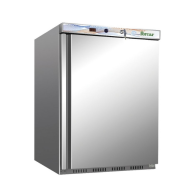
Refrigerated back bar coolers for drinks are professional appliances designed to store and organise bottles and beverages behind the counter while keeping them easily accessible to operators during service.
They are mainly used in bars, pubs, kiosks, cafés, cocktail bars, hotels, beach bars and businesses with frequent beverage service.
Their position under or behind the counter allows businesses to use operational space efficiently and reduce the movement required to retrieve drinks throughout the day.
Choosing the correct model requires evaluating capacity, number of doors, opening system, operating temperature, refrigeration system, dimensions, internal organisation and installation conditions.
Why Use a Professional Refrigerated Back Bar Cooler?
During peak service periods, the organisation of the beverage station can affect service speed.
If operators frequently need to move away from the counter to reach distant refrigerators, the number of movements required to complete each order increases.
A refrigerated back bar cooler allows frequently used beverages to be stored close to the working station.
A correctly sized solution can help:
- organise bottles and beverages;
- reduce operator movement;
- use available space behind the counter;
- simplify beverage station restocking;
- improve product accessibility;
- maintain a more organised working area;
- support service during peak periods.
Where Are Refrigerated Back Bar Coolers Used?
These appliances can be used in many professional businesses.
Common applications include:
- bars;
- pubs;
- cocktail bars;
- wine bars;
- cafés;
- kiosks;
- beach bars;
- beach clubs;
- nightclubs;
- entertainment venues;
- hotels;
- restaurants;
- bistros;
- hospitality businesses;
- beverage stations for events and catering.
Operational requirements can vary significantly depending on service volume, available space and the number of beverages managed.
Which Products Can Be Stored?
A refrigerated back bar cooler can be used to store products compatible with the temperature range and technical specifications declared by the manufacturer.
Common products include:
- bottled water;
- soft drinks;
- juices;
- cocktail mixers;
- energy drinks;
- other packaged beverages compatible with the operating conditions of the equipment.
The internal configuration should be planned according to the formats actually used by the business.
Glass bottles, PET bottles and cans may require different shelf configurations.
Capacity: How Many Litres Do You Need?
Capacity is one of the main selection criteria.
Purchasing the back bar cooler with the largest available volume is not necessarily the best solution.
Before purchasing, businesses should evaluate:
- average number of beverages sold;
- consumption during peak hours;
- restocking frequency;
- number of product references managed;
- bottle and can formats;
- available space behind the counter;
- presence of other refrigeration equipment.
An undersized appliance may require continuous restocking.
An oversized model may occupy valuable operational space and create unused refrigerated capacity.
Number of Doors
Refrigerated back bar coolers are available in different configurations.
The number of doors should be selected according to the required capacity and available space.
One-Door Refrigerated Back Bar Coolers
One-door models are suitable for compact service stations, small bars, kiosks or businesses that need to store a limited quantity of beverages close to the service area.
They can also be used as supplementary refrigeration units in larger businesses.
Two-Door Refrigerated Back Bar Coolers
Two-door models provide greater capacity and allow beverages to be divided into different storage areas.
They may be suitable for bars, pubs, cafés and businesses with medium service volumes.
Three-Door or Larger Refrigerated Back Bar Coolers
These models are intended for businesses that require greater storage capacity and a wider beverage selection close to the service station.
Before purchasing, it is important to verify the space required for installation and door operation.
Sliding Doors or Hinged Doors?
The opening system can affect workflow behind the bar.
Sliding Doors
Sliding doors do not require the same front clearance needed for hinged doors.
They may be useful in businesses with narrow service areas or limited working space.
Important factors include:
- ease of sliding;
- accessibility to different internal areas;
- possibility of removing panels for cleaning;
- characteristics of the door tracks.
Hinged Doors
Hinged doors can provide wide access to the refrigerated compartment.
However, they require sufficient space in front of the equipment to open without obstructing operator movement.
The choice should be based on the actual layout of the premises.
Solid Doors or Glass Doors?
Another factor to evaluate is the door material.
Glass Doors
Glass doors allow operators to identify available beverages before opening the cooler.
This can facilitate service operations and help staff check the products available inside the appliance.
Businesses should consider:
- ease of cleaning;
- glass characteristics;
- possible condensation formation;
- internal visibility;
- compartment lighting.
Solid Doors
Solid doors have different construction characteristics and may be preferred when internal visibility is not a priority.
The choice should be made by comparing model specifications with the operational requirements of the business.
Operating Temperature
The back bar cooler should be selected according to the beverages stored and the operating temperatures specified by the manufacturer.
Equipment should not be selected according to dimensions alone.
Before purchasing, it is important to verify:
- declared temperature range;
- ambient temperature of the premises;
- frequency of door openings;
- quantity of products loaded;
- temperature of beverages placed inside the appliance;
- installation conditions;
- climate class.
Using the appliance outside the conditions specified by the manufacturer may compromise performance.
Ventilated or Static Refrigeration?
The refrigeration system affects temperature distribution inside the appliance.
Ventilated Refrigeration
Ventilated refrigeration uses forced air circulation to promote more uniform temperature distribution.
It may be useful in back bar coolers that are opened frequently during service and contain products distributed across multiple levels.
The airflow paths specified by the manufacturer should not be obstructed.
Static Refrigeration
Static refrigeration uses the natural circulation of cold air.
It may produce temperature differences between different areas of the refrigerated compartment and requires careful product organisation.
The choice should be based on the characteristics of the model and the operational requirements of the business.
Internal Organisation and Shelves
Declared capacity in litres is not the only factor determining the actual quantity of beverages that can be stored.
It is also important to evaluate:
- number of shelves;
- adjustable shelf positions;
- usable depth;
- available height between levels;
- compatibility with bottles and cans;
- ease of restocking;
- product accessibility.
A flexible internal configuration allows the back bar cooler to be adapted more effectively to the products actually used by the business.
The Back Bar Cooler and Bar Workflow
Equipment positioning should be determined by analysing operator movement.
The most frequently used beverages should be accessible with the fewest possible movements.
It is useful to consider the relationship between the back bar cooler and:
- cocktail station;
- ice machine;
- glasswasher;
- sink;
- beverage dispensers;
- coffee machine;
- service area;
- stock replenishment area.
A correctly designed workstation can reduce unnecessary movement and improve organisation during peak service periods.
Dimensions and Installation
Before purchasing, the available space behind the counter should be measured accurately.
Width, depth and height of the equipment are not the only factors to consider.
It is important to verify:
- external dimensions;
- working space available for operators;
- door clearance for hinged models;
- accessibility of sliding doors;
- ventilation clearances;
- location of electrical connections;
- drainage requirements, where applicable;
- access for cleaning and maintenance;
- delivery route to the final installation area.
Doors, corridors, stairways and other access points should be measured before ordering.
A correctly sized appliance should integrate into the beverage station without excessively reducing working space.
Refrigeration Unit Ventilation
The refrigeration system must be able to dissipate the heat generated during operation.
Ventilation arrangements can vary depending on equipment design.
Before installation, it is necessary to verify:
- position of air intakes;
- position of air outlets;
- minimum clearances specified by the manufacturer;
- presence of walls or panels that may restrict airflow;
- access to the condenser for cleaning.
The appliance should not be installed in a way that obstructs the ventilation openings.
Insufficient heat dissipation can increase the workload of the refrigeration system and compromise equipment performance.
Climate Class and Environmental Conditions
The performance of a refrigerated back bar cooler also depends on the environmental conditions of the installation area.
Before purchasing, it is important to verify the climate class declared by the manufacturer.
Particular attention should be paid when equipment is installed:
- in particularly warm kiosks;
- in beach bars and beach clubs;
- near frequently opened doors;
- next to heat-producing equipment;
- in premises with high ambient temperatures;
- in high-humidity environments;
- in areas with insufficient ventilation.
The back bar cooler should be operated within the conditions specified by the manufacturer.
Internal Lighting
Some refrigerated back bar coolers are equipped with internal lighting.
This feature can be particularly useful in models with glass doors because it allows operators to identify available beverages more quickly.
Before purchasing, businesses can evaluate:
- presence of internal lighting;
- light uniformity;
- position of light sources;
- ease of replacement or maintenance;
- independent lighting controls, where available.
Lighting should support product visibility without replacing proper internal organisation.
How to Organise Beverages Inside the Back Bar Cooler
Internal organisation should be planned according to how frequently each product is used.
The most frequently requested beverages can be placed in the easiest-to-reach areas.
The back bar cooler can be organised:
- by beverage type;
- by bottle or can format;
- by frequency of use;
- by workstation;
- by operator, in businesses with multiple beverage stations.
It is advisable to maintain a consistent arrangement over time.
When every operator knows the position of each product, beverage retrieval can be faster during service.
Loading Beverages Correctly
A back bar cooler should not be filled without considering manufacturer instructions and the airflow required by the refrigeration system.
It is important to:
- avoid exceeding the specified load capacity;
- avoid obstructing air intakes and outlets;
- distribute weight correctly across the shelves;
- use shelves compatible with the products being stored;
- avoid loading excessive quantities of warm beverages at the same time;
- keep high-turnover products easily accessible.
Incorrect loading can reduce the operational efficiency of the equipment.
Cleaning and Hygiene
Broken bottles, spilled beverages, dust, condensation and dirt can accumulate inside and around the equipment.
The back bar cooler should be included in the cleaning schedule of the business.
It is important to:
- periodically remove products;
- clean shelves and internal surfaces;
- clean doors and handles;
- keep sliding door tracks clean;
- inspect and clean door seals;
- remove spilled liquids;
- check drainage systems, where present;
- use cleaning products compatible with equipment materials.
Before cleaning or maintenance operations, follow the safety procedures and manufacturer instructions applicable to the equipment.
Condenser Cleaning
Condenser cleaning is one of the maintenance operations that can affect equipment performance.
Dust and debris can reduce the system's ability to dissipate heat.
Cleaning frequency and procedures depend on the model, environmental conditions and manufacturer instructions.
In businesses with significant levels of dust, grease or other airborne contaminants, more frequent inspections may be necessary.
Maintenance operations should be performed according to manufacturer instructions and, when required, by qualified technical personnel.
Routine Maintenance
Regular maintenance helps keep the equipment under suitable operating conditions.
Businesses should schedule checks of:
- internal temperature;
- door seals;
- opening mechanisms;
- sliding door tracks;
- fans;
- drainage systems;
- internal lighting;
- unusual noise;
- abnormal ice or condensation formation;
- condenser condition.
Recurring faults or abnormal operating conditions should be inspected by qualified technical personnel.
Energy Consumption
A refrigerated back bar cooler may operate continuously for many hours every day.
Energy consumption is therefore an important factor when evaluating the total operating cost of the equipment.
Before purchasing, it is advisable to compare:
- declared energy consumption;
- usable capacity;
- dimensions of the refrigerated compartment;
- refrigeration system;
- insulation characteristics;
- door type;
- expected door-opening frequency;
- ambient conditions;
- defrosting system;
- internal lighting.
The equipment with the lowest purchase price is not necessarily the most economical solution over the long term.
Noise Levels and Behind-the-Bar Installation
Noise levels may be an important selection criterion, particularly in small bars, cafés, lounge bars and hotels.
The refrigeration unit, fans and other components produce noise during operation.
When acoustic comfort is important, businesses should verify manufacturer-declared noise data and compare different models.
Correct maintenance can also help prevent abnormal noise caused by dirty, worn or incorrectly installed components.
The Most Common Buying Mistakes
Choosing Based Only on Capacity in Litres
Declared capacity should be evaluated together with shelf configuration, bottle formats and internal accessibility.
Purchasing a Back Bar Cooler That Is Too Large
Oversized equipment can occupy valuable space behind the counter and create unused refrigerated capacity.
Choosing a Model That Is Too Small
An undersized back bar cooler may require continuous restocking during service.
Failing to Evaluate Door Type
Sliding and hinged doors require different installation spaces and operating procedures.
Ignoring Ventilation Requirements
Obstructing the openings required for heat dissipation can compromise equipment performance.
Failing to Check Climate Class
The model should be compatible with the environmental conditions of the installation area.
Neglecting Workflow
Poorly positioned equipment can increase operator movement instead of reducing it.
Ignoring Cleaning and Maintenance Requirements
Condenser access, door tracks, shelves and internal surfaces should be evaluated before purchasing.
Failing to Consider Technical Support and Spare Parts
Professional refrigeration equipment may require maintenance and replacement components during its operating life.
How to Choose the Right Refrigerated Back Bar Cooler
Before purchasing, businesses should define:
- types of beverages stored;
- number and format of bottles and cans;
- average daily sales volume;
- consumption during peak periods;
- restocking frequency;
- required usable capacity;
- number of doors;
- sliding or hinged doors;
- glass or solid doors;
- operating temperature;
- refrigeration system;
- shelf configuration;
- available installation space;
- environmental conditions;
- climate class;
- ventilation requirements;
- cleaning and maintenance access;
- energy consumption;
- noise level, when relevant;
- technical support;
- spare parts availability.
Comparing models according to actual operational requirements allows businesses to make a more informed purchasing decision.
Frequently Asked Questions (FAQ)
What Is a Refrigerated Back Bar Cooler Used For?
It is used to store and organise bottles and beverages behind the counter while keeping them easily accessible to operators during service.
Which Businesses Use Refrigerated Back Bar Coolers?
Bars, pubs, cocktail bars, cafés, kiosks, beach clubs, hotels, nightclubs, restaurants and other businesses with beverage service.
What Capacity Should a Refrigerated Back Bar Cooler Have?
Capacity should be calculated according to daily consumption, peak service demand, number of products, bottle and can formats, restocking frequency and available space.
Are Sliding Doors or Hinged Doors Better?
It depends on the layout of the premises.
Sliding doors may be useful when front clearance is limited.
Hinged doors require sufficient opening space but can provide wide access to the refrigerated compartment.
Are Glass Doors or Solid Doors Better?
It depends on operational requirements.
Glass doors allow operators to view products before opening the cooler, while solid doors have different construction characteristics.
Businesses should compare the technical specifications of individual models.
Where Should a Refrigerated Back Bar Cooler Be Installed?
Close to the beverage station and the areas where stored drinks are used most frequently, while complying with the manufacturer's installation, ventilation and maintenance requirements.
Can a Refrigerated Back Bar Cooler Be Installed in a Kiosk?
Yes, provided that the model is compatible with the available space, environmental conditions, climate class and installation requirements specified by the manufacturer.
What Should Be Checked Before Purchasing?
Capacity, dimensions, number and type of doors, operating temperature, refrigeration system, internal configuration, climate class, ventilation, energy consumption, cleaning requirements, maintenance, technical support and spare parts availability.
Conclusion
Refrigerated back bar coolers for drinks are professional appliances designed to organise beverage storage close to the service station.
Choosing the correct model requires evaluating capacity, bottle and can formats, number and type of doors, operating temperature, refrigeration system, dimensions, ventilation, environmental conditions, workflow, cleaning requirements and energy consumption.
A correctly sized and positioned back bar cooler can reduce operator movement, improve beverage station organisation and support service during peak operating periods.
Are you looking for a professional refrigerated back bar cooler for a bar, pub, kiosk, café, hotel or business with beverage service?
Compare the models available on Ristorazione-Refrigerazione.it by evaluating capacity, dimensions, number of doors, operating temperature and technical specifications.
For support in choosing the equipment that best matches your business requirements:
📞 +39 0824 1816643
📱 WhatsApp +39 389 7940545
Explore the Refrigerated Back Bar Coolers category and choose the solution that best matches your available space, service volume and beverage station organisation.