Senza tasse Con tasse

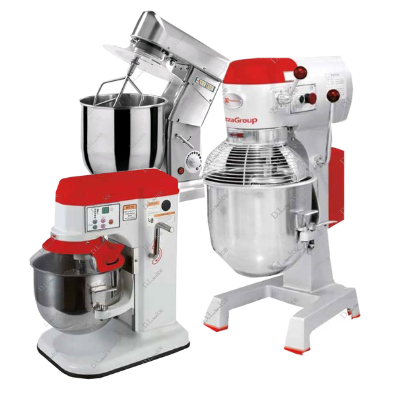
PLANETARY MIXERS

Professional dough mixers and commercial planetary mixers are designed to knead, mix, blend and whip ingredients in professional food production environments. Ideal for bakeries, pizzerias, pastry shops, artisan bakeries, restaurants, hotels, delicatessens and catering businesses, they support the preparation of bread dough, pizza dough, focaccia, fresh pasta, brioche, fermented dough, creams and pastry mixtures using different mixing technologies suited to the ingredients and their consistency.

The range includes commercial spiral dough mixers, fork mixers, twin-arm mixers, professional planetary mixers and Kenwood mixers, available in different capacities and configurations. Depending on the model, features may include fixed or removable bowls, adjustable speeds, variable-speed drives, mechanical or digital controls, timers, safety guards and interchangeable mixing tools. Choosing the appropriate machine requires consideration of dough capacity in kilograms, bowl volume in litres, dough hydration, mixing technology, motor power and frequency of use.

Professional dough mixers and planetary mixers for bakeries, pizzerias and pastry shops

Commercial bread and pizza dough mixers and professional planetary mixers serve different production requirements. Spiral, fork and twin-arm machines use dedicated mixing tools to knead dough, while planetary mixers use interchangeable accessories for whipping, mixing and kneading suitable preparations. The appropriate equipment depends on dough consistency, batch size, production frequency and the required mixing results.

Main types of commercial dough mixers and planetary mixers

Professional spiral dough mixers

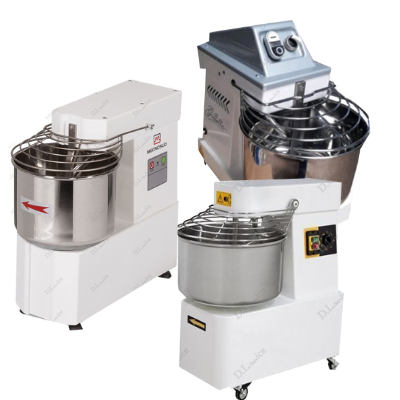
Commercial spiral dough mixers are widely used for pizza dough, bread dough, focaccia and fermented bakery products. A spiral-shaped tool kneads ingredients inside the bowl, supporting dough development. Depending on the model, machines may feature one or more speeds, fixed or removable bowls and different mixing capacities.

Professional twin-arm dough mixers

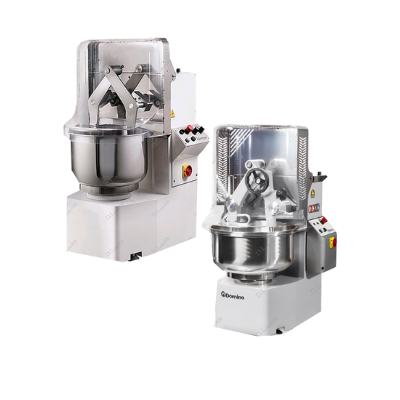
Commercial twin-arm mixers use two arms operating with an alternating movement to knead ingredients. They are used in bakeries and pastry production for fermented dough and preparations requiring progressive mixing. Bowl capacity, speed settings and cycle controls vary according to the machine.

Commercial fork dough mixers

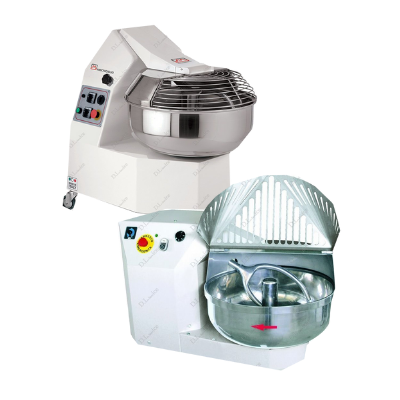
Professional fork mixers use an inclined mixing tool with a characteristic kneading action. They are traditionally employed for firm dough and artisan bread production. Bowl capacity, mixing speed and permitted dough types depend on the manufacturer's specifications.

Professional planetary mixers

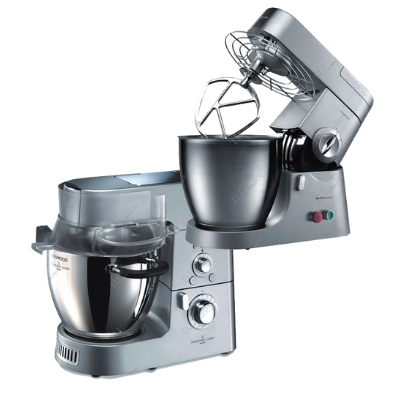
Commercial planetary mixers are versatile appliances for pastry creams, whipped mixtures, cake batters, fillings and compatible doughs. Their planetary movement enables different tools, including whisks, flat beaters and dough hooks where supplied. Suitability for heavier dough depends on the model's rated capacity and performance.

Kenwood mixers and planetary mixers

Kenwood mixers and planetary stand mixers can be used for mixing, whipping and kneading suitable preparations according to their specifications. Selection should consider bowl capacity, available attachments, speed adjustment and the manufacturer's declared intended use, distinguishing commercially suitable versions from models intended for less demanding applications.

Dough mixers for different recipes and batch sizes

Choosing a dough mixer for a bakery, pizzeria or pastry kitchen depends on both the ingredients and production volume. Low-hydration dough, soft dough, enriched fermented dough and whipped preparations require different mixing technologies and tools. Both the minimum workable batch and the maximum permitted load should be considered.

How to choose a professional dough mixer

When selecting a commercial dough mixer for pizza, bread or pastry production, identify the recipes, batch quantity and frequency of use. A pizzeria making dough every day may require a suitably sized spiral mixer, while a pastry kitchen might need a planetary mixer for varied preparations or a twin-arm mixer for particular fermented doughs.

Important specifications include minimum and maximum mixing capacity in kg, bowl volume in litres, motor power, available speeds, mixing cycle duration, dimensions and electrical supply. Removable bowl options, cleaning access and safety mechanisms must also be assessed.

Spiral, fork and twin-arm mixers: what is the difference?

Spiral mixers use a spiral mixing tool, typically combined with bowl movement, and are widely used for bread and pizza dough. Fork mixers use a different mixing motion traditionally associated with firm doughs. Twin-arm mixers employ alternating arms that lift and stretch the dough during mixing.

Machine type is only one consideration: hydration level, flour strength, dough temperature, ingredient quantities and mixing time also influence the results. Not all mixers in the same category support identical hydration levels or minimum and maximum batch quantities.

Dough capacity in kg versus bowl volume in litres

Dough capacity in kilograms indicates the quantity a mixer is rated to process under the manufacturer's specified conditions. Bowl volume in litres describes the container's volume and does not directly represent the dough weight it can process. Product comparisons must distinguish between declared flour weight, total dough weight and capacities for other preparations.

The minimum mixing quantity also matters: a large bowl may not efficiently work very small batches. Performance depends on dough density, hydration, speed and cycle duration. Manufacturer load limits must be observed to avoid overloading the motor and transmission.

Planetary mixer attachments: whisk, beater and dough hook

Professional planetary mixers may support multiple attachments. The wire whisk is primarily used for whipping and incorporating air; the flat beater mixes creams, batters and suitable preparations; and the dough hook kneads certain fermented doughs within the rated machine limits.

When selecting a commercial planetary mixer, consider bowl capacity, speeds, supplied tools and operating frequency. The presence of a dough hook does not necessarily mean that every planetary mixer is suitable for very stiff dough or extended mixing cycles.

Installation, safety, cleaning and maintenance

Installing a professional dough mixer requires a stable work surface or suitable floor positioning, compatible single-phase or three-phase electrical supply and sufficient access for adding ingredients and handling bowls. Safety guards, interlocks and manufacturer operating instructions must be checked before use.

Cleaning includes bowls, spirals, forks, mixing arms, whisks, beaters and dough hooks where fitted. Cleaning must be performed with the machine safely stopped and without interfering with moving parts or safety guards. Periodic maintenance helps preserve motors, transmissions and components subject to wear.

WE ARE HERE TO HELP

Looking for a professional dough mixer or planetary mixer?

Our team can help you choose spiral, fork and twin-arm dough mixers or commercial planetary mixers according to dough type, production capacity, dimensions, electrical supply and technical requirements. Contact us by telephone, WhatsApp, online chat, email or request a video consultation.

Choose how to contact us →
Product added to compare.