Senza tasse Con tasse

WASHING EQUIPMENT

Professional warewashing equipment is designed to wash, rinse, dry and handle dishes, glasses, cutlery and kitchen utensils in commercial foodservice environments. Ideal for restaurants, hotels, bars, pizzerias, delicatessens, pastry shops, canteens, catering companies and commercial kitchens, these appliances help organise cleaning operations, reduce manual handling and manage daily hygiene requirements during busy service periods.

The range includes commercial dishwashers, professional glasswashers, utensil washers, glass dryers and cutlery drying machines, available in different capacities and configurations. Depending on the model, features may include programmable washing cycles, mechanical or electronic controls, detergent and rinse aid dispensers, drain pumps, dedicated rinsing systems and stainless steel construction. When selecting a machine, consider basket dimensions, usable loading height, productivity, water consumption, electrical supply and plumbing requirements.

Professional warewashing equipment for dishes, glasses and kitchen utensils

An efficient commercial warewashing area requires equipment suited to the type of items being cleaned, washing volume and service workflow. Commercial dishwashers and glasswashers offer dedicated washing cycles, while utensil and pot washers accommodate larger kitchen equipment. Glass drying and cutlery drying machines support the finishing operations after washing and rinsing.

Main types of commercial warewashing equipment

Commercial dishwashers

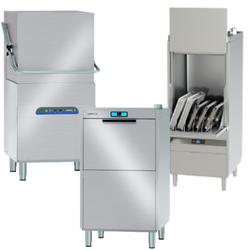
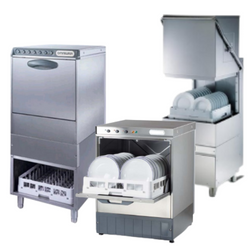
Professional dishwashers for restaurants are designed to clean plates, tableware and compatible kitchen utensils. Depending on the available range, models may include undercounter, front-loading and hood-type dishwashers. Basket size, wash cycles, loading clearance and throughput depend on the machine.

Professional glasswashers

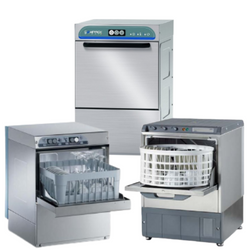
Commercial glasswashers for bars and restaurants are intended for glasses, cups and suitable glassware. Models may feature round or square baskets, mechanical or electronic controls and different loading heights. Drain pumps, detergent dispensers, rinse aid dosing and water softeners depend on the model and options.

Commercial utensil and pot washers

Professional utensil washers are designed for larger items, containers and equipment compatible with the washing chamber. Depending on the model, they can accommodate pots, pans, bakery trays, containers and kitchen accessories. Loading height, basket design and washing programmes must suit the items being cleaned.

Professional glass drying machines

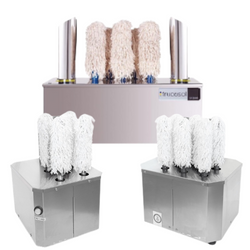
Commercial glass dryers assist with drying and finishing glassware after washing. Depending on the model, they may use brushes, airflow or dedicated drying systems for compatible glasses, helping bars, restaurants and hospitality businesses organise glassware preparation.

Commercial cutlery drying machines

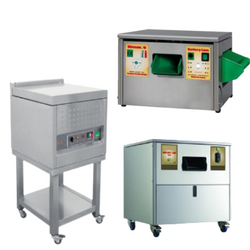
Professional cutlery dryers support the drying and, where provided, polishing of cutlery after washing. They are used in restaurants, hotels, canteens and catering businesses. Processing capacity, drying technology and finishing materials vary according to the model.

Mechanical and electronic dishwashers

Mechanically controlled commercial dishwashers feature straightforward operating controls, while electronic models may include multiple programmes, displays and advanced functions. Depending on the version, additional features can include detergent and rinse aid dispensers, drain pumps and rinse management systems.

How to choose a commercial dishwasher for a restaurant or bar

When choosing a professional dishwasher for restaurants, pizzerias, hotels or delicatessens, consider the quantity of tableware to be washed, cycle duration, available space and the items used during service. A small bar may require a compact glasswasher, while a busy commercial kitchen may benefit from a hood-type dishwasher or equipment designed for higher throughput.

Important selection criteria include basket dimensions, usable wash height, cycle duration, baskets per hour, water consumption per cycle, electrical power and supply type. Detergent dosing equipment, optional drain pumps, required water pressure and ease of filter cleaning should also be checked.

Glasswashers, dishwashers and utensil washers: key differences

Professional glasswashers are primarily designed for glasses and cups, using basket sizes suited to these items. Commercial dishwashers handle plates, cutlery and compatible tableware. Utensil washers are intended for larger kitchen items, including certain pots, trays and containers.

Equipment selection should not be based on external dimensions alone. Loading clearance, basket dimensions, item geometry and wash programme characteristics determine whether articles can be cleaned correctly. Always confirm that the items are suitable for mechanical washing and the specified cleaning chemicals.

Wash baskets, drain pumps and detergent dispensers

Commercial warewashing machines use baskets in different sizes and shapes. Common formats include 350 x 350 mm, 400 x 400 mm and 500 x 500 mm baskets, alongside round baskets and specialised arrangements, depending on the model. Loading clearance must also be assessed for tall glasses, large plates and deep containers.

A drain pump may be required where the drainage arrangement does not permit suitable gravity discharge. Detergent and rinse aid dispensers, where fitted, help control chemical dosing. Before purchasing, verify whether these components are included, available as optional accessories or incompatible with the selected model.

Water quality, softeners and washing performance

Water quality affects commercial dishwasher operation and washing results. Hard water can cause limescale accumulation on heating components and inside the hydraulic system. Depending on local water hardness and manufacturer specifications, a compatible water softener or water treatment system may be recommended or required.

Effective washing depends on suitable detergents and rinse aids, correct chemical dosing, appropriate programmes and water meeting the specified requirements. Preventing water marks on glassware also depends on rinse quality, glass characteristics and subsequent drying procedures.

Installation, hygiene, drying and maintenance

Installing a commercial dishwasher or glasswasher requires checking single-phase or three-phase electrical supply, water connections, inlet water pressure, drainage and available installation space. Appliances must be connected and operated according to manufacturer instructions, including any requirements for water treatment.

Maintenance includes cleaning filters, wash tanks, spray arms, nozzles and door seals according to the model. Glass dryers and cutlery dryers assist with finishing washed items but do not replace proper washing and rinsing. Hygiene procedures must follow the establishment's HACCP-based food safety plan and the instructions for cleaning chemicals and operating temperatures.

WE ARE HERE TO HELP

Looking for a commercial dishwasher, glasswasher or utensil washer?

Our team can help you choose commercial dishwashers, glasswashers, utensil washers, glass dryers and cutlery dryers according to basket dimensions, throughput, power supply, accessories and technical specifications. Contact us by telephone, WhatsApp, online chat, email or request a video consultation.

Choose how to contact us →
Product added to compare.