Professional Equipment for Restaurants, Bars, Pastry Shops, Gelaterias and Ho.Re.Ca. Businesses: How to Plan Your Purchases
Choosing a machine simply because it has an attractive price or a certain production capacity is not enough.
Every business has different requirements.
A 40-seat restaurant operates differently from a kitchen serving 200 guests. A pastry shop has production flows that differ from those of a butcher shop. Bars, gelaterias and hotels each require different equipment and organisation.
For this reason, the first question should not be:
“Which machine should I buy?”
but rather:
“How does my business need to operate?”
This is where the selection of professional equipment should begin.
At Ristorazione-Refrigerazione.it, businesses can explore a catalogue of over 45,000 products covering professional food service, refrigeration, preparation, cooking, storage, display and many other requirements.
Plan the project before choosing the equipment
One of the most common mistakes when setting up a professional kitchen is purchasing individual machines without considering the complete production process.
A kitchen operates as a system.
A typical workflow can be simplified as:
receiving → storage → preparation → processing → cooking → holding → plating → service.
Not every business follows exactly the same sequence, but the principle remains the same: each machine should form part of a coherent operational system.
Are you opening a new business?
Starting from scratch provides an important advantage: the organisation can be planned before purchasing the equipment.
At a minimum, consider:
- type of business;
- menu;
- expected number of covers;
- daily production;
- peak service periods;
- available space;
- staff workflow;
- storage requirements;
- production processes;
- available utilities;
- equipment dimensions.
Only after these factors have been analysed should the search for specific machines begin.
Are you renovating an existing professional kitchen?
The approach is different.
Start by identifying weaknesses in the current operation.
Where do bottlenecks occur?
Does food preparation require too much staff time?
Is refrigerated storage no longer sufficient?
Is a production process still performed manually?
Can the cooking line handle peak demand?
Does the display equipment present products effectively?
These questions help identify where new equipment can produce a real operational improvement.
Restaurants and professional kitchens
A restaurant kitchen may require several categories of equipment.
Depending on the menu and workflow, solutions may be needed for:
- preparation;
- cooking;
- refrigeration;
- storage;
- washing;
- hot holding;
- food processing;
- display.
Ovens, fryers, grills, bratt pans, pasta cookers, blast chillers, refrigerated cabinets and food preparation machines should not be considered isolated pieces of equipment.
They must work together.
Bars and coffee shops
Bars have very different operational requirements.
A project may involve:
- beverage refrigeration;
- preparation equipment;
- display;
- service;
- ice production;
- hot beverages;
- snacks;
- light food service.
The starting point should always be the commercial concept.
A breakfast-focused café has different requirements from a cocktail bar or a venue whose main business is the evening aperitif service.
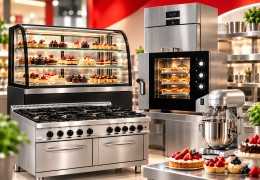
Pastry shops and production laboratories
A pastry laboratory requires careful organisation of each production stage.
Preparation, mixing, baking, cooling, refrigeration, storage and display should be considered as parts of the same process.
Equipment capacities should also be balanced.
High production capacity at one stage offers little benefit if the next stage becomes a bottleneck.
Gelaterias and ice cream shops
Gelato production also requires a dedicated project.
Production, storage and display should be sized consistently.
Equipment selection depends on factors such as:
- expected production;
- number of flavours;
- product turnover;
- available space;
- service method;
- laboratory organisation.
The display case is also more than a technical appliance: it is one of the main commercial elements customers see.
Butcher shops and delicatessens
Businesses processing meat and prepared foods may have very different requirements.
Preparation, refrigeration, processing and display must be organised around both production and counter service.
Equipment should therefore be selected according to the processes actually carried out by the business.
Hotels, canteens and catering businesses
As production volume increases, capacity becomes even more important.
Hotels, canteens and catering operations may need to manage:
- large quantities;
- buffets;
- advance preparation;
- hot holding;
- refrigeration;
- food movement;
- simultaneous service of numerous portions.
In these environments, even a small bottleneck can have a significant impact.
1. Define the number of covers
The number of covers is an important starting point, but it is not sufficient on its own.
Two 100-seat restaurants can have completely different requirements.
One may mainly operate an à la carte service.
Another may focus on pizza, banqueting or buffets.
The number of covers must therefore be connected to the type of production.
2. Calculate peak demand, not only averages
Equipment should not be sized solely according to average daily production.
It is essential to understand what happens during the busiest period.
If most orders arrive within a single hour, the equipment must be capable of supporting that workload.
Sizing should therefore consider peak operating demand.
3. Analyse the available space
Before purchasing equipment, measure the area in which it will be installed.
Width and depth alone are not enough.
Also consider:
- door opening;
- operator space;
- passageways;
- maintenance access;
- cleaning access;
- connections;
- required ventilation;
- technical clearances.
A machine that physically fits into a space is not necessarily a machine that can be installed correctly.
4. Check utility requirements
Technical specifications should always be checked before purchasing.
Depending on the equipment, relevant requirements may include:
- voltage;
- power;
- electrical supply;
- gas;
- water;
- drainage;
- other technical connections.
These factors should be verified before ordering and installation.
5. Do not choose solely by price
Price matters, but it should never be the only criterion.
Equipment should also be evaluated according to:
- capacity;
- dimensions;
- productivity;
- technical specifications;
- materials;
- intended use;
- cleaning requirements;
- installation;
- declared energy consumption;
- kitchen organisation.
A cheaper machine that does not suit the production process may prove to be a poor investment.
6. Bigger is not automatically better
The opposite mistake is also common.
Oversized equipment can:
- occupy valuable space;
- require more power;
- be disproportionate to actual production;
- unnecessarily increase investment.
The objective is to choose equipment that is correctly sized for the business.
7. Professional food preparation
Before cooking begins, a large amount of preparation work may be required.
Depending on the business, equipment may include:
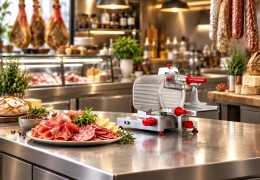
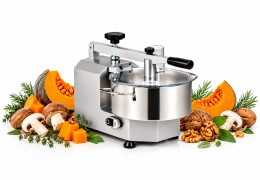
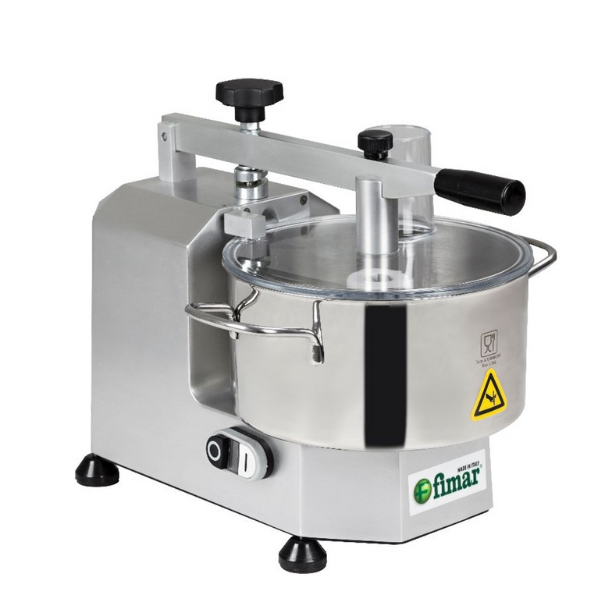
- vegetable preparation machines;
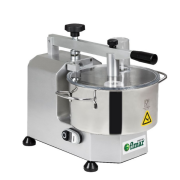
- bowl cutters;
- slicers;
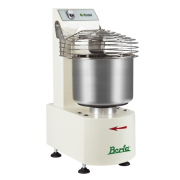
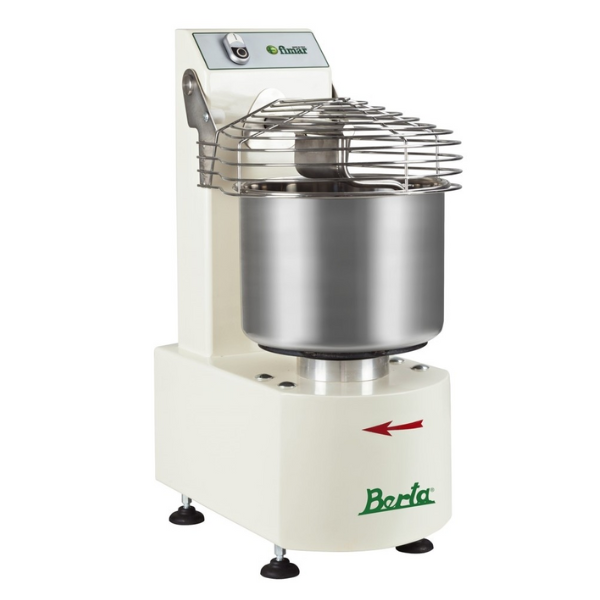
- spiral mixers;
- planetary mixers;
- meat mincers;
- fresh pasta machines;
- other specialised equipment.
Correctly mechanising selected processes can help organise mise en place more efficiently.
8. Professional cooking equipment
The cooking line should be designed around the menu.
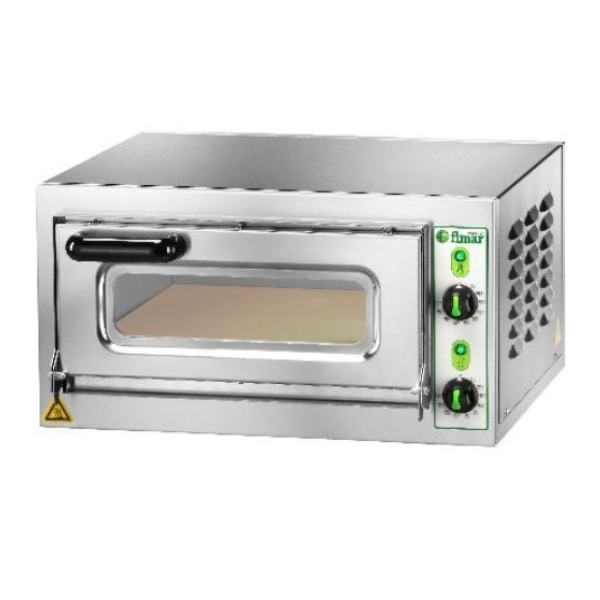
Depending on the operation, equipment may include:
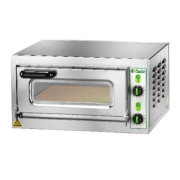
- ovens;
- fryers;
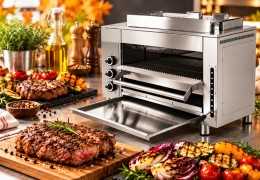
- grills;
- fry tops;
- bratt pans;
- pasta cookers;
- bain-marie units;
- professional ranges;
- rotisserie ovens.
A kitchen does not need every machine available.
It needs the equipment that matches what the business actually sells.
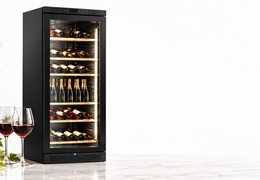
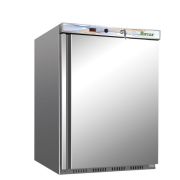
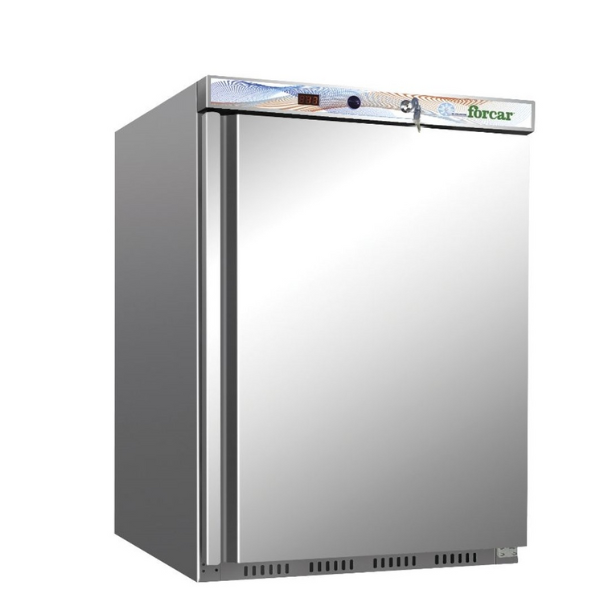
9. Professional refrigeration
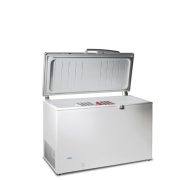
Refrigeration is another fundamental part of the project.
Different solutions may be required for storage and display.
Consider:
- quantity of products;
- type of food;
- workflow;
- frequency of access;
- required temperature conditions;
- available space.
Capacity should be calculated according to actual stock levels and production organisation.
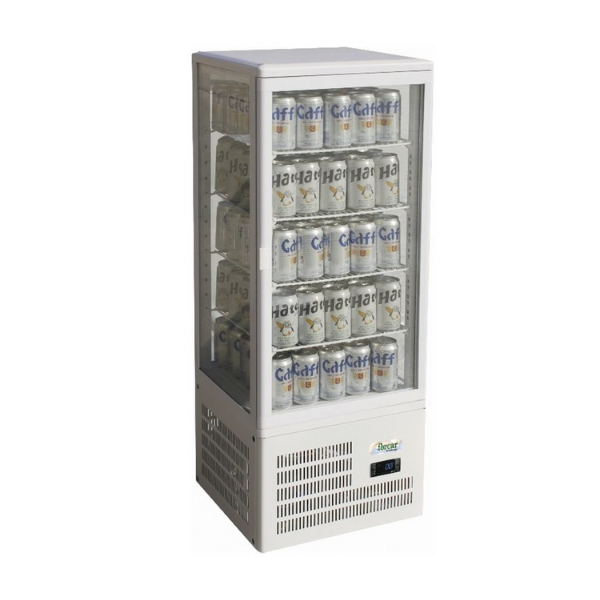
10. Display equipment: when the machine also has to sell
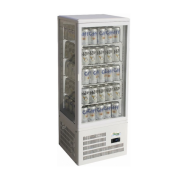
In gelaterias, pastry shops, bars, delicatessens and other customer-facing businesses, some equipment has two functions:
managing the product and presenting it to the customer.
Display equipment should therefore also be evaluated for:
- visibility;
- accessibility;
- display capacity;
- integration with the premises;
- service method.
The equipment becomes part of the commercial experience.
Over 45,000 products: how to navigate the catalogue
A large catalogue provides a wide range of solutions, but it also requires a clear method.
At Ristorazione-Refrigerazione.it, the starting point can be the sector or the production process that needs to be organised.
A useful procedure is:
1. Identify the category.
Start with the process you need to perform.
2. Compare models.
Do not stop at the first suitable-looking machine.
3. Read the technical specifications.
Dimensions, capacity, power and utility requirements are essential.
4. Check the available space.
Measure before purchasing.
5. Evaluate production requirements.
Compare machine specifications with actual volumes.
6. Request information when necessary.
If a characteristic is unclear, verify it before purchasing.
Equipment should solve a problem
An investment makes sense when it responds to a real operational need.
For example:
Problem: too much time is spent cutting vegetables.
Possible solution: evaluate a professional vegetable preparation machine.
Problem: the grill station cannot handle peak demand.
Possible solution: review cooking capacity and workstation organisation.
Problem: refrigerated storage is insufficient.
Possible solution: analyse actual stock and size an additional refrigeration solution.
Problem: demand for fresh pasta is increasing.
Possible solution: evaluate a machine with production capacity suited to the required volume.
The equipment is therefore selected after the problem has been identified.
Pay attention to technical specifications
Before placing an order, carefully check:
- dimensions;
- capacity;
- electrical or other supply requirements;
- power;
- productivity, where stated;
- standard equipment;
- accessories;
- installation requirements;
- intended use.
Two machines that appear similar may have very different technical characteristics.
Plan for the future
When opening or renovating a business, it is useful to consider future development.
If the kitchen currently produces 30 portions but the business plan realistically expects 100 in the near future, this can affect equipment sizing.
However, overly optimistic forecasts can also lead to unnecessarily large purchases.
Growth should therefore be considered using realistic data.
The importance of workflow
An efficient professional kitchen does not depend solely on individual machines.
Their position also matters.
A well-designed workflow can reduce:
- unnecessary movement;
- crossing paths;
- production time;
- interference between staff.
Equipment and organisation should therefore be considered as a single system.
When should you add or replace a machine?
Before investing, ask:
- has the existing equipment become insufficient?
- is there a production bottleneck?
- are we introducing a new process?
- are we expanding the menu?
- are volumes increasing?
- is a manual process consuming too much labour?
- do we need more refrigeration or display capacity?
If the answer identifies a real operational issue, the investment can be evaluated more accurately.
Common mistakes when buying professional equipment
Avoid:
- purchasing before defining the project;
- choosing solely on price;
- oversizing equipment;
- undersizing equipment;
- ignoring peak production;
- failing to measure available space;
- failing to verify power and utilities;
- not reading technical specifications;
- forgetting space for doors, cleaning and maintenance;
- purchasing equipment that does not match the menu;
- evaluating each machine separately from the rest of the kitchen.
FAQ – Professional Catering Equipment
What equipment is required to open a restaurant?
It depends on the menu, number of covers, production volume, available space and workflow. There is no universal equipment list suitable for every restaurant.
How do I choose the capacity of a machine?
Analyse actual production volumes, batch size and especially peak workload.
Should I buy larger equipment to prepare for future growth?
Not automatically. Realistic growth should be considered, but unjustified oversizing should be avoided.
Should utility requirements be checked before purchase?
Yes. Voltage, power and other technical requirements should be verified before ordering.
How do I choose between two similar machines?
Compare technical specifications, capacity, dimensions, intended use, installation requirements and actual production needs.
Does Ristorazione-Refrigerazione only sell restaurant equipment?
No. The catalogue includes professional solutions for restaurants, bars, pastry shops, gelaterias, butcher shops, delicatessens, hotels, canteens, catering businesses and other professional activities.
Where can I view the available equipment?
Categories and products can be explored directly on Ristorazione-Refrigerazione.it, where the technical characteristics of individual solutions can be checked.
Conclusion: your business has a project — we help you equip it
Every professional business starts from different requirements.
Some entrepreneurs are opening their first restaurant.
Others are renovating an existing kitchen.
Some want to expand a pastry laboratory, increase the production capacity of a delicatessen or develop a new hotel, bar or gelateria.
There is therefore no single machine that is perfect for everyone.
The right equipment is the equipment that matches the available space, production volume, menu, workflow and objectives of the business.
At Ristorazione-Refrigerazione.it, you can explore a catalogue of more than 45,000 products, browse professional categories, check technical specifications and identify solutions suited to the processes you need to organise.
🍽️ Restaurants and professional kitchens
☕ Bars and coffee shops
🍰 Pastry shops and laboratories
🍦 Gelaterias and ice cream shops
🥩 Butcher shops and delicatessens
🏨 Hotels, canteens and catering businesses
👉 Visit Ristorazione-Refrigerazione.it and discover professional solutions for your business.
Already running a business or planning a new opening? Start with your actual requirements: available space, expected production, number of covers and the processes you need to organise.
TAGS
professional catering equipment, restaurant equipment, commercial kitchen equipment, professional kitchen machinery, bar equipment, coffee shop equipment, pastry shop equipment, gelateria equipment, butcher shop equipment, delicatessen equipment, hotel equipment, catering equipment, commercial refrigeration, professional cooking equipment, restaurant kitchen planning, HoReCa equipment, Ristorazione-Refrigerazione