Professional Wine Cabinets: Storage, Organisation and Wine Service in Restaurants and Hotels
For restaurants, hotels, wine bars and hospitality businesses, professional wine management therefore also involves choosing appropriate storage equipment.
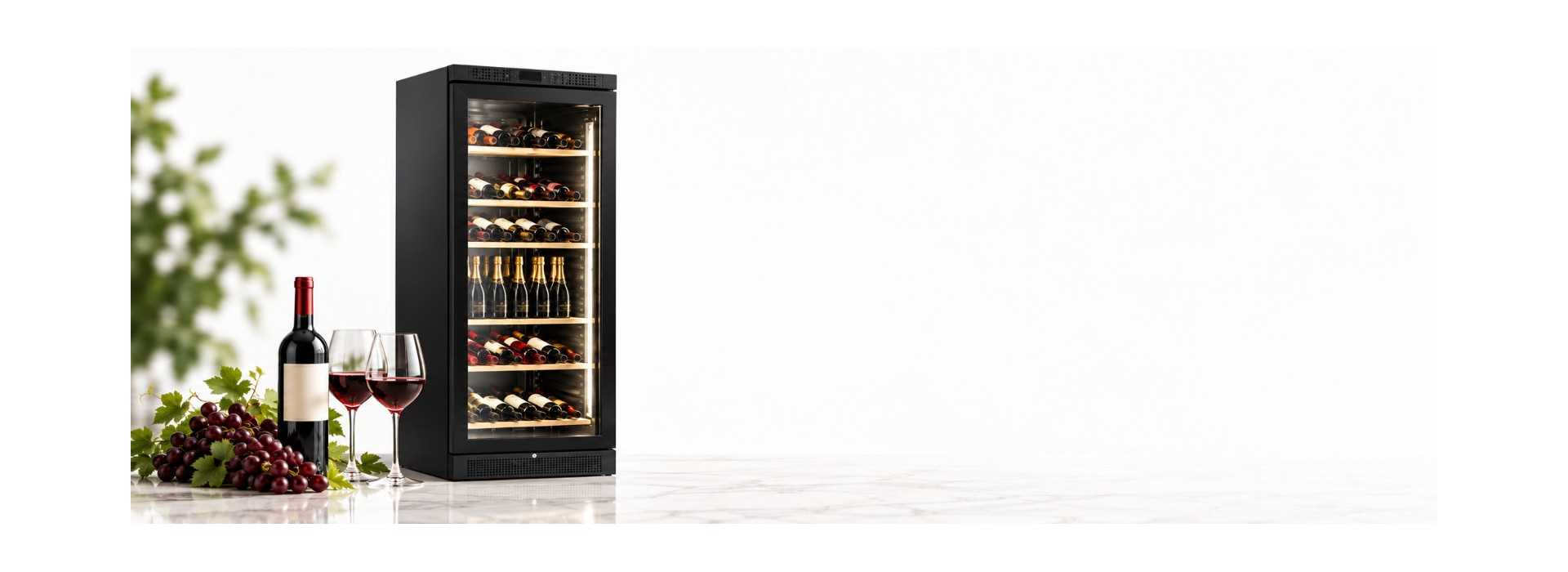
Professional wine cabinets and wine coolers can provide controlled conditions according to the specifications of the appliance while helping staff organise bottles and improve service efficiency.
Wine storage is not simply refrigeration
One common mistake is to treat wine like any other beverage that needs to be kept cold.
Temperature, stability, light and other factors can all be relevant to wine management.
Dedicated wine equipment is therefore designed for a different purpose from an ordinary refrigerator used for other products.
Before purchasing, determine whether the main objective is:
- storage;
- maturation, where applicable;
- preparation for service;
- bottle display.
Not every wine cabinet is designed for exactly the same purpose.
What is a professional wine cabinet?
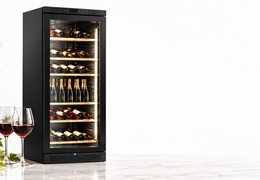
It is equipment designed to hold wine bottles under controlled conditions according to the specifications of the model.
Configurations may differ in:
- capacity;
- number of temperature zones;
- temperature range;
- door type;
- shelving;
- dimensions;
- installation requirements;
- control systems.
Technical specifications should therefore matter more than appearance alone.
Single-zone or multi-zone?
This is one of the main decisions.
Single-zone wine cabinet
It manages one zone according to the characteristics of the model.
It can be suitable when the appliance has one principal function or product category.
Multi-zone wine cabinet
It offers differentiated zones or temperature management according to the machine's design.
This can provide greater flexibility when different wine styles need to be organised for service.
Always verify how the zones actually operate on the chosen model.
Red, white and sparkling wines
A restaurant may simultaneously offer:
🍷 red wine
🥂 sparkling wine
🍾 Champagne or traditional-method sparkling wine
🍇 white wine
🌸 rosé
🍯 dessert wine
Managing this variety requires organisation.
A large wine list should not result in bottles being randomly distributed between storerooms, counters and refrigerators.
Dedicated equipment can support a more structured system.
Storage and serving temperature are different concepts
This distinction is important.
Managing a bottle over time and bringing it to the desired condition for service are related but not necessarily identical requirements.
Before purchasing equipment, determine what role the cabinet will perform in the operation.
Bottle capacity requires interpretation
A cabinet may be advertised as holding a certain number of bottles.
Actual capacity can depend on:
- bottle format;
- arrangement;
- shelf design;
- wider bottles;
- internal configuration.
Burgundy bottles and sparkling-wine bottles, for example, may occupy different amounts of space from the standard bottle used for the manufacturer's capacity calculation.
Organising bottles for faster service
A well-organised cabinet helps both the wine and the staff.
Bottles may be arranged by:
- wine type;
- region;
- denomination;
- position on the wine list;
- sales frequency;
- price range.
The important point is that staff understand the system.
During a busy service, searching for bottles wastes valuable time.
Autumn menus and wine
Autumn changes the food customers order.
Porcini mushrooms, truffles, braised meats and roasts become more prominent.
This creates an opportunity to review wine pairings and build a selection that reflects the seasonal menu.
Chef Costantino's related recipe
For this theme, Chef Costantino proposes:
Beef Fillet with Red Wine, Porcini Mushrooms and Reduced Jus.
The combination of meat, mushrooms and red-wine sauce creates a structured autumn dish and provides a natural opportunity to develop the relationship between the kitchen and the wine list.
Wine cabinets as part of the interior
Modern restaurants often place wine cabinets in visible areas such as:
- dining rooms;
- bar areas;
- dedicated wine walls;
- reception or service areas.
In these situations, appearance becomes relevant alongside technical performance.
A well-presented bottle collection can help communicate the positioning of the restaurant.
Glass or solid doors?
The correct choice depends on the equipment and intended use.
Glass doors provide bottle visibility and may be particularly attractive for customer-facing installations.
Other configurations may be preferable for different applications.
Technical characteristics should always be evaluated rather than choosing solely on appearance.
Positioning and installation
A wine cabinet should not simply be placed wherever there is an empty space.
Check:
- dimensions;
- ventilation requirements;
- clearances;
- permitted ambient temperature;
- door opening;
- accessibility;
- electrical supply;
- manufacturer's installation instructions.
Correct operation also depends on correct installation.
Cleaning and routine management
Professional wine cabinets require routine care.
Keep clean:
- internal surfaces;
- shelves;
- seals;
- glass;
- handles;
- accessible areas identified by the manufacturer.
A cabinet installed in the dining room should also remain visually presentable.
Monitoring operation
Professional management means more than setting a temperature and forgetting the equipment.
The appliance should be checked periodically according to the business's operating procedures.
Potential problems should be identified before they can affect valuable stock.
How to choose a professional wine cabinet
Consider:
Function: what role will the cabinet perform?
Capacity: how many bottles genuinely need to be managed?
Bottle formats: does the wine list contain many different shapes?
Zones: is one zone sufficient or is differentiated management needed?
Dimensions: does the cabinet fit the intended area?
Installation: can ventilation and clearance requirements be met?
Display: will customers see the equipment?
Internal organisation: are the shelves suitable for the wine programme?
Common mistakes
Avoid:
- treating an ordinary refrigerator as a universal wine-storage solution;
- choosing solely by stated bottle capacity;
- ignoring different bottle formats;
- confusing storage with serving temperature;
- buying multi-zone equipment without a genuine need;
- ignoring installation requirements;
- filling the cabinet without an organisational system;
- failing to monitor operation;
- neglecting customer-facing glass;
- failing to relate capacity to actual wine-list turnover.
FAQ – Professional Wine Cabinets
What is a professional wine cabinet used for?
It is designed to organise and manage wine bottles under controlled conditions according to the appliance specifications.
Is it the same as an ordinary refrigerator?
No. Wine cabinets are designed specifically for wine-management applications according to their intended function.
What does multi-zone mean?
It refers to equipment that provides differentiated management across separate zones according to its design.
Can red and white wines be stored in the same cabinet?
This depends on the intended use and equipment configuration. Multi-zone models may provide additional flexibility.
Is stated bottle capacity always exact?
Capacity is based on the manufacturer's reference conditions and bottle format. Different bottle shapes can change actual capacity.
Can a wine cabinet be installed in the dining room?
Yes, where the model and installation conditions allow it. It can also function as a display element.
Conclusion
Professional wine management does not end with selecting labels.
Storage, organisation, temperature management, presentation and service are part of the same customer experience.
A professional wine cabinet should therefore be selected according to the wine list, stock turnover and the function it will perform.
👉 Discover professional wine cabinets available from Ristorazione-Refrigerazione and choose a solution suited to your hospitality business.
TAGS
professional wine cabinets, commercial wine cooler, restaurant wine cabinet, wine storage, wine temperature, multi zone wine cooler, single zone wine cooler, wine list, wine bar equipment, hotel equipment, restaurant equipment, wine service, HoReCa