Professional Bowl Cutters: Creams, Stuffings, Sauces and Consistent Food Preparation
When these products need to be prepared every day and in significant quantities, manual processing can become slow and difficult to standardise.
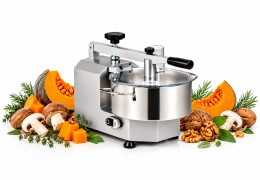
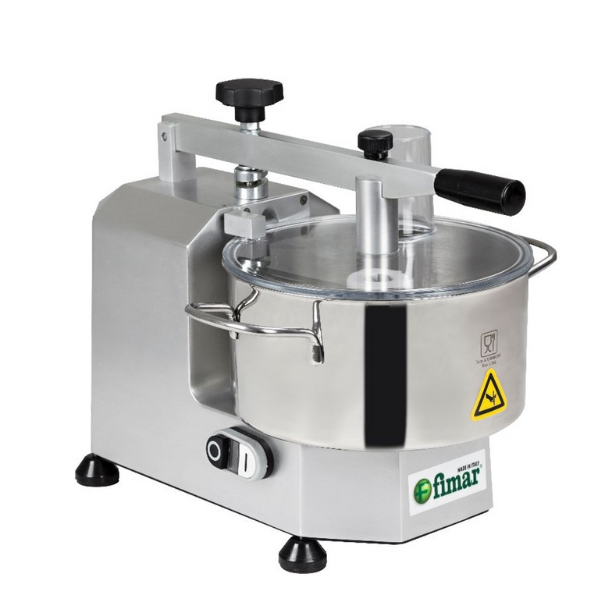
A professional bowl cutter is designed to chop, process and mix compatible foods according to the characteristics of the machine and its cutting system.
For restaurants, hotels, catering operations, delicatessens, canteens and food laboratories, it can become a valuable part of the preparation area.
What is a professional bowl cutter?
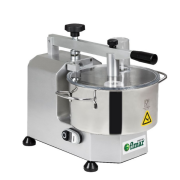
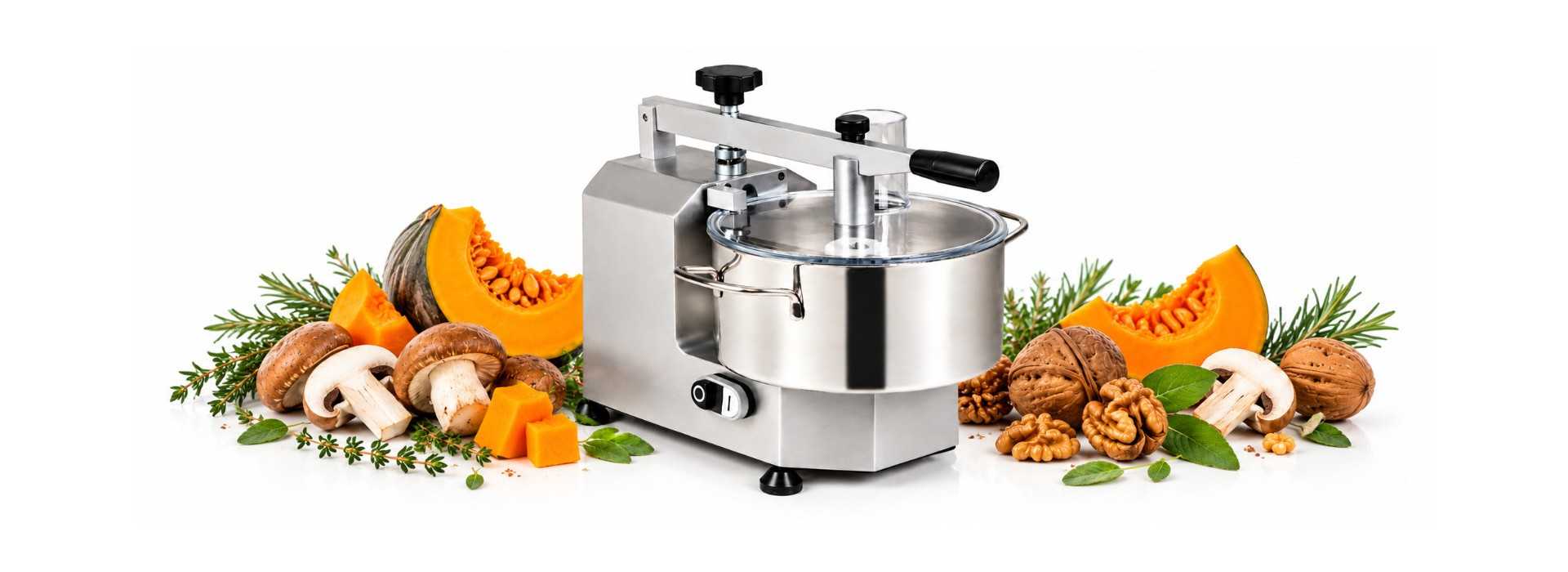
A bowl cutter generally consists of a bowl and a motor-driven blade system.
The rotating blades process the ingredients inside the bowl.
Depending on the model, it may be suitable for preparations such as:
- stuffings;
- fillings;
- creams;
- mixtures;
- sauces;
- chopped vegetables;
- herbs;
- certain meat preparations;
- gastronomic bases.
Product compatibility must always be checked against the manufacturer's specifications.
Bowl cutter vs vegetable preparation machine
These machines perform different functions.
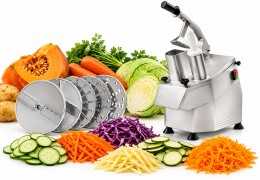
A vegetable preparation machine is primarily designed to produce defined cuts using discs and accessories.
A bowl cutter processes ingredients inside a bowl with rotating blades.
If the kitchen needs uniform vegetable slices, a vegetable cutter may be appropriate.
If it needs a stuffing, mixture or finely processed preparation, a bowl cutter may be more suitable.
Why use one in a professional kitchen?
Speed is only part of the benefit.
A professional kitchen also needs to reproduce recipes consistently.
A bowl cutter can help standardise:
- quantities;
- processing times;
- consistency;
- particle size;
- recipes.
The final result still depends on correct operation and a defined production procedure.
Processing time matters
The same ingredients can produce very different textures depending on processing time.
Professional recipes should therefore specify more than simply “process in the cutter.”
Where appropriate, record:
- ingredient quantity;
- preliminary preparation;
- blade system;
- speed;
- approximate processing time;
- desired final texture.
This makes the process more repeatable.
Bowl capacity
Capacity is one of the first specifications to consider.
A bowl that is too small may require too many batches.
An unnecessarily large bowl may not match normal production requirements.
Start with actual workflow:
average batch size × number of preparations × daily frequency.
Nominal bowl volume does not necessarily mean that every preparation can fill the bowl completely.
Always respect manufacturer load limits.
Autumn applications
Pumpkin can be used in:
- creams;
- stuffings;
- fillings;
- flan mixtures;
- sauces.
Mushrooms and herbs can also be processed, where appropriate, for:
- fillings;
- stuffings;
- duxelles;
- aromatic preparations;
- gastronomic mixtures.
Chef Costantino's related recipe
For this theme, Chef Costantino proposes:
Pumpkin Flan with Parmigiano Fondue and Toasted Hazelnuts.
The pumpkin is transformed into a smooth, consistent mixture for the flan.
Parmigiano fondue adds creaminess, while toasted hazelnuts introduce a contrasting texture.
The dish demonstrates why precise control of consistency can be important even in apparently simple preparations.
Standardising recipes
A production sheet can define:
- exact ingredient quantities;
- preliminary preparation;
- loading sequence;
- processing time;
- speed;
- required final texture.
The machine then becomes part of a controlled and repeatable process.
Product temperature
Mechanical processing may influence the temperature of some preparations.
The effect depends on ingredients, machine, speed and processing duration.
Where temperature is relevant to quality or food safety, it should be monitored according to the kitchen's procedures.
Blade safety
The blade assembly is both one of the machine's most important components and one of its principal hazards.
Never:
- bypass safety systems;
- open the machine while operating;
- insert utensils while blades are moving;
- operate with incorrectly installed components.
Blade removal, handling and cleaning must follow the manufacturer's instructions.
Cleaning and hygiene
Before purchasing, evaluate how easily the equipment can be cleaned.
Consider:
- bowl removal, where applicable;
- blade removal;
- removable components;
- specified washing procedures;
- parts that must not be immersed.
When one machine is used for several recipes, hygiene between batches becomes particularly important.
Allergen management
If a cutter is used for a preparation containing nuts and then for another recipe, potential cross-contact must be managed.
The same applies to ingredients such as:
- dairy products;
- eggs;
- gluten-containing ingredients;
- nuts;
- other allergens.
Visible removal of food residue is not automatically equivalent to an appropriate cleaning procedure.
Workspace
The machine footprint is only part of the space requirement.
The operator must also be able to:
- load ingredients;
- open the lid;
- remove the finished product;
- dismantle components;
- clean;
- work safely.
How to choose a professional bowl cutter
Consider:
Preparations: what does the kitchen actually need to produce?
Batch size: how much is normally processed at once?
Capacity: does the bowl match production requirements?
Speed: what settings are available?
Blade system: is it appropriate for the intended applications?
Electrical requirements: check voltage and power.
Cleaning: how easily can bowl and tools be managed?
Safety: evaluate the manufacturer's protection systems.
Common mistakes
Avoid:
- purchasing without defining intended preparations;
- confusing a cutter with a vegetable slicer or blender;
- selecting excessive capacity;
- overloading the bowl;
- over-processing ingredients;
- always using maximum speed;
- failing to standardise quantities and processing time;
- ignoring product temperature;
- handling blades carelessly;
- failing to manage allergens and cross-contact.
FAQ – Professional Bowl Cutters
What is a professional bowl cutter used for?
It chops, processes and mixes compatible foods inside a bowl using a rotating blade system.
Is it the same as a vegetable cutter?
No. They are designed for different types of food preparation.
Can it make fillings and stuffings?
Yes, where the model is designed for those preparations.
Can it produce creams?
This depends on the recipe and equipment. A bowl cutter should not automatically be considered equivalent to a blender.
How should capacity be selected?
According to the average batch size actually processed.
Can the bowl always be filled completely?
Not necessarily. Manufacturer load limits and operating instructions must be respected.
Is temperature important?
For some preparations, yes. Processing can affect temperature and this may matter for product quality or food safety.
Conclusion
A professional bowl cutter can become one of the most versatile pieces of equipment in the preparation area.
Stuffings, fillings, creams, sauces and gastronomic bases can be produced through more consistent and repeatable procedures.
The real benefit is not simply faster chopping, but greater control through defined quantities, processing times and production methods.
👉 Discover professional bowl cutters available from Ristorazione-Refrigerazione and choose equipment suited to your kitchen.
TAGS
professional bowl cutter, commercial food cutter, restaurant bowl cutter, food processing equipment, professional food preparation, stuffings, fillings, sauces, pumpkin preparation, autumn menu, commercial kitchen equipment, restaurant equipment, catering equipment, HoReCa