Crushed Ice: How It Is Produced, Where It Is Used and Which Equipment to Choose
Ice is essential for many professional businesses, but not all types of ice have the same characteristics.
Crushed ice is generally obtained by mechanically breaking already formed ice into small, irregular pieces.
Its ability to adapt easily to the shape of glasses and containers makes it particularly popular in cocktail bars, hotels, buffets, restaurants and many other foodservice businesses.
However, choosing the right professional equipment requires understanding the differences between crushed ice, granular ice and flake ice, estimating daily consumption and determining whether an ice crusher or an automatic ice maker is the better solution.
What Is Crushed Ice?
Crushed ice consists of irregular pieces obtained by mechanically crushing ice cubes or other compatible forms of ice.
The size of the fragments can vary depending on the crushing system used.
Compared with whole ice cubes, crushed ice has a larger surface area and therefore tends to cool drinks and products quickly.
At the same time, the greater exposed surface area also causes it to melt faster.
For this reason, crushed ice must be produced, stored and used correctly according to the intended application.
Crushed Ice, Granular Ice and Flake Ice: What Are the Differences?
These three types of ice are often confused, but they have different characteristics.
Crushed Ice
Crushed ice is produced by mechanically breaking already formed ice.
It has an irregular structure and is widely used for cocktails, beverages and visually appealing presentations.
Granular Ice
Granular ice is produced directly by specific commercial ice makers.
It generally has a softer, more compact consistency than traditional crushed ice and is used in various beverage, foodservice and temporary food preservation applications.
Flake Ice
Flake ice consists of thin pieces of ice produced directly by specialised machines.
Its ability to conform closely to product surfaces makes it particularly suitable for professional applications requiring an even distribution of cooling.
These applications include food processing and the display of fresh products.
How Is Crushed Ice Produced?
There are two main production methods.
Crushing Previously Produced Ice
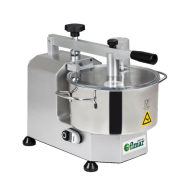
The first method involves using a commercial ice crusher.
Ice cubes are placed inside the machine and rapidly reduced to smaller fragments.
This solution is particularly suitable for:
- cocktail bars;
- pubs;
- restaurants;
- hotels;
- seasonal venues;
- businesses with variable consumption levels.
The main advantage is the ability to produce crushed ice only when required.
Using an Automatic Ice Maker
For businesses with high and continuous consumption, it may be more efficient to use an ice maker designed to produce granular ice or another type of ice suitable for the intended application.
This solution provides continuous production without requiring operators to manually crush large quantities of ice cubes.
Commercial Ice Crusher or Automatic Ice Maker?
The choice depends primarily on the required production volume.
A commercial ice crusher may be the most suitable solution when:
- crushed ice is required only during specific service periods;
- ice cubes are already available from an existing ice maker;
- available space is limited;
- daily consumption is relatively low.
An automatic ice maker may be preferable when:
- ice consumption is high;
- continuous production is required;
- ice is an essential component of the service;
- the business wants to reduce manual processing.
Before purchasing equipment, it is therefore essential to estimate actual daily ice requirements.
Main Professional Uses of Crushed Ice
Cocktail Bars and Beverage Service
The beverage sector is one of the best-known applications.
Crushed ice is used for cocktails, mocktails and many summer drinks.
Its consistency affects drink temperature, dilution and final presentation.
Hotels and Hospitality Businesses
Hotels may use crushed ice in bars, pool bars, rooftop venues, events and selected buffet services.
Properties with large numbers of guests should carefully calculate the required production capacity.
Restaurants and Catering
Restaurants and catering companies may use crushed ice for beverages, beverage stations and selected food presentations.
Its ability to adapt easily to different containers makes it particularly versatile during events and high-volume service periods.
Food Businesses and Seafood Applications
Ice may also be used in specific food businesses and seafood operations.
In these cases, selecting the correct type of ice is essential because crushed ice, granular ice and flake ice have different operational characteristics.
For the professional display of fresh seafood, businesses should also consider refrigerated equipment specifically designed for this purpose.
How to Calculate Ice Production Requirements
One of the most common mistakes is selecting equipment based only on the production capacity stated by the manufacturer.
Before purchasing, businesses should estimate their actual daily ice requirements.
Important factors include:
- average daily ice consumption;
- consumption during peak service periods;
- number of cocktails and beverages served;
- simultaneous uses of ice;
- seasonal variations;
- storage bin capacity;
- available installation space;
- ambient conditions and incoming water temperature when these factors affect the manufacturer's rated performance.
A seasonal cocktail bar may experience very high consumption peaks concentrated within a few hours, while a hotel may require more consistent availability throughout the day.
For this reason, nominal daily production capacity should not be the only selection criterion.
Hourly Production, Daily Production and Storage Capacity
Machine production capacity and the quantity of ice immediately available for service are two different factors.
A machine may produce a specified quantity of ice over 24 hours, while the business may require large quantities within much shorter service periods.
It is therefore important to evaluate:
- production capacity;
- production speed;
- storage capacity;
- peak consumption;
- ice stock recovery time.
Correct sizing helps prevent ice shortages during service while avoiding the purchase of unnecessarily oversized equipment.
Storing Crushed Ice
Once produced, ice must be stored correctly until use.
The storage bin must be suitable for food contact, easy to clean and protected from potential contamination.
It is important to avoid:
- direct contact with hands;
- unsuitable storage containers;
- food residues inside the storage bin;
- placing bottles or other objects inside ice intended for consumption;
- storing crushed ice for excessive periods before service.
Crushed ice has a greater exposed surface area than whole cubes and therefore tends to melt faster.
Whenever operationally possible, it should be produced as close as possible to the time of service.
Hygiene and HACCP
Ice intended for consumption or contact with food must be managed as a food product.
A proper HACCP procedure should include:
- use of water that meets applicable requirements for food use;
- regular cleaning and sanitisation of surfaces that come into contact with ice;
- maintenance of ice makers and ice crushers;
- inspection and cleaning of storage bins;
- use of dedicated ice scoops;
- hygienic handling during service;
- compliance with the manufacturer's cleaning and maintenance instructions.
Filters, water circuits and internal components should also be inspected according to the equipment maintenance schedule.
Cleaning a Commercial Ice Crusher
Residues, moisture and continuous use can compromise equipment hygiene if cleaning is neglected.
It is important to:
- disconnect the machine before carrying out cleaning operations required by the manufacturer's manual;
- remove any remaining ice;
- clean accessible parts according to the manufacturer's instructions;
- use cleaning products compatible with the machine's materials;
- dry surfaces properly when required;
- periodically inspect components subject to wear.
The frequency of cleaning operations should be determined according to the intensity of use and the manufacturer's instructions.
The Most Common Mistakes
Confusing Crushed Ice, Granular Ice and Flake Ice
Not all types of ice are interchangeable.
Choosing equipment without first evaluating the required final ice characteristics may result in purchasing a machine that is unsuitable for the intended service.
Considering Only 24-Hour Production Capacity
Daily production capacity does not necessarily indicate how much ice will be available during peak service periods.
Storage capacity, production speed and peak consumption should also be evaluated.
Using an Undersized Commercial Ice Crusher
Equipment with insufficient capacity can slow down service and force operators to work continuously to replenish ice supplies.
Producing Too Much Crushed Ice in Advance
Crushed ice tends to melt and compact more quickly than whole ice cubes.
Producing excessive quantities too far in advance may compromise texture and operational quality.
Neglecting Water Quality
Water characteristics affect hygiene, ice quality and equipment operation.
When necessary, businesses should evaluate water treatment systems compatible with local water conditions and the equipment manufacturer's instructions.
Neglecting Cleaning and Maintenance
Insufficient maintenance may compromise hygiene, reduce equipment performance and increase the risk of breakdowns.
How to Choose the Right Equipment
Before purchasing, it is advisable to evaluate:
- the type of ice actually required;
- average daily consumption;
- consumption during peak periods;
- availability of an existing cube ice maker;
- need for continuous production;
- storage capacity;
- available installation space;
- electrical supply and installation requirements;
- ease of cleaning;
- maintenance requirements;
- availability of technical support and spare parts.
For businesses with occasional consumption, a commercial ice crusher may be sufficient.
For high-volume and continuous applications, an automatic machine designed to produce the required type of ice may be a more suitable solution.
Frequently Asked Questions (FAQ)
Are Crushed Ice and Granular Ice the Same Thing?
No.
Crushed ice is generally produced by mechanically breaking already formed ice.
Granular ice is produced directly by specific ice makers and has different characteristics in terms of texture and intended applications.
Is It Better to Buy a Commercial Ice Crusher or an Automatic Ice Maker?
It depends on consumption volume and service organisation.
A commercial ice crusher is suitable for businesses that already have ice cubes available and require variable quantities of crushed ice.
An automatic ice maker is more suitable when high and continuous production of a specific type of ice is required.
How Much Ice Does a Cocktail Bar Need?
There is no single quantity that applies to every business.
Requirements depend on the number of drinks served, the recipes offered, the amount of ice used per drink, peak service periods and any additional applications.
It is advisable to calculate consumption during the busiest operating days and include an appropriate operational margin.
Can Crushed Ice Be Prepared in Advance?
Yes, but only for limited periods and with proper handling.
Because crushed ice tends to melt and compact quickly, it is preferable to produce it close to the time of service.
Is Ice Subject to HACCP Procedures?
Yes.
Ice intended for consumption or contact with food must be produced, stored and handled according to proper hygiene procedures and should be included in the business's food safety management system.
Does Water Quality Affect Ice Maker Performance?
Yes.
Water characteristics can affect scale formation, maintenance requirements and equipment performance.
It is important to follow the manufacturer's instructions and, when necessary, evaluate a suitable water treatment system.
Conclusion
Crushed ice is an important operational resource for cocktail bars, hotels, restaurants, catering companies and many other professional businesses.
To ensure efficient service, it is essential to distinguish correctly between crushed ice, granular ice and flake ice, calculate actual requirements and choose equipment according to production volumes.
A commercial ice crusher is a practical solution for businesses that already have ice cubes available and need to produce crushed ice during service.
When demand is high and continuous, it may be more appropriate to evaluate an ice maker designed to produce the required type of ice directly.
The right equipment choice, combined with proper cleaning, maintenance and HACCP procedures, improves service efficiency and supports professional ice management.
If you are looking for a commercial ice crusher, a professional ice maker or a solution suited to the needs of your cocktail bar, hotel, restaurant or Ho.Re.Ca. business, our team is available to help you choose the right equipment.
📞 +39 0824 1816643
📱 WhatsApp +39 389 7940545
Explore the professional solutions for ice production and processing available at Ristorazione-Refrigerazione.it and choose the equipment that best matches your operational requirements and production volumes.