Common Mistakes in Using Blast Chillers in Professional Kitchens ❄️👨🍳
Blast chillers are essential tools for food safety and efficient kitchen organization. However, many restaurateurs make mistakes that reduce the effectiveness of chilling and put food quality and preservation at risk. Companies specializing in professional equipment sales, such as ristorazione-refrigerazione, often aim to raise awareness about these bad habits.
Let's analyze the main mistakes to avoid and the best practices to adopt.
⚠️ 1. Overloading the Blast Chiller with Food that is Too Hot or Excessive Amounts
One of the most common mistakes is filling the blast chiller without leaving enough space between trays. Cold air needs to circulate freely, and if food is loaded in bulk or packed tightly, the chilling process becomes uneven.
Additionally, inserting large portions without dividing them into smaller portions slows down the process and may not reach the required temperatures according to health regulations.
🌡️ 2. Not Selecting the Correct Program (Positive or Negative Chilling)
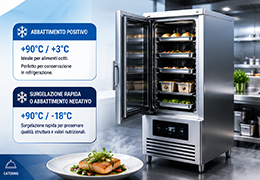
Many restaurateurs use a generic program without considering whether the food requires positive (+3°C) or negative (-18°C) chilling. Each food item has specific needs:
-
Raw fish
-
Sauces
-
Creams
-
Freshly cooked meat
-
Pastry products
Using the wrong program compromises quality, texture, and safety.
🕒 3. Opening the Door During the Cycle
A common habit is checking the chilling process by "eye," opening the door multiple times. This causes the cold air to escape, forcing the machine to exert more effort, extending the time and increasing energy consumption.
The blast chiller is designed to work with the door closed: relying on the automatic cycle is the best choice.
🧼 4. Neglecting Cleaning and Maintenance
Poor hygiene in the blast chiller can lead to contamination, bad odors, ice build-up, or condensation. It is essential to clean it daily following the manufacturer's recommended procedures and perform regular maintenance to avoid performance decline.
Even ice accumulation on temperature probes or fans can affect the effectiveness of the equipment.
📊 5. Not Monitoring Temperatures or Recording Cycles
In many restaurants, blast chiller temperatures, cycle times, and outcomes are not recorded, which poses risks both for food safety and potential inspections.
Using registration tables or taking advantage of the blast chiller’s digital functions ensures traceability and compliance with HACCP regulations.
🧊 6. Storing Food Without Pre-cooling
For extremely hot preparations, such as sauces or broths, it is a good practice to slightly lower the temperature before placing them in the blast chiller, using shallow, portioned containers.
Skipping this step makes the blast chiller work excessively, resulting in uneven cooling.
🥘 7. Using Inappropriate Containers
Avoid containers that are too deep or made of materials that don’t conduct cold effectively.
Using shallow gastronorm trays allows for faster and more precise chilling. Additionally, covering food during the cycle is a mistake: the cover hinders proper heat exchange.
🧩 8. Not Fully Utilizing the Blast Chiller’s Capabilities
Many restaurateurs fail to use the blast chiller for all its possible functions:
-
Regeneration
-
Rapid freezing
-
Chocolate crystallization
-
Fresh or semi-frozen food management
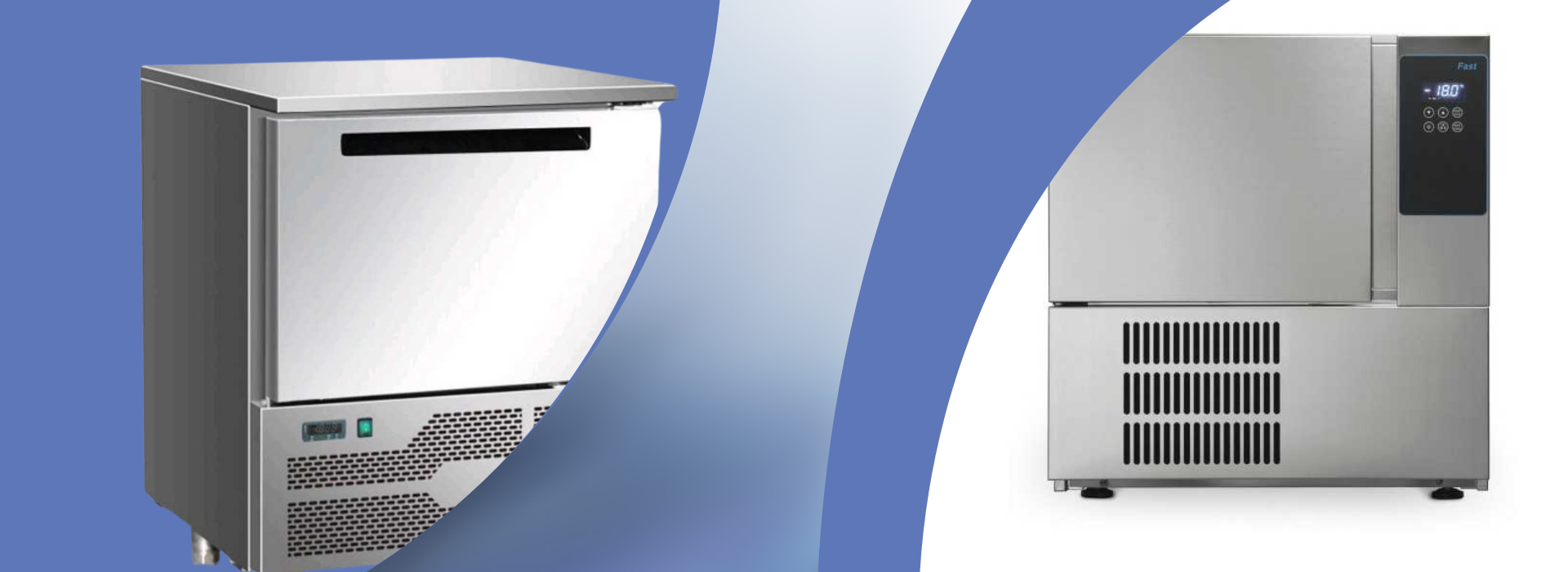
A blast chiller, especially models ranging from 3 to 20 trays like those offered by ristorazione-refrigerazione, is a versatile investment that can improve production, quality, and workflow organization.
🔧 How to Avoid These Mistakes and Maximize Your Blast Chiller
To get the most out of your equipment, it is important to:
-
Train your staff
-
Read the manufacturer’s instructions
-
Program cycles suitable for different types of food
-
Keep the blast chiller clean and efficient
Correct usage improves product quality, reduces waste, optimizes preparation times, and guarantees food safety.
Selecting the Right Blast Chiller
Choosing a blast chiller suited to your needs — like those available at ristorazione-refrigerazione in various professional formats — allows for more efficient operations, ensuring optimal temperature management and safe food preservation, while simultaneously improving productivity and overall kitchen quality.
Conclusion:
The blast chiller is one of the most powerful tools in a professional kitchen, but only when used correctly. Avoiding these common mistakes will not only help preserve food quality and safety but also optimize costs and time. Training, maintenance, and attention to detail are key to fully benefiting from this essential tool.