Refrigerated Pastry Display Cases: Professional Display and Storage for Desserts
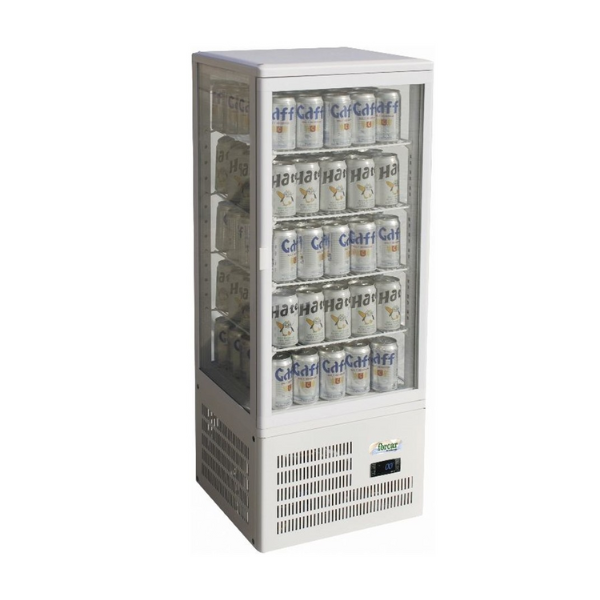
Refrigerated pastry display cases are professional appliances designed to display cakes, individual desserts, plated sweets and fresh pastry products while maintaining the storage conditions required by each preparation.
In pastry shops, cafés, bakeries, hotels and Ho.Re.Ca. businesses, the display case serves simultaneously as refrigeration equipment, a furnishing element and one of the main points of contact between the product and the customer.
Proper display helps enhance colours, shapes and decorations, improve product visibility and organise service more efficiently.
However, choosing the right model requires evaluating product types, required temperature, refrigeration system, display capacity, dimensions, operator access and the organisation of the premises.
Professional Display Cases for Pastry Shops, Cafés and Bakeries
Display requirements can vary significantly depending on the type of business.
A pastry shop with a wide production of cakes and individual desserts requires a different display capacity from a café offering a limited selection of desserts.
Professional refrigerated display cases can be used in:
- artisan pastry shops;
- cafés and coffee shops;
- bakeries;
- gelato shops offering pastry products;
- bistros;
- restaurants;
- hotels;
- tea rooms;
- catering businesses with retail outlets;
- dedicated dessert departments in food retail businesses.
Before purchasing, it is therefore important to define the quantity, dimensions and types of products that will be displayed.
Why Choose a Professional Refrigerated Display Case?
A professional display case must provide performance suitable for the intensity of use of the business.
Throughout the day, operator-side openings, product loading, lighting, ambient temperature and equipment positioning can affect operating conditions.
A correctly sized solution can help:
- maintain products under the required storage conditions;
- improve display organisation;
- enhance the visual presentation of cakes and desserts;
- facilitate operator service;
- make better use of available space;
- improve the professional appearance of the retail area.
Which Products Can Be Displayed?
Refrigerated pastry display cases can be used for many different preparations, provided that the required storage temperatures are compatible with the technical specifications of the equipment.
Common products include:
- modern cakes;
- cheesecakes;
- individual desserts;
- spoon desserts;
- mousses;
- frozen or semi-frozen desserts compatible with the display case temperature range;
- tarts with perishable fillings;
- cream-based pastries;
- preparations containing pastry creams;
- fruit desserts;
- fresh pastry products.
Not all products require the same storage conditions.
For this reason, before purchasing it is necessary to verify the operating temperature range of the equipment and compare it with the actual requirements of the products.
Operating Temperature
Temperature is one of the main selection criteria.
A refrigerated display case should be selected according to the products that will be stored and displayed.
There is no single ideal temperature for all pastry products.
Ingredients, product structure, display duration and the procedures defined by the business's HACCP plan may require different operating conditions.
Before purchasing, it is therefore advisable to evaluate:
- manufacturer-declared temperature range;
- types of desserts displayed;
- frequency of door openings;
- ambient temperature;
- quantity of products loaded;
- product organisation and rotation procedures.
Ventilated or Static Refrigeration?
The refrigeration system affects temperature distribution inside the display case.
Ventilated Refrigeration
Ventilated refrigeration uses forced air circulation to promote more uniform temperature distribution.
It may be suitable for businesses with products displayed on multiple levels and high product turnover.
Products should be arranged correctly to avoid obstructing the airflow paths specified by the manufacturer.
Static Refrigeration
Static refrigeration uses the natural circulation of cold air inside the equipment.
It may provide less uniform temperature distribution than a ventilated system and requires careful management of product loading and arrangement.
The choice between the two systems should be based on the characteristics of the products and the type of service.
Display Capacity and Number of Shelves
A large display surface is not always the best solution.
A display case should be sized according to actual production and product turnover.
It is advisable to evaluate:
- length and depth of the display surface;
- number of shelves;
- usable height between levels;
- dimensions of cakes and individual desserts;
- quantity of products displayed at the same time;
- frequency of restocking;
- accessibility from the operator side.
A model that is too small may force operators to overload the display.
An oversized display case may occupy valuable commercial space without providing a real operational advantage.
Product Visibility and Glass Surfaces
Visibility is a fundamental factor in the sale of pastry products.
Large glass surfaces and proper internal organisation allow customers to see colours, decorations and product shapes more clearly.
Before purchasing, it is useful to evaluate:
- front glass surface;
- side visibility;
- shelf height;
- structural elements that may limit visibility;
- ease of cleaning the glass;
- condensation formation and management according to the characteristics of the model.
The display case should provide customers with an immediate and orderly view of the product range.
Display Case Lighting
Lighting contributes to product presentation.
A well-designed system should enhance cakes and desserts without compromising the operating conditions of the equipment.
Important factors include:
- uniformity of lighting;
- position of light sources;
- colour rendering;
- presence of shadow areas;
- ease of lighting system maintenance.
LED lighting is frequently used in modern professional equipment due to its efficiency and integration possibilities within display areas.
Accessibility and Service Speed
The display case must be designed not only for customers but also for operators.
During peak service periods, rapid access to products can affect service speed.
It is advisable to evaluate:
- rear opening system;
- door dimensions;
- sliding mechanisms and accessibility;
- ease of product removal;
- ergonomics of the working area;
- available space behind the display case.
Equipment correctly integrated into the business workflow can reduce unnecessary movement and improve service organisation.
Display Case Dimensions and Positioning
Before purchasing, it is essential to verify the actual space available on the premises.
The external dimensions of the equipment are only one of the factors to consider.
It is advisable to evaluate:
- width, depth and height of the display case;
- space required for opening doors or panels;
- working area available for operators;
- service routes and movement paths;
- access for cleaning and maintenance;
- space required for ventilation and proper heat dissipation;
- delivery access and equipment handling requirements.
A correctly sized display case should integrate into the layout without obstructing service or compromising the installation conditions specified by the manufacturer.
Climate Class and Environmental Conditions
The performance of a refrigerated display case also depends on the conditions of the environment in which it is installed.
Room temperature and humidity can affect equipment operation.
Before purchasing, it is important to verify the climate class declared by the manufacturer and ensure that it is compatible with the expected operating conditions.
Particular attention should be paid when the display case is installed:
- near frequently opened doors;
- in very warm environments;
- in premises with high humidity;
- near ovens or other heat sources;
- in areas exposed to direct sunlight;
- in locations with insufficient ventilation.
Incorrect positioning can increase the workload of the refrigeration system and compromise performance.
Product Organisation Inside the Display Case
Product arrangement affects both presentation and proper equipment operation.
Shelves should not be overloaded, and cakes or desserts should not be positioned in ways that obstruct the airflow paths specified by the manufacturer.
Good organisation should consider:
- product type;
- dimensions of preparations;
- sales frequency;
- stock rotation;
- visibility from the customer side;
- accessibility from the operator side;
- distance from air supply and return points, where applicable.
The most frequently requested products should be easily accessible without compromising display order.
Cleaning and Hygiene
Cakes, mousses, cheesecakes, fruit desserts and preparations containing cream or pastry fillings require careful hygiene management.
The display case should be included in the business's cleaning and maintenance plan.
It is important to:
- regularly remove food residues and crumbs;
- clean shelves and internal surfaces;
- keep glass panels and doors clean;
- inspect seals and hard-to-reach areas;
- use cleaning products compatible with equipment materials;
- prevent standing water;
- follow the manufacturer's cleaning and sanitising instructions.
When internal components are removable, the possibility of taking them out can make cleaning operations easier.
Condensation Management
Condensation can be caused by several factors, including ambient humidity, frequency of door openings, temperature differences and installation conditions.
To reduce operational problems, it is important to:
- comply with the environmental conditions specified by the manufacturer;
- avoid unnecessarily prolonged door openings;
- check the condition of door seals;
- avoid loading hot products unless permitted by the equipment specifications;
- periodically inspect drainage and water discharge systems;
- carry out scheduled maintenance.
Recurring or abnormal condensation should be inspected by qualified technical personnel.
Routine Maintenance
Regular maintenance helps maintain adequate performance and reduce the risk of equipment downtime.
Maintenance operations may include:
- cleaning the condenser according to the manufacturer's instructions;
- checking door seals;
- verifying proper fan operation;
- monitoring temperatures;
- cleaning drainage systems;
- inspecting the lighting system;
- checking doors and opening mechanisms;
- carrying out a general inspection of the equipment.
Maintenance frequency should be determined according to the intensity of use and the manufacturer's instructions.
Energy Consumption
A refrigerated display case may operate for many hours every day.
For this reason, energy consumption is an important factor when evaluating the total cost of ownership.
Before purchasing, it is advisable to compare:
- declared energy consumption;
- dimensions and refrigerated volume;
- refrigeration system;
- insulation quality;
- characteristics of glass surfaces;
- lighting systems;
- defrosting method;
- expected operating conditions.
The model with the lowest purchase price is not necessarily the most economical solution over the long term.
Design and Integration into the Premises
The display case is one of the most visible elements inside a pastry shop or café.
Design, materials and finishes should integrate with the identity of the premises without compromising functionality and maintenance.
It is useful to consider:
- style of the retail area;
- colours and materials used in the interior design;
- service counter height;
- visibility from the entrance area;
- continuity with the bar counter or other equipment;
- availability of modular configurations, where offered.
Design should support product sales rather than reduce operational efficiency.
The Most Common Selection Mistakes
Choosing Based Only on Price
Initial cost is important, but it should be evaluated together with performance, energy consumption, reliability, maintenance requirements and technical support.
Failing to Check the Temperature Range
A display case must be compatible with the actual storage requirements of the products being displayed.
Purchasing a Display Case That Is Too Small
Undersized equipment may lead to overloaded shelves and poor display organisation.
Purchasing an Excessively Large Display Case
Unused capacity occupies valuable commercial space and may create unnecessary purchase and operating costs.
Ignoring Climate Class
Installing equipment under environmental conditions different from those specified by the manufacturer may compromise performance.
Neglecting Operator Workflow
A display case that is difficult to restock, clean or use during service may slow down daily operations.
Evaluating Design Alone
Appearance is important, but it should not replace the evaluation of refrigeration performance, capacity, ergonomics and maintenance requirements.
How to Choose a Refrigerated Pastry Display Case
Before purchasing, it is advisable to define:
- types of products to be displayed;
- required storage temperatures;
- average quantity of products displayed;
- dimensions of cakes and individual desserts;
- daily product turnover;
- available space;
- environmental conditions of the premises;
- refrigeration system;
- number and arrangement of shelves;
- product visibility;
- lighting system;
- operator-side accessibility;
- ease of cleaning;
- energy consumption;
- technical support;
- spare parts availability.
Comparing models according to actual operational requirements allows businesses to make a more informed purchasing decision.
Frequently Asked Questions (FAQ)
What Temperature Should a Pastry Display Case Maintain?
There is no single temperature suitable for all pastry products.
The operating temperature should be selected according to the products displayed, ingredient characteristics, the business's HACCP procedures and the equipment manufacturer's instructions.
Is Ventilated or Static Refrigeration Better?
It depends on the products displayed and the organisation of the service.
Ventilated refrigeration promotes more uniform temperature distribution, while static refrigeration has different operating characteristics.
The technical specifications of the model and the requirements of the products should be evaluated.
Can Cakes, Individual Desserts and Other Pastries Be Displayed in the Same Case?
Yes, provided that the products require compatible storage conditions and the equipment can maintain the necessary temperature range.
How Large Should a Pastry Display Case Be?
The size should be determined according to the actual quantity of products displayed, daily turnover, available space and service organisation.
Where Should a Refrigerated Pastry Display Case Be Positioned?
In an area visible to customers, easily accessible to operators and compatible with the installation conditions specified by the manufacturer.
Heat sources, direct sunlight and locations that restrict equipment ventilation should be avoided.
How Often Should the Display Case Be Cleaned?
Cleaning frequency depends on the intensity of use and the business's food safety management plan.
Visible dirt and food residues should be removed regularly, while deeper cleaning operations should follow a defined schedule and the manufacturer's instructions.
What Should Be Checked Before Purchasing?
Temperature range, dimensions, display capacity, refrigeration system, climate class, energy consumption, ease of cleaning, installation requirements, technical support and spare parts availability.
Conclusion
Refrigerated pastry display cases play a central role in the storage, presentation and sale of cakes, individual desserts and fresh pastry products.
Choosing the correct model means evaluating refrigeration requirements, display capacity, environmental conditions, service organisation, ease of cleaning, energy consumption and design.
A properly sized display case that is correctly integrated into the business workflow can enhance product presentation, improve operator efficiency and provide customers with a more organised and professional display.
Are you looking for a professional refrigerated display case for a pastry shop, café, bakery or hotel?
Compare the models available on Ristorazione-Refrigerazione.it by evaluating dimensions, display capacity, operating temperature range and technical specifications.
For support in choosing the equipment that best matches your business requirements:
📞 +39 0824 1816643
📱 WhatsApp +39 389 7940545
Explore the Refrigerated Pastry Display Cases category and choose the solution that best matches your operational requirements, available space and product range.