PROFESSIONAL VEGETABLE WASHERS: How to Improve Vegetable Washing in a Commercial Kitchen
Washing vegetables is one of the most important steps in food preparation. In restaurants, hotels, cafeterias, delicatessens and catering services, this task must be carried out carefully, consistently and efficiently to ensure a smooth workflow.
As production volumes increase, manual washing can become time-consuming and slow down the entire kitchen operation. Professional vegetable washers are designed to simplify this stage, allowing chefs to process leafy greens, vegetables and fresh herbs in a more practical and organized way.
The goal is not only to speed up preparation but also to create a more efficient workflow, reducing downtime and improving the productivity of the kitchen staff.
Why Proper Vegetable Washing Matters
Fresh vegetables may contain soil, sand and other impurities that must be removed before food preparation.
In professional kitchens this process is repeated several times throughout the day and often involves large quantities of produce. If it is not properly organized, it can slow down subsequent preparation stages and unnecessarily occupy staff and workspace.
Poor organization may result in:
- longer preparation times;
- sinks occupied for extended periods;
- accumulation of crates and containers;
- delays during service;
- reduced efficiency in the preparation area.
A well-planned workflow helps maintain continuous production and better organization throughout the kitchen.
How a Professional Vegetable Washer Works
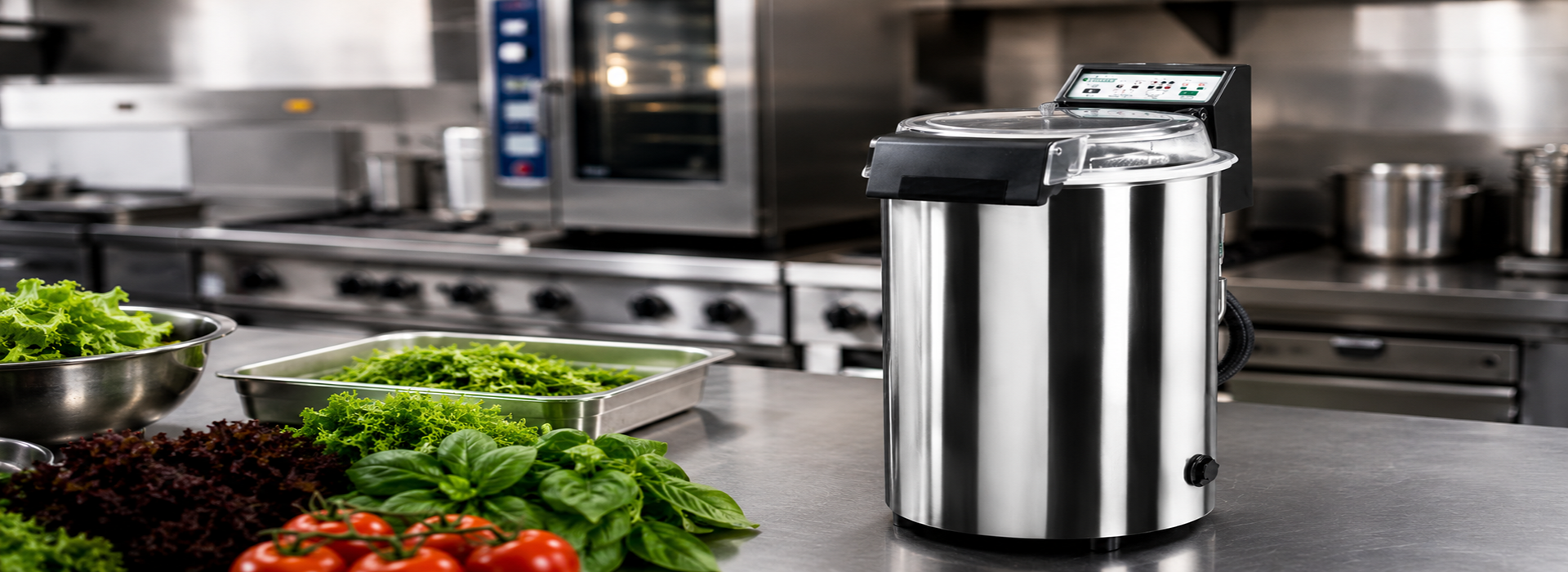
A professional vegetable washer is designed to clean vegetables inside a dedicated washing tank. Water movement helps remove soil and other impurities from the surface of the produce.
Operation varies depending on the model, but a typical washing cycle includes:
- selecting the vegetables;
- removing damaged or unwanted parts;
- loading the vegetables into the machine;
- starting the washing cycle;
- draining the water;
- unloading the vegetables;
- allowing them to drain or dry if required.
The operator remains responsible for checking the quality of the vegetables before and after washing.
What Can Be Washed?
Professional vegetable washers are suitable for cleaning a wide variety of fresh vegetables.
Common products include:
- lettuce;
- mixed salad leaves;
- arugula;
- spinach;
- chard;
- cabbage;
- celery;
- fennel;
- zucchini;
- peppers;
- cucumbers;
- tomatoes;
- carrots;
- potatoes;
- parsley;
- basil;
- mint;
- other fresh herbs.
Always follow the manufacturer's recommendations regarding the intended use of the machine.
Benefits of Using a Professional Vegetable Washer
Introducing a professional vegetable washer helps improve the organization of the preparation area, especially in kitchens that process large quantities of vegetables every day.
Key benefits include:
- reducing manual washing time;
- improving workflow organization;
- maintaining a steady pace during service;
- handling large volumes of produce;
- reducing sink occupancy;
- minimizing repetitive manual tasks;
- standardizing washing procedures.
For restaurants, hotels, cafeterias and catering companies, it is an effective solution for improving daily productivity.
When Is a Professional Vegetable Washer Worth It?
Not every food business has the same production requirements. A professional vegetable washer becomes particularly useful when manual washing begins to consume a significant amount of working time.
Restaurants with high customer turnover, hotels, cafeterias, delicatessens and catering companies often need to prepare large quantities of vegetables within tight schedules. In these situations, organizing the washing stage properly helps improve the overall efficiency of the kitchen.
It is also particularly beneficial during busy periods such as holidays, special events or the summer season, when maintaining a consistent workflow becomes essential.
Evaluating daily production volumes is the first step in determining whether a professional vegetable washer can improve your kitchen operations.
How to Choose the Right Professional Vegetable Washer
Choosing the right model depends mainly on the kitchen's workflow and daily production requirements.
Before purchasing, consider:
- the amount of vegetables prepared each day;
- the average number of meals served;
- the available space;
- ease of cleaning;
- maintenance requirements;
- machine capacity;
- expected frequency of use.
Selecting a machine that matches your actual needs helps maximize efficiency while avoiding unnecessary costs.
Cleaning and Maintenance
Proper maintenance helps keep a professional vegetable washer operating efficiently over time.
At the end of each working day it is recommended to:
- empty the washing tank completely;
- remove any vegetable residues;
- clean all internal surfaces thoroughly;
- rinse with clean water;
- dry accessible components.
Following the manufacturer's maintenance instructions helps preserve performance and reduce the risk of unexpected downtime.
Common Mistakes to Avoid
To achieve the best performance, avoid these common mistakes:
- choosing a machine that is too small for your production needs;
- purchasing an oversized model;
- overloading the washing tank;
- neglecting daily cleaning;
- using unsuitable cleaning products;
- postponing scheduled maintenance.
Proper use and regular maintenance help ensure long-term reliability.
Conclusion
Professional vegetable washers are an effective solution for improving the organization of the preparation area and optimizing vegetable washing in commercial kitchens.
Choosing the right model helps reduce preparation times, improve workflow efficiency and simplify the management of fresh ingredients.
Whether you operate a small restaurant or a large central kitchen, organizing the vegetable washing stage properly can make the entire production process more efficient.
Did You Know?
Many professional kitchens organize their preparation area following a precise workflow: receiving ingredients, sorting, washing, draining, preparing and storing. This approach helps reduce unnecessary staff movement and improves efficiency during service.