Professional Spiral Mixers: A Buying Guide for Pizzerias, Bakeries and Production Laboratories
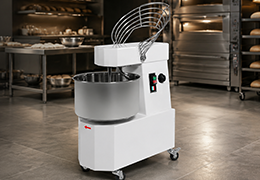
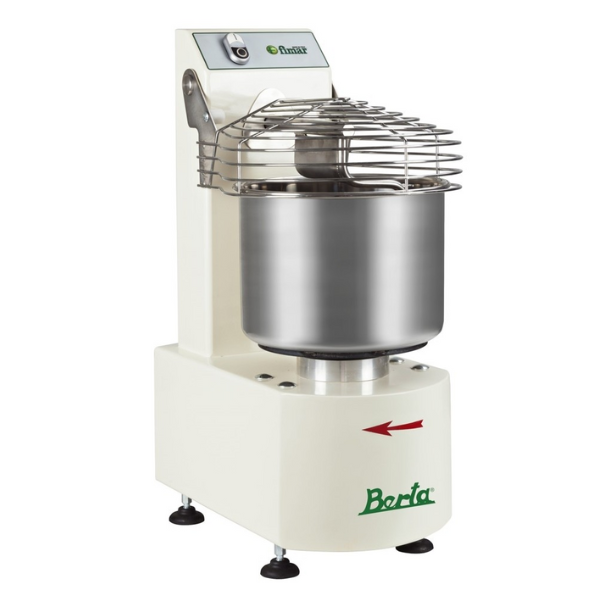
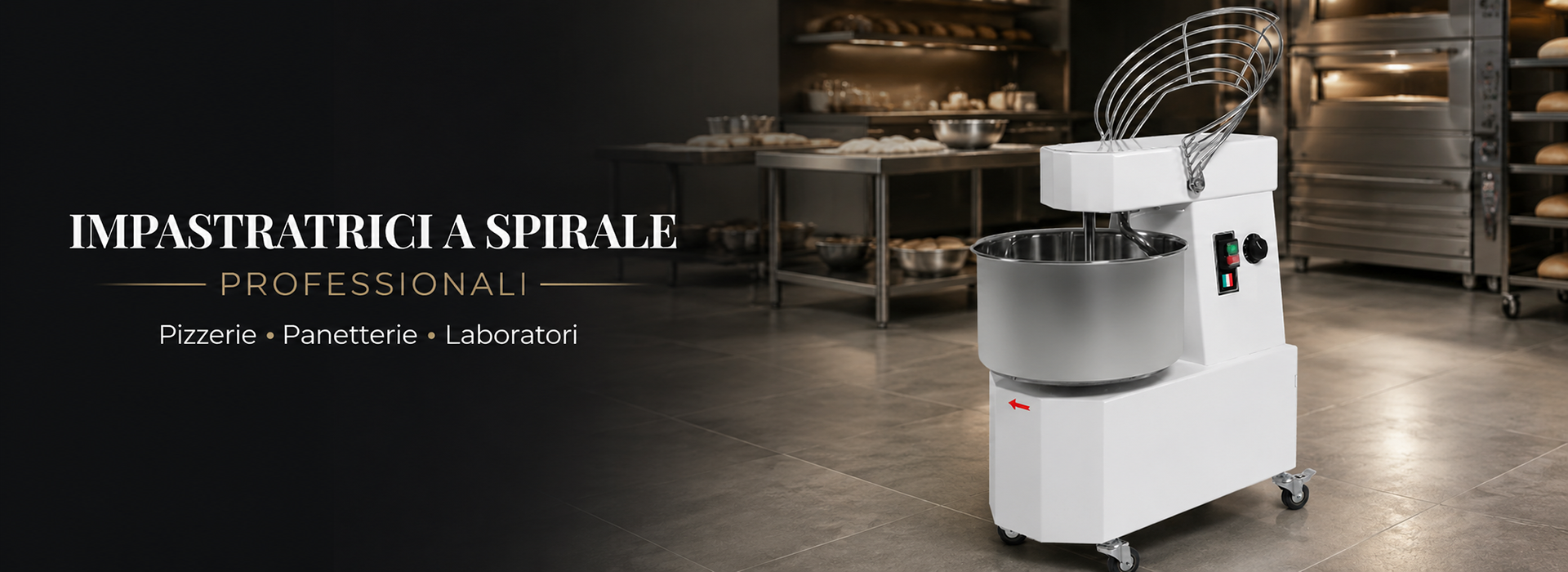
Professional spiral mixers are designed to process dough for pizza, bread, focaccia, baked products and many other sweet or savoury preparations.
The combined movement of the spiral tool and the bowl mixes the ingredients, supports gluten development and produces more consistent and repeatable dough.
The correct model should be selected according to the type of dough, the quantity processed during each cycle, hydration level, frequency of use and the organisation of the production area.
A mixer that is too small can slow down production, while an oversized machine may struggle to process quantities below its guaranteed minimum dough capacity.
How a spiral mixer works
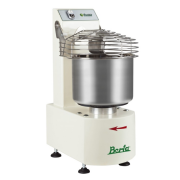
The machine takes its name from the spiral-shaped tool that works the ingredients inside the bowl. During the cycle, the spiral penetrates the dough while the bowl rotates, creating a continuous and regular mixing action.
The central breaker bar fitted to many models helps control the movement of the dough and keeps it within the correct working area.
This system is particularly suitable for:
-
pizza dough;
-
bread and bakery products;
-
focaccia;
-
medium- and high-hydration dough;
-
biscuits and compatible preparations;
-
flatbread and similar products;
-
sweet or savoury preparations requiring gluten development.
Mixing time, speed and quantity must be adjusted according to the recipe and type of flour used.
Bowl capacity and dough quantity
One of the most common mistakes is to consider only the stated maximum capacity.
Capacity in litres indicates the volume of the bowl, while dough capacity generally refers to the total weight of flour, water and other ingredients that the machine can process during each cycle.
Before purchasing, it is important to determine:
-
maximum dough quantity required;
-
minimum quantity normally processed;
-
number of daily cycles;
-
desired hourly output;
-
hydration level of the dough;
-
possible future increases in production.
A business that frequently prepares small batches must pay particular attention to the guaranteed minimum quantity. Placing an insufficient mass in a large bowl may prevent the spiral from processing it correctly.
Fixed or lifting head
Spiral mixers are available with either a fixed or lifting head.
Fixed-head spiral mixer
On fixed-head models, the upper section of the machine cannot be raised and the bowl is generally not removable.
This configuration is robust, straightforward and suitable for standard production. Once mixing has been completed, the dough is removed directly from the bowl.
Cleaning must be carried out carefully, reaching all accessible surfaces and following the manufacturer’s instructions.
Lifting-head spiral mixer
A lifting head provides easier access to the bowl and simplifies dough removal.
On models with a removable bowl, the container can be detached from the machine. This solution can facilitate dough handling, cleaning and the organisation of different production cycles.
The choice depends on frequency of use, processed quantity and the operating method adopted by the laboratory.
Fixed or removable bowl
A fixed bowl is integrated into the machine and provides a practical solution for regular production carried out in the same working position.
A removable bowl offers greater flexibility and makes it easier to transfer the dough to the next production stage.
For high-volume production, removable or trolley-mounted bowls can be useful when dough must be moved towards worktables, dough dividers or other equipment.
Before purchasing, it is also important to consider the space required to lift the head and remove the bowl.
One, two or multiple speeds
Spiral speed affects the way the dough develops.
Single speed
Single-speed models are straightforward to use and can be suitable for traditional dough and standard production.
Two speeds
The first speed gradually combines the ingredients and begins forming the dough.
The second speed increases the intensity of the mixing action and can support structural development while reducing processing time for certain preparations.
Variable speed
Mixers equipped with variable speed control allow more precise adjustment of the spiral rotation. This function can be useful in laboratories processing recipes with different characteristics and hydration levels.
Higher speed should not be used indiscriminately. Excessively intense mixing can increase dough temperature and change its behaviour during fermentation.
Final dough temperature
Mixing friction generates heat. The final dough temperature can affect fermentation, consistency, resting times and the quality of the finished product.
To control it, it is necessary to consider:
-
flour temperature;
-
water temperature;
-
room temperature;
-
mixing duration;
-
spiral speed;
-
processed quantity;
-
characteristics of the machine.
In professional production, it is useful to measure the dough temperature at the end of the cycle and record the settings used for the most important recipes.
Water temperature can be adjusted according to the working environment and the required result, following the recipe and production method adopted by the business.
Single-phase or three-phase power supply
Compact models may be available with a 230 V single-phase power supply. Machines with greater capacity and power frequently require a three-phase connection.
Before placing an order, check:
-
available voltage;
-
number of phases;
-
absorbed power;
-
position of the socket or connection;
-
possible requirement for technical installation;
-
electrical protection provided by the system.
The electrical specifications must be checked by qualified personnel. Professional equipment may be supplied without a plug because the connection must be adapted to the electrical system and applicable technical regulations.
Timer, wheels and accessories
A timer allows the operator to programme the cycle duration and can help improve production consistency.
Wheels make it easier to move the machine for cleaning or when reorganising the production area. They must be lockable to ensure stability during operation.
Depending on the model, the equipment may include:
-
timer;
-
wheels;
-
safety guard;
-
central breaker bar;
-
reverse bowl rotation;
-
programmable cycles;
-
digital control panel;
-
lifting systems;
-
additional bowls.
Accessories should be evaluated according to actual production requirements and not simply according to the number of features supplied.
Operational safety
The safety guard must never be removed or tampered with. The machine must stop as specified by its safety system when the guard is lifted.
Hands, scrapers and utensils must never be placed inside the bowl while the mixer is operating.
Before cleaning or inspection, the machine must be switched off and disconnected from the power supply, following the manufacturer’s instructions.
Operators must receive training on correct use, permitted quantities and emergency stopping procedures.
Cleaning and maintenance
The bowl, spiral, central breaker bar and safety guard must be cleaned after every use, preventing dough residue from drying onto the surfaces.
It is important to:
-
disconnect the machine before cleaning;
-
avoid using direct water jets on electrical components;
-
use detergents compatible with stainless steel;
-
remove all flour and dough residue;
-
inspect the guard and safety devices periodically;
-
follow the manufacturer’s maintenance programme.
The external structure should be cleaned without using abrasive materials that could damage its surfaces.
How to choose a professional spiral mixer
Before comparing individual models, define the following information accurately:
-
type of dough;
-
minimum and maximum quantity per cycle;
-
number of daily cycles;
-
hydration level;
-
required capacity;
-
one, two or multiple speeds;
-
fixed or lifting head;
-
fixed or removable bowl;
-
available power supply;
-
installation space;
-
requirement for a timer and wheels.
The selection should be based on actual production. A correctly sized machine supports better cycle organisation, reduces manual work and produces more consistent results.
Related Chef Costantino recipe
To demonstrate a professional application of the spiral mixer, this article will be linked to High-Hydration Gourmet Focaccia with Confit Tomatoes, Stracciatella and Basil.
The preparation will explore hydration management, gluten development, resting periods, fermentation and production organisation.
The complete Chef Costantino recipe will be published in Italian and will include precise quantities, professional preparation procedures, service instructions, Food Cost and allergens.
[DISCOVER THE CHEF COSTANTINO RECIPE]
Related category on Ristorazione-Refrigerazione
Explore the category dedicated to professional mixers and planetary mixers, including spiral models with different capacities, fixed or lifting heads and fixed or removable bowls.
Request assistance in choosing the right model
To identify the most suitable machine, contact us and provide the type of dough, hydration level, kilograms processed per cycle, usual minimum quantity and available power supply.
A preliminary assessment helps select a spiral mixer that is correctly sized for production and genuinely suitable for the organisation of the laboratory.