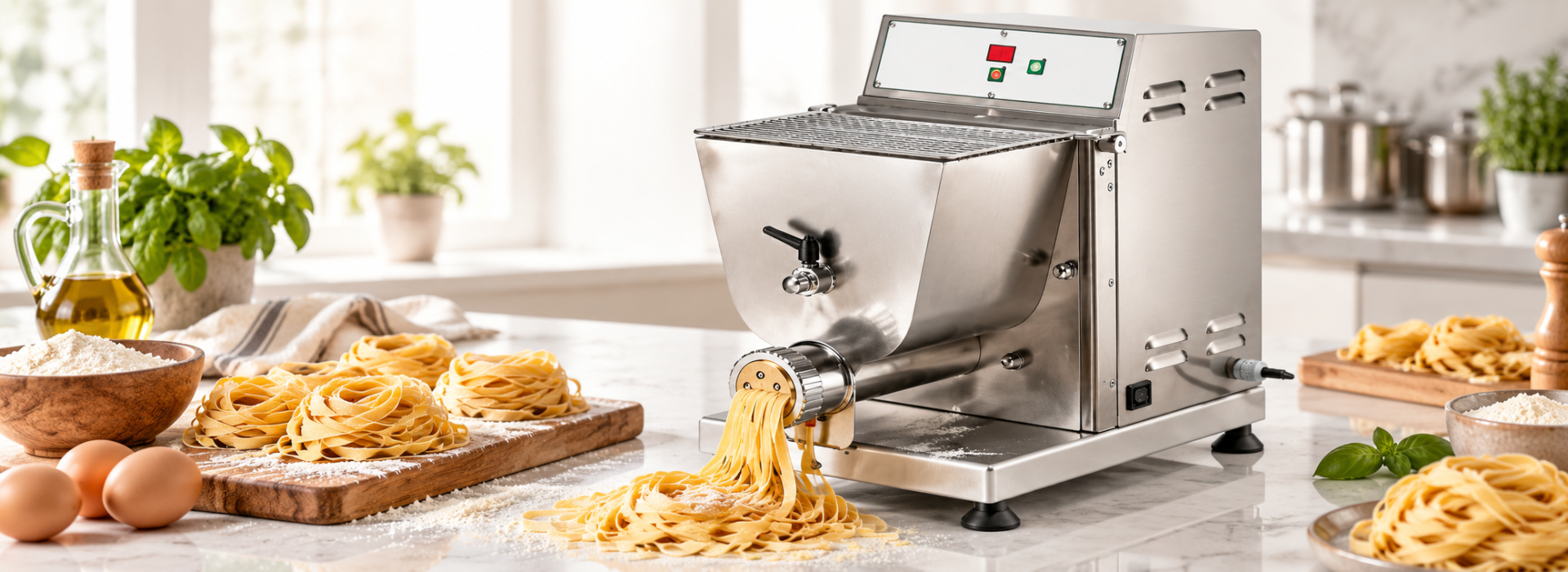
Professional Fresh Pasta Machines: Organising Pasta Production in Restaurants and Food Laboratories
For restaurants, trattorias, agritourism businesses, hotels, pasta shops and professional food laboratories that want to produce fresh pasta in-house, however, efficient organisation is essential.
Professional fresh pasta machines can help standardise and speed up specific production stages, provided the equipment is selected according to the type of pasta being produced.
Why produce fresh pasta in-house?
Introducing fresh pasta production is more than simply adding another preparation to the menu.
It can become a distinctive feature of the business.
A restaurant can develop:
- customised pasta shapes;
- seasonal recipes;
- distinctive doughs;
- regional preparations;
- products created specifically for its menu.
Fresh pasta can therefore contribute directly to a restaurant's culinary identity.
Production must, however, be properly organised, particularly when service volumes increase.
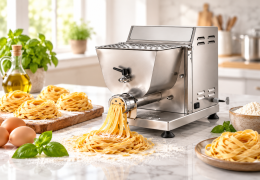
What is a professional fresh pasta machine?
There is no single machine that represents the entire category.
Professional pasta equipment includes machines designed for different processing stages.
Depending on the required production, equipment may be used to:
- mix dough;
- sheet dough;
- cut pasta;
- extrude pasta;
- form certain pasta types;
- perform specific processes using compatible accessories.
The first question should therefore not be:
“What is the best fresh pasta machine?”
but:
“What type of pasta do I want to produce?”
The answer determines the equipment required.
Professional pasta sheeters
A pasta sheeter works the dough by progressively reducing its thickness.
Depending on subsequent processing, sheets can be used for:
- lasagne;
- tagliatelle;
- fettuccine;
- filled pasta;
- other compatible products.
Consistent thickness is an important factor in achieving a more uniform final product.
Combined pasta machines
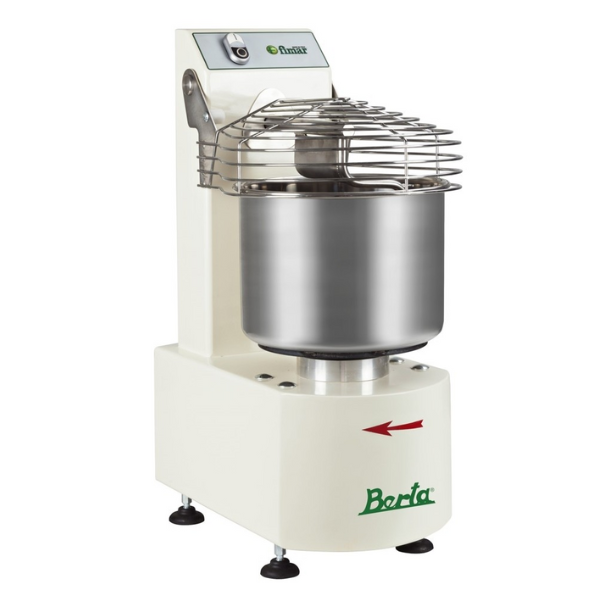
Some professional machines combine several functions within a single unit.
Depending on the model, they may handle part of the dough preparation process as well as subsequent operations.
These solutions can be interesting when production needs to be organised within a relatively compact workspace.
Always verify which functions are actually included in the individual machine.
Pasta extruders
Extruded pasta follows a different production process.
The dough is forced through a die, which helps determine the final shape.
Different pasta formats may be produced depending on the machine and compatible dies.
Important considerations include:
- production capacity;
- suitable dough types;
- available dies;
- frequency of use;
- ease of disassembly and cleaning;
- available space.
Dies and pasta formats
A die is not merely an optional accessory.
On extrusion machines, it directly contributes to determining the shape of the pasta.
Before purchasing, check which dies are available and which formats are compatible with the machine.
Buying equipment first and discovering later that the desired format cannot be produced is an avoidable mistake.
Fresh tagliatelle: an all-year classic
Tagliatelle is an extremely versatile pasta format.
In autumn it pairs particularly well with:
🍄 porcini mushrooms
🌿 truffles
🎃 pumpkin
🥩 meat ragù
🧀 cheeses
🌰 chestnuts
In-house production can also allow the restaurant to adapt thickness, width and dough recipe to its own style, within the capabilities of the equipment.
Chef Costantino's related recipe
For this theme, Chef Costantino proposes:
Fresh Tagliatelle with Porcini Mushrooms and Truffle.
Fresh pasta becomes the central element alongside two ingredients strongly associated with autumn.
The pasta is paired with porcini mushrooms and finished with truffle, creating a simple but highly seasonal dish.
How much pasta should the machine produce?
Production capacity is one of the most important parameters.
Equipment should be selected according to actual demand.
A useful calculation starts with:
number of portions × average pasta weight per portion × number of services.
A restaurant offering one fresh-pasta dish will have very different requirements from a specialised pasta-production business.
Manufacturer production figures should also be interpreted according to the stated operating conditions.
Don't choose solely on kg/h
Hourly production is useful, but it does not describe the entire workflow.
Also consider:
- dough preparation;
- processing time;
- format changes;
- cleaning;
- ingredient organisation;
- handling after forming;
- the actual pace of kitchen production.
The machine should fit into the production workflow, rather than simply delivering the highest possible output.
Available space
Measure the installation area carefully before purchasing.
Consider:
- width;
- depth;
- height;
- operating space;
- opening of components;
- access for cleaning and maintenance;
- proximity to other production stages.
A machine that appears perfect on paper may become impractical in an unsuitable workspace.
Electrical requirements
Always check the electrical specifications required by the equipment.
Voltage, power and connection requirements can vary according to the model.
The technical specifications should therefore be compared with the utilities available in the premises.
Construction and materials
Professional equipment should also be evaluated for:
- robustness;
- materials;
- construction quality;
- food-contact components;
- accessibility;
- ease of cleaning;
- availability of required accessories.
These considerations become particularly important with daily use.
Cleaning pasta machines
Flour and dough residues can accumulate in different parts of the machine.
Cleaning should always follow the manufacturer's specific instructions.
Before any intervention, the machine must be placed in the required safe condition.
Pay particular attention to:
- dough-contact components;
- dies;
- rollers;
- cutting components;
- removable parts.
Never improvise washing methods that may be incompatible with the equipment.
Organising production
Professional fresh-pasta production requires a defined method.
Establish:
- daily quantity;
- standard dough recipes;
- ingredient weights;
- pasta formats;
- production times;
- post-production handling;
- cleaning procedures.
This transforms an artisanal preparation into a repeatable process.
Standardising the dough
A machine can improve consistency, but the dough recipe itself must also be standardised.
Small variations in liquids, flour or other ingredients can affect processing.
Professional production should therefore use precise weights and documented recipes.
Fresh pasta and food safety
In-house pasta production must be incorporated into the business's food-safety procedures.
Correct management should include:
- ingredients;
- allergens;
- eggs, when used;
- cross-contamination;
- surfaces;
- equipment;
- storage;
- applicable time and temperature controls.
Allergen management is particularly important because pasta commonly contains gluten-containing cereals and may contain eggs or other ingredients.
Fresh pasta as a marketing tool
In-house production can also be communicated to customers.
Statements such as “fresh pasta made in our kitchen”, when they accurately reflect the actual process, can contribute to the perceived value of the dish.
Seasonality makes the concept even stronger.
Autumn options can include:
- porcini tagliatelle;
- pumpkin ravioli;
- truffle pasta;
- pasta with slow-cooked ragù;
- dishes combining pasta with chestnuts and cheese.
The equipment thus becomes part of a broader culinary strategy.
How to choose a professional fresh pasta machine
Evaluate at least:
Pasta type: sheets, cut pasta, extruded pasta or other products.
Required output: how many kilograms are genuinely needed?
Formats: which shapes will be produced?
Accessories and dies: are the required options available?
Space: will the machine fit properly?
Electrical requirements: is the existing installation compatible?
Cleaning: how much work is required for routine cleaning and disassembly?
Frequency of use: occasional and daily production require different assessments.
Common mistakes
Avoid:
- purchasing before defining the pasta formats;
- selecting solely on maximum output;
- failing to check dies and accessories;
- underestimating installation space;
- ignoring electrical requirements;
- overlooking cleaning time;
- failing to standardise dough recipes;
- underestimating allergen management;
- purchasing equipment that is oversized for actual production.
FAQ – Professional Fresh Pasta Machines
What machine is needed for tagliatelle?
It depends on the production system. Generally, dough is sheeted to the required thickness and then cut using a compatible system.
What is the difference between a pasta sheeter and an extruder?
A sheeter passes dough through rollers to create a sheet. An extruder pushes dough through a die.
Can one machine produce several pasta formats?
It depends on the machine and compatible accessories or dies.
How should production capacity be selected?
Calculate the actual requirements of the business and compare them with the manufacturer's stated output.
Does the machine completely replace manual work?
Not necessarily. Automating one stage does not automatically mean automating the entire process.
Are dimensions important?
Yes. Consider both the machine footprint and the operating space required by staff.
Are pasta dies universal?
Do not assume so. Compatibility must be checked for the specific model.
How should the machine be cleaned?
According to the manufacturer's procedures and applicable safety requirements.
Conclusion
Producing fresh pasta in a restaurant or professional laboratory can become an important point of differentiation.
However, equipment selection should begin with the pasta you actually want to produce.
Sheeting, cutting, extrusion, production capacity, formats, dies, available space and cleaning requirements should all be evaluated before purchasing.
Autumn then provides exceptional menu opportunities with porcini, truffles, pumpkin and slow-cooked ragù.
👉 Discover professional fresh pasta machines and pasta-production equipment available from Ristorazione-Refrigerazione.
TAGS
professional fresh pasta machines, commercial pasta machine, pasta sheeter, pasta extruder, pasta dies, fresh pasta production, fresh tagliatelle, restaurant pasta machine, porcini mushrooms, truffle, autumn menu, Italian restaurant equipment, professional kitchen, HoReCa