Professional Bratt Pans: Braised Meats, Stews and Slow Cooking for Autumn Menus
What is a professional bratt pan?
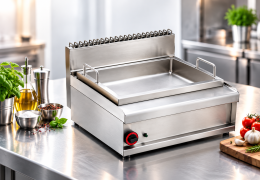
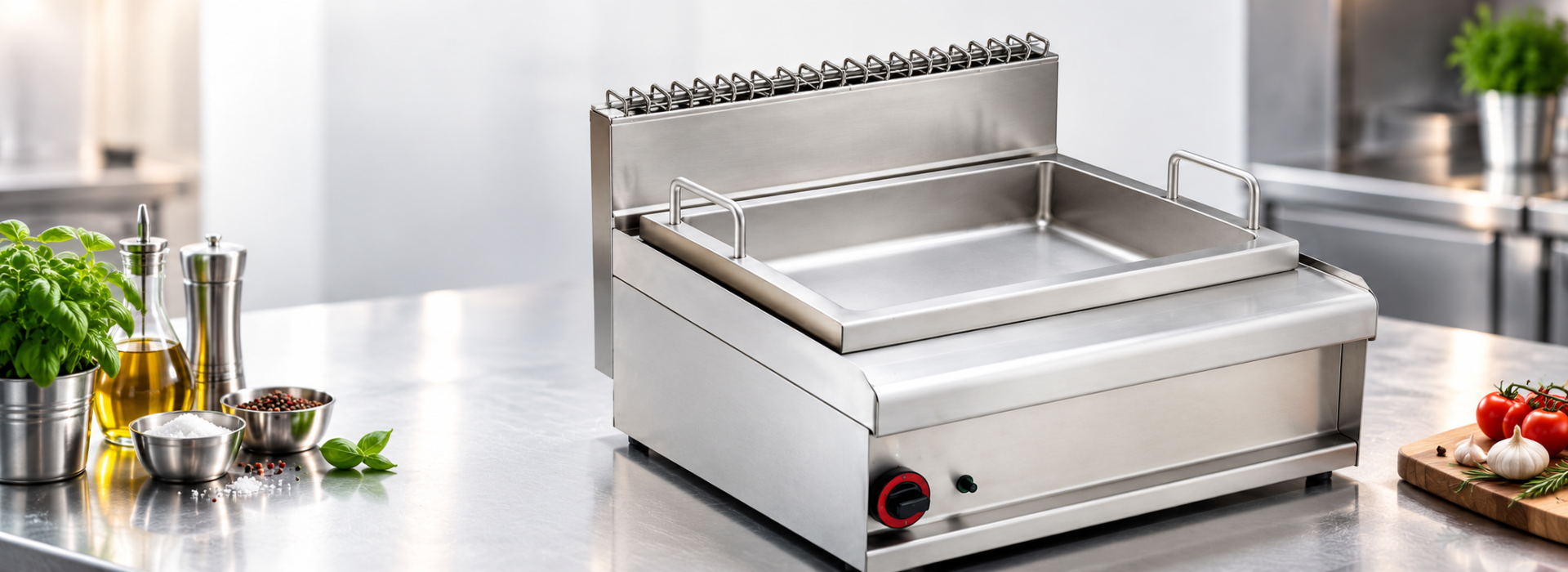
A professional bratt pan, also known in some markets as a tilting braising pan or tilting skillet, generally consists of a large cooking pan designed for different types of preparation depending on the model.
Gas and electric versions are available in different sizes and capacities.
Depending on its specifications, it may be suitable for:
- braising;
- browning;
- stews;
- slow-cooked preparations;
- vegetables;
- sauces and cooking bases;
- other compatible cooking processes.
This versatility is one of the principal reasons bratt pans are used in professional kitchens.
Why use a professional bratt pan?
Producing large quantities exclusively in small pans can make kitchen organisation inefficient.
A properly sized bratt pan allows certain production processes to be concentrated into one appliance.
Potential operational benefits include:
- better production organisation;
- management of larger batches;
- improved process standardisation;
- more effective use of working space;
- easier management of different stages of preparation.
The appliance should always be selected according to the actual production volume.
Autumn and slow cooking
Autumn is an ideal season for dishes characterised by deeper flavours and longer cooking processes.
Examples include:
🥩 braised beef cheek
🍷 red-wine braised beef
🥕 meat and vegetable stews
🍄 meat with mushrooms
🧅 sauces and cooking bases
🥔 slow-cooked side dishes
Cooking management plays a decisive role in the final result.
What does braising mean?
Braising generally combines an initial browning stage with subsequent cooking using a certain amount of liquid.
For meat, the process may begin by browning the surface before wine, stock or another cooking liquid is added.
Cooking times, temperatures and liquid quantities depend on the ingredient and required result.
Although the bratt pan is strongly associated with braising, many models can perform a wider range of cooking processes.
Browning matters
Many slow-cooked preparations begin with browning.
This stage contributes to the development of colour and flavour.
Overloading the cooking surface should be avoided when effective browning is required.
Adding too much meat simultaneously may cause the temperature to drop rapidly and increase the release of liquid.
Production loads should therefore be organised appropriately.
From browning to slow cooking
A typical braising workflow may include:
- preparing and portioning the meat;
- browning;
- adding aromatic vegetables;
- deglazing;
- adding cooking liquid;
- controlled cooking;
- checking the product;
- reducing or processing the cooking juices;
- portioning and service.
Standardising these stages helps maintain consistency between services.
Beef cheek: an autumn classic
Beef cheek is particularly suited to long cooking processes.
Correct cooking can produce a tender texture and a rich sauce that pairs well with seasonal side dishes.
Chef Costantino's related recipe
For this theme, Chef Costantino proposes:
Red-Wine Braised Beef Cheek with Reduced Jus and Potato Purée.
The meat is browned, combined with aromatic vegetables and red wine and cooked until the desired texture is reached.
The cooking liquid is then processed to create an intense finishing sauce.
It is a strong example of autumn cooking and professional organisation of a traditional technique.
Bratt pans and high-volume production
One of the main reasons for using this equipment is its ability to manage larger batches than conventional small cookware.
It can be particularly useful in:
- high-volume restaurants;
- hotels;
- canteens;
- central kitchens;
- delicatessens;
- catering operations;
- institutional kitchens.
However, larger does not automatically mean better.
Capacity must correspond to actual production requirements.
Tilting bratt pans
Many professional models feature a mechanism that allows the pan to tilt.
Depending on the appliance, this may be manual or powered.
Tilting can facilitate certain handling and discharge operations, especially when substantial quantities are involved.
Before purchasing, check:
- tilting mechanism;
- control system;
- discharge operation;
- safety features;
- manufacturer's operating procedures.
Gas or electric?
Both options can be suitable.
The choice depends on:
- available utilities;
- power requirements;
- kitchen layout;
- appliance specifications;
- production volumes;
- operational preferences.
The individual model should therefore be evaluated in relation to the infrastructure of the kitchen.
Capacity
Capacity is one of the first specifications to consider.
An undersized pan can require multiple production cycles.
An oversized machine may represent an unnecessary investment.
A useful starting calculation is:
number of portions × average quantity per portion × production per service.
The recipes actually produced must also be considered.
Power and performance
Rated power should be considered alongside:
- capacity;
- cooking surface;
- heating system;
- energy source;
- intended use.
Comparing professional bratt pans purely on nominal power can therefore be misleading.
Materials and construction
Durability is essential in a professional kitchen.
When comparing equipment, evaluate:
- pan construction;
- structural robustness;
- controls;
- stability;
- ease of cleaning;
- accessibility;
- manufacturer's stated construction characteristics.
Cleaning
The pan should be cleaned according to the manufacturer's instructions after use.
Residues of sauces, fats and cooking juices should not be allowed to accumulate.
Before cleaning, always follow the required safety procedures and use appropriate cleaning products and equipment.
Ease of cleaning should therefore be considered before purchasing, not afterwards.
Organisation and mise en place
Efficient equipment cannot compensate for poor kitchen organisation.
Before beginning a substantial production run, prepare:
- ingredients;
- portioned meat;
- vegetables;
- liquids;
- utensils;
- containers for subsequent stages.
Good mise en place reduces interruptions and helps control the process.
Food safety
Professional cooking processes must form part of the business's food-safety procedures.
Attention should be paid to:
- raw ingredients;
- cross-contamination;
- time and temperature;
- cooling, where applicable;
- storage;
- reheating or regeneration, where required.
The bratt pan is a production tool; food safety depends on the complete process.
How to choose a professional bratt pan
Consider at least:
Capacity: determine the actual production volume required.
Energy source: gas or electric according to infrastructure and operational needs.
Tilting system: manual or powered, where available.
Dimensions: verify compatibility with the kitchen layout.
Production requirements: evaluate recipes as well as the number of covers.
Cleaning: frequent use requires practical cleaning procedures.
Technical specifications: always check the manufacturer's documentation.
Common mistakes
Avoid:
- oversizing the equipment;
- failing to check utility requirements;
- overcrowding the pan during browning;
- applying identical processes to different preparations;
- neglecting time and temperature control;
- choosing solely on price;
- overlooking cleaning and maintenance;
- failing to verify dimensions before installation.
FAQ – Professional Bratt Pans
What is a professional bratt pan used for?
Depending on the model, it can be used for braising, browning, stews, vegetables, sauces and other compatible cooking processes.
Is it only used for meat?
No. Applications vary according to the equipment.
Are gas bratt pans available?
Yes. Both gas and electric configurations exist.
What is a tilting bratt pan?
It has a pan that can be tilted to facilitate certain product-handling and discharge operations.
Is manual or powered tilting better?
It depends on equipment size, production volume and operational requirements.
How should capacity be selected?
According to actual production volume and the preparations being produced.
Are bratt pans only for restaurants?
No. They can also be used in hotels, canteens, catering operations, delicatessens and institutional kitchens.
Conclusion
Autumn brings braised meats, stews and slow-cooked dishes back to professional menus.
For businesses producing substantial quantities, a correctly sized professional bratt pan can become an important part of the cooking line.
Capacity, energy source, tilting mechanism, dimensions and construction should always be assessed against actual production requirements.
👉 Discover professional bratt pans available from Ristorazione-Refrigerazione and compare solutions for your professional kitchen.
TAGS
professional bratt pans, commercial bratt pan, tilting bratt pan, electric bratt pan, gas bratt pan, braising equipment, slow cooking, braised beef, beef cheek, autumn menu, professional kitchen equipment, restaurant equipment, HoReCa