Professional Cutters: Complete Guide for Restaurants, Hotels, Food Production Laboratories and Catering Businesses
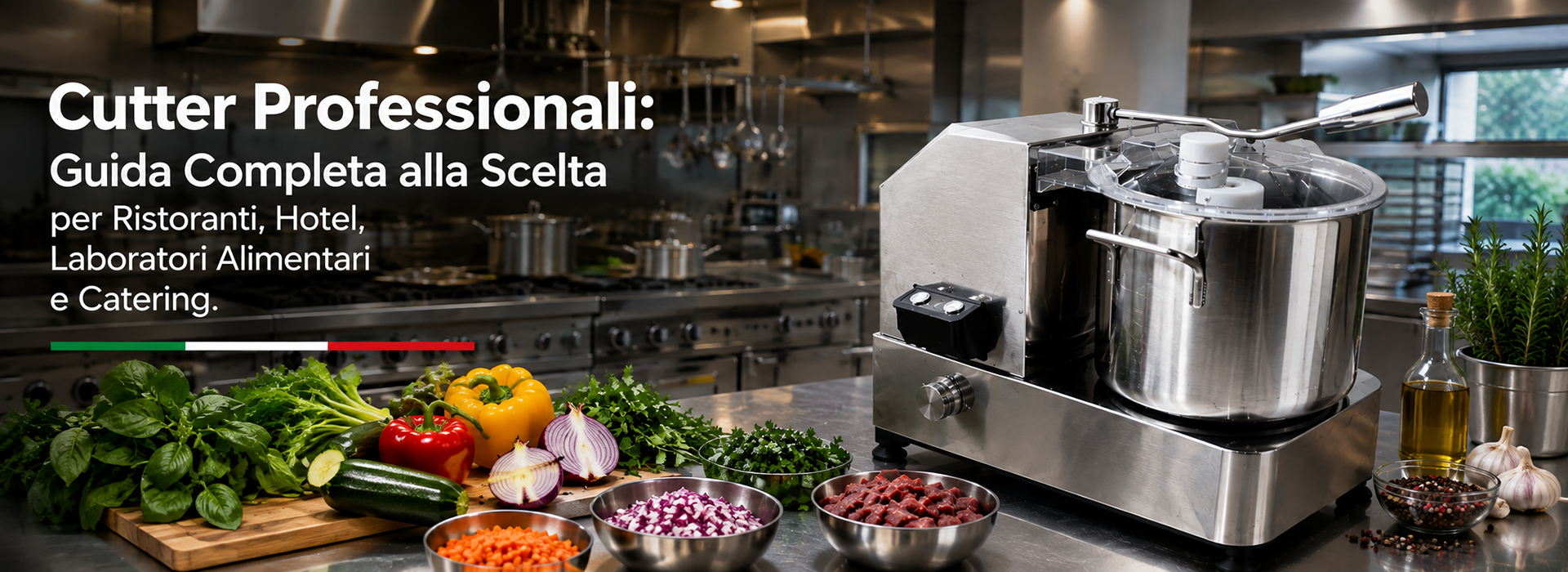
Among the most complete and versatile machines found in a professional kitchen, the professional cutter is an essential piece of equipment for speeding up food preparation while delivering precise, consistent and repeatable results.
Its ability to chop, mince, emulsify, blend, knead and homogenize a wide variety of ingredients makes it indispensable in restaurants, hotels, delicatessens, butcher shops, fish markets, food production laboratories, pastry shops, bakeries and catering companies.
The combination of high-speed blades and a heavy-duty construction allows the machine to handle intensive production while maintaining excellent quality standards and significantly reducing preparation time.
What Is a Professional Cutter?
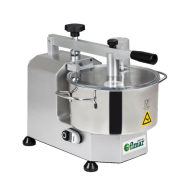
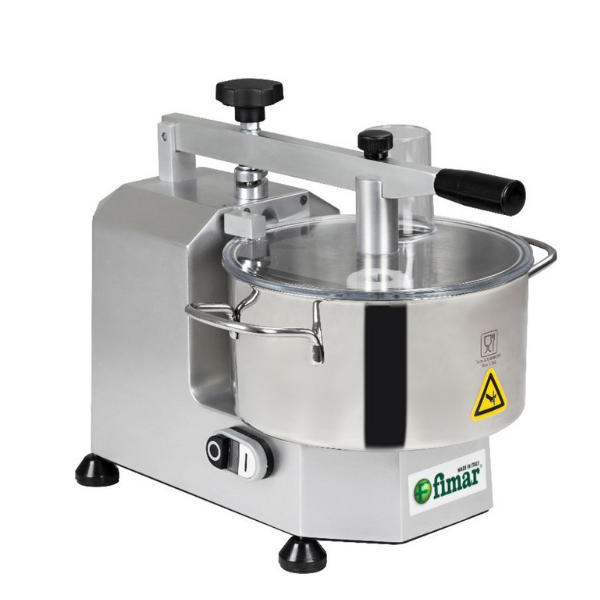
A professional cutter is a machine consisting of a robust stainless steel structure, a processing bowl and a high-speed blade assembly specifically designed to process ingredients with different textures.
Unlike domestic blenders or food processors, a professional cutter is engineered for continuous operation throughout the working day, providing reliability, precision and consistent results even under heavy workloads.
Thanks to its powerful motor and optimized blade geometry, the machine produces exceptionally uniform preparations while preserving ingredient quality.
How Does a Professional Cutter Work?
Its operation is straightforward yet extremely effective.
Ingredients are placed inside the stainless steel bowl and the safety lid is securely closed.
Once the machine is started, the blades rotate at high speed, rapidly processing the ingredients until the desired consistency is achieved.
Depending on the processing time, the cutter can produce coarse chopping, fine mincing, smooth creams, mousses or perfectly homogeneous emulsions.
This level of precision allows kitchens to standardize recipes and obtain identical results regardless of the operator.
Why Choose a Professional Cutter?
Introducing a professional cutter into a commercial kitchen offers numerous operational advantages.
Among the most significant are:
- reduced preparation time;
- higher productivity;
- uniform processing;
- greater precision;
- reduced manual labor;
- improved kitchen workflow;
- consistent, repeatable results;
- exceptional versatility across multiple food preparations.
For businesses with demanding production schedules, it is one of the most valuable investments for the food preparation department.
Where Is It Used?
Professional cutters are widely used throughout the foodservice industry.
They are commonly found in:
- restaurants;
- hotels;
- delicatessens;
- butcher shops;
- fish markets;
- food production laboratories;
- pastry shops;
- bakeries;
- catering companies;
- central production kitchens;
- food manufacturing facilities.
Their versatility makes them suitable for virtually every professional food production environment.
What Foods Can It Process?
One of the greatest strengths of a professional cutter is its ability to process an extensive variety of ingredients.
Among the most common are:
- meat;
- fish;
- vegetables;
- fresh herbs;
- cheese;
- nuts;
- bread;
- creams;
- mousses;
- sauces;
- pâtés;
- pesto;
- fillings;
- forcemeats;
- emulsions;
- soft doughs.
This exceptional flexibility makes the professional cutter one of the most frequently used preparation machines in modern commercial kitchens.
Production Capacity
Professional cutters are available in a wide variety of configurations to meet the needs of every Ho.Re.Ca. business, from small commercial kitchens to large food production laboratories.
Bowl capacity is one of the most important specifications to evaluate, as it directly affects productivity and the number of processing cycles required throughout the working day.
As a general guideline, professional cutters can be divided into the following categories:
| Business Type | Recommended Capacity |
|---|---|
| Bars, cafés and small restaurants | 3–5 liters |
| Restaurants, hotels and delicatessens | 5–9 liters |
| Food production laboratories and catering companies | 9–15 liters |
| High-volume production facilities | Over 15 liters |
Choosing the correct bowl capacity reduces processing time, improves workflow and increases the overall efficiency of the food preparation department.
Construction Materials
Professional cutters are designed to deliver reliable performance even under intensive daily use.
Commercial models are generally equipped with:
- stainless steel frame;
- stainless steel processing bowl;
- heavy-duty stainless steel blades;
- transparent safety lid with locking system;
- ventilated motor designed for continuous operation;
- intuitive control panel;
- non-slip feet for maximum stability.
Stainless steel is the preferred material because it provides excellent hygiene, long service life and fast, easy cleaning.
How to Choose the Right Professional Cutter
Before purchasing a professional cutter, it is important to carefully evaluate the type of food preparation carried out every day.
The most important factors include:
- quantity of food processed daily;
- types of ingredients;
- bowl capacity;
- motor power;
- blade rotation speed;
- ease of cleaning;
- availability of spare parts;
- technical support.
Carefully evaluating these factors makes it easier to select the machine that best suits your kitchen's operational requirements.
Cleaning and Maintenance
Regular maintenance helps preserve the cutter's performance over time.
After every use, it is recommended to:
- completely empty the bowl;
- thoroughly wash the bowl and blades;
- remove all food residues;
- carefully dry all surfaces;
- periodically inspect the seals;
- verify that the blades are securely fastened.
Preventive maintenance minimizes machine downtime and helps ensure consistent preparation quality.
Common Mistakes to Avoid
To achieve the best possible performance, operators should avoid several common mistakes.
The most frequent include:
- overfilling the bowl;
- processing products that are not suitable for the cutter;
- using unnecessarily long processing times;
- failing to clean the machine immediately after use;
- operating with worn blades;
- neglecting scheduled maintenance.
Correct operation preserves preparation quality while extending the service life of the equipment.
Summary Table
| Feature | Benefit |
|---|---|
| High-speed blades | Fast and consistent processing |
| Exceptional versatility | One machine for multiple preparations |
| Stainless steel bowl | Hygiene and long service life |
| High productivity | Reduced preparation time |
| Easy operation | Quick staff training |
| Simple cleaning | Improved food safety |
| Professional performance | Ideal for intensive production |
Frequently Asked Questions
Can a professional cutter process both raw and cooked ingredients?
Yes. Professional cutters are designed to process a wide variety of raw and cooked ingredients, provided they are compatible with the machine's technical specifications and the manufacturer's recommendations.
What types of food can be processed?
A professional cutter can be used to prepare:
- minced meat;
- fish;
- vegetables;
- fresh herbs;
- cheese;
- nuts;
- breadcrumbs;
- sauces;
- creams;
- mousses;
- pâtés;
- pesto;
- fillings;
- forcemeats;
- emulsions.
Can a professional cutter replace a blender?
No. Although the two machines share certain functions, a professional cutter is specifically designed for commercial food preparation requiring greater power, precision and consistency. It is particularly suitable for processing solid and semi-solid ingredients.
How should the bowl capacity be selected?
The correct bowl capacity depends on:
- the quantity of food processed each day;
- the number of meals served;
- the type of food preparations;
- the organization of the kitchen.
A properly sized bowl reduces the number of processing cycles while improving overall productivity.
Is a professional cutter difficult to use?
No. Modern professional cutters feature simple and intuitive controls. After a brief introduction to operating procedures and safety guidelines, staff can use the equipment quickly and efficiently.
Which construction materials are recommended?
For intensive commercial use, it is advisable to choose models manufactured from stainless steel, equipped with heavy-duty stainless steel blades. These materials ensure excellent hygiene, durability and long service life.
What maintenance is required?
It is recommended to:
- thoroughly clean the bowl and blades after every use;
- regularly inspect seals;
- monitor blade wear;
- follow the preventive maintenance schedule specified by the manufacturer.
What advantages does a professional cutter offer over manual preparation?
Using a professional cutter allows businesses to:
- significantly reduce preparation time;
- achieve highly consistent processing;
- improve finished product quality;
- increase kitchen productivity;
- standardize food preparation;
- reduce manual labor.
Conclusion
The professional cutter is one of the most complete and versatile machines available for commercial food preparation.
Its ability to chop, mince, emulsify, knead, blend and homogenize a wide variety of ingredients makes it an essential investment for improving productivity while maintaining consistently high-quality results.
Before purchasing, businesses should carefully evaluate bowl capacity, motor power, construction quality, ease of cleaning and the availability of technical support. Choosing the correct model ensures long-term reliability and allows the equipment to integrate perfectly into the daily workflow of the kitchen.
Whether used in restaurants, hotels, delicatessens, butcher shops, pastry shops, food production laboratories or catering companies, a professional cutter helps optimize daily production, reduce preparation time and improve the overall efficiency of the kitchen.
Related Category on Ristorazione-Refrigerazione
To further expand the capabilities of your food preparation area, explore the Professional Immersion Blenders category. These machines are ideal for blending, emulsifying and homogenizing ingredients directly inside pots and large containers, making them the perfect complement to a professional cutter.
Chef Costantino Recipe
Gourmet Beef Tartare with Fresh Herbs, Whole-Grain Mustard and Parmesan perfectly demonstrates how a professional cutter can process meat with exceptional precision while preserving its texture, juiciness and natural structure. When used correctly, it delivers uniform results, speeds up preparation and guarantees professional consistency even during high-volume service.
Looking for a professional cutter for your business?
At Ristorazione-Refrigerazione, you'll find a carefully selected range of professional cutters designed for restaurants, hotels, delicatessens, butcher shops, pastry shops, food production laboratories and catering companies.
Explore our collection and choose the professional cutter that best fits your operational needs. Our specialists are ready to help you select the ideal solution for your commercial kitchen.