Negative Temperature Island Freezers: Professional Storage and Display for Frozen Foods
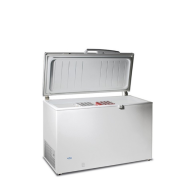
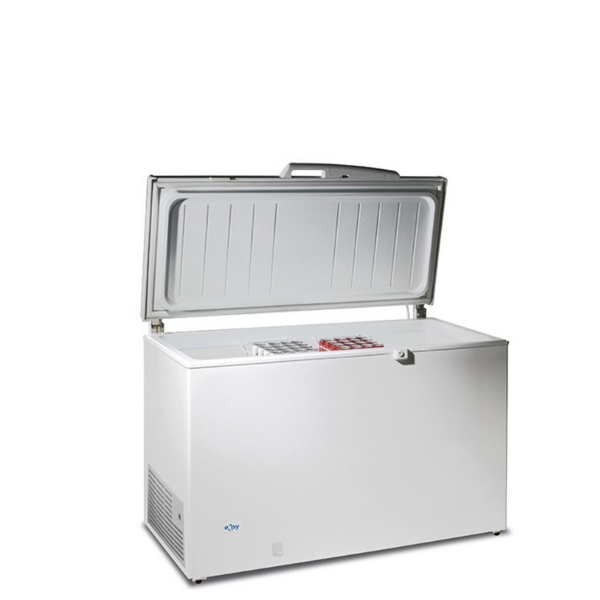
Negative temperature island freezers are professional refrigeration units designed to store and display frozen and deep-frozen products in supermarkets, convenience stores, grocery stores, cash & carry businesses and other food retail environments.
Their horizontal design allows products to be organised inside the refrigerated basin and, in models intended for direct customer access, enables shoppers to easily view and select packaged frozen products.
Choosing the correct island freezer requires evaluating usable capacity, operating temperature, display surface, external dimensions, loading depth, internal organisation, refrigeration system, defrost system, climate class, energy consumption and installation conditions.
It is not enough to choose the model with the largest declared capacity.
The equipment should be sized according to the number of product references, stock turnover, replenishment frequency, available space and the overall layout of the retail area.
What Are Negative Temperature Island Freezers Used For?
Negative temperature island freezers allow frozen and deep-frozen products to be stored under controlled conditions within the operating temperature range specified by the manufacturer.
Depending on the technical characteristics of each model, they can be used to organise and display:
- packaged frozen foods;
- frozen products;
- packaged ice cream;
- frozen desserts;
- frozen pizzas and bakery products;
- frozen vegetables;
- packaged frozen seafood;
- packaged frozen meat;
- frozen ready meals;
- other products compatible with the equipment specifications.
Before use, always verify the operating temperature, loading method and intended application declared by the manufacturer.
Where Are They Used?
Professional island freezers can be installed in many different commercial environments.
The most common include:
- supermarkets;
- hypermarkets;
- convenience stores;
- grocery stores;
- discount retailers;
- cash & carry businesses;
- specialist frozen food stores;
- frozen food retailers;
- food retail departments;
- commercial outlets with dedicated frozen food sections.
Requirements vary according to the sales area, customer traffic, product assortment and replenishment frequency.
Island Freezer or Traditional Commercial Freezer?
Although both preserve frozen products, these types of equipment generally serve different operational purposes.
A commercial freezer intended primarily for storage is selected mainly according to storage capacity and stock organisation.
A retail island freezer, on the other hand, must combine several functions:
- frozen product preservation;
- product visibility;
- customer accessibility;
- organisation of product references;
- ease of replenishment;
- efficient use of retail floor space;
- integration with the customer's shopping route.
The correct choice therefore depends on the role the equipment must perform within the business.
Gross Capacity, Net Capacity and Truly Usable Volume
One of the most common purchasing mistakes is comparing models only according to their declared litre capacity.
Before purchasing, it is important to distinguish between the total internal volume of the equipment and the space that can actually be used for storing products.
Usable capacity may be influenced by:
- maximum loading line;
- basin depth;
- internal dividers;
- baskets;
- internal geometry;
- location of refrigeration components;
- the need to keep airflow unobstructed;
- package dimensions;
- product arrangement.
For this reason, equipment should always be evaluated according to the products that will actually be sold.
Calculating the Required Capacity
Capacity should be determined by analysing the actual operation of the retail business.
Useful factors include:
- average daily sales;
- sales during peak trading periods;
- number of product references;
- quantity displayed for each reference;
- package dimensions;
- replenishment frequency;
- availability of reserve frozen storage;
- delivery schedules;
- seasonal demand fluctuations.
An undersized island freezer may require constant replenishment.
An oversized unit may occupy valuable retail space, increase the initial investment and create unused refrigerated capacity.
Operating Temperature
Operating temperature is one of the main purchasing criteria.
Before buying, it is important to verify:
- declared operating temperature range;
- type of products to be stored;
- climate class;
- expected ambient temperature;
- lid opening frequency;
- loading procedures;
- quantity of products loaded;
- product temperature during loading.
Island freezers designed for frozen food storage must always be used according to the manufacturer's technical specifications and the procedures applicable within the business.
They must not be used to rapidly freeze warm products or replace blast chillers unless the manufacturer specifically declares that function.
Maximum Loading Line
The maximum loading line indicates the highest level to which products should be placed inside the refrigerated basin.
Exceeding this level may interfere with the correct operation of the equipment.
It is important to:
- respect the declared loading limit;
- avoid compressing products excessively;
- keep airflow unobstructed;
- maintain visibility of internal indicators where present;
- distribute products evenly;
- follow the manufacturer's instructions.
The actual usable capacity of the island freezer should always be evaluated considering this operational limit.
Display Surface and Product Visibility
For retail equipment, display surface is just as important as storage capacity.
A large quantity of products arranged without clear organisation can make it difficult for customers to identify individual references.
It is advisable to evaluate:
- visible display width;
- basin depth;
- equipment height;
- product visibility;
- label readability;
- possibility of separating product categories;
- accessibility to products positioned at the bottom.
The objective is to create a well-organised display without compromising the storage conditions required for frozen products.
Basin Depth and Ergonomics
A deeper basin may increase the available storage volume, but it should also be evaluated from an accessibility perspective.
It is important to consider:
- the overall height of the island freezer;
- product retrieval depth;
- accessibility to products placed at the bottom;
- the type of customers using the equipment;
- replenishment procedures;
- operator requirements during cleaning and maintenance.
Additional storage capacity should never compromise the practical usability of the equipment.
Sliding Lids
Many professional island freezers are equipped with sliding lids.
Before purchasing, it is advisable to evaluate:
- ease of sliding;
- usable opening width;
- accessibility to the different areas of the basin;
- glass characteristics;
- product visibility;
- ease of cleaning;
- the possibility of removing the panels according to the manufacturer's instructions;
- guide rail characteristics.
The lids should remain closed whenever access to the products is not required.
Curved Glass or Flat Glass?
The shape of the glass panels can influence aesthetics, product visibility and the way the equipment is used.
Curved Glass
Curved glass can offer a different display configuration and provide a distinctive visual appearance.
It is advisable to evaluate:
- product visibility;
- ease of cleaning;
- opening system;
- integration into the retail layout.
Flat Glass
Flat glass may be used in configurations featuring straight upper surfaces and different opening systems.
The choice should be made by comparing the technical characteristics of each model with the specific requirements of the retail environment.
Internal Organisation with Dividers and Baskets
Dividers and baskets can help separate different product references.
A properly organised interior can help:
- distinguish product categories;
- separate different package formats;
- quickly identify individual references;
- simplify replenishment;
- maintain a standardised product layout;
- correctly apply stock rotation procedures.
Before purchasing, it is important to verify which accessories are included as standard and which are available as optional extras.
Organising Products by Category and Turnover
Products should be arranged according to both operational and merchandising criteria.
The island freezer may be organised:
- by product category;
- by brand;
- by package format;
- by price range;
- by sales turnover;
- by promotional campaigns;
- according to the customer's shopping route.
High-turnover products should be replenished in a way that reduces the risk of empty display areas.
Product arrangement must always comply with the maximum loading line and the operating conditions specified for the equipment.
Replenishing the Island Freezer
Replenishment should be planned to minimise prolonged lid openings and avoid interfering with customer traffic.
It is advisable to define:
- replenishment schedules;
- quantities to be transferred;
- responsible personnel;
- the route from storage to the sales area;
- stock rotation procedures;
- packaging management;
- inspection of damaged packages;
- temperature checks according to the company's operating procedures.
A well-organised replenishment system helps maintain an orderly display while reducing interruptions during business hours.
Stock Rotation
Stock rotation should be managed according to the company's operating procedures and the characteristics of the stored products.
It is important to:
- verify applicable date markings;
- inspect package integrity;
- organise products according to the chosen stock rotation method;
- avoid placing new products in front of existing stock without checking;
- identify non-compliant products;
- record any irregularities whenever required by internal procedures.
The layout of the island freezer should facilitate stock control rather than make it more difficult.
Positioning Within the Store
The position of the island freezer influences both customer flow and staff operations.
Before installation it is useful to evaluate:
- aisle width;
- customer circulation;
- distance from checkout areas;
- proximity to related departments;
- replenishment routes;
- accessibility for cleaning and maintenance;
- location of electrical connections;
- nearby heat sources;
- direct sunlight exposure;
- air currents;
- emergency exits and any applicable safety requirements.
The equipment should never create obstacles to customer circulation.
Stand-Alone or Linear Configuration?
Island freezers may be installed individually or combined into larger layouts whenever the model and store design allow.
Stand-Alone Island
This solution may be suitable for:
- small retail stores;
- promotional areas;
- limited frozen assortments;
- integration with other departments.
Multiple Configurations
Several island freezers may be used together to create dedicated frozen food areas.
It is important to evaluate:
- available floor space;
- accessibility;
- electrical supply;
- heat dissipation;
- customer circulation;
- replenishment procedures;
- cleaning;
- maintenance.
The final configuration should always be designed according to the specific characteristics of the equipment selected.
Climate Class and Environmental Conditions
The climate class indicates the environmental conditions for which the equipment has been designed and tested according to the applicable specifications.
Before purchasing, it is essential to verify compatibility with the intended installation environment.
Particular attention should be paid in locations with:
- high ambient temperatures;
- significant humidity;
- large glazed surfaces;
- direct sunlight;
- entrances that remain frequently open;
- proximity to ovens or other heat sources;
- insufficient ventilation.
Using the equipment outside the environmental conditions specified by the manufacturer may compromise its performance.
Refrigeration System
The characteristics of the refrigeration system depend on the design of each model.
Before purchasing, it is advisable to verify:
- operating temperature range;
- method of cold distribution;
- position of cooling surfaces or airflow;
- loading recommendations;
- presence of circulation fans, where applicable;
- temperature control system;
- refrigeration unit characteristics.
Technical features should never be assumed to be identical across different models.
The manufacturer's specifications should always be used as the primary reference when selecting and operating the equipment.
Defrost System
The defrost system can influence the day-to-day management of the equipment.
Depending on the model, different defrost solutions may be provided.
Before purchasing, it is important to verify:
- the type of defrost system;
- the activation method;
- the expected defrost frequency;
- condensate water management;
- any operations required from the operator;
- cleaning procedures after defrosting;
- the manufacturer's instructions.
Any abnormal ice build-up should be monitored and, when necessary, inspected by qualified technical personnel.
Temperature Monitoring
Temperature should be monitored according to the procedures established by the business.
It is important to:
- verify the temperature display system;
- use any monitoring devices provided;
- record temperature data whenever required by the HACCP plan;
- monitor alarms;
- establish procedures for abnormal temperature situations;
- periodically verify the correct operation of the equipment.
The temperature display and monitoring procedures should always be used according to the company's operating procedures and the manufacturer's instructions.
Energy Consumption
Island freezers may operate continuously and can have a significant impact on the energy costs of the retail business.
Before purchasing, it is advisable to compare:
- declared energy consumption;
- usable storage capacity;
- display surface;
- external dimensions;
- insulation characteristics;
- lid design;
- refrigeration system;
- defrost system;
- expected environmental conditions;
- operating procedures.
The purchase price should always be evaluated together with the expected operating costs throughout the equipment's service life.
Cleaning and Hygiene
The island freezer should be included in the cleaning programme of the retail business.
It is important to provide for:
- controlled removal of products;
- cleaning of internal surfaces;
- cleaning of the glass lids;
- cleaning of the sliding guides;
- removal of residues and packaging;
- inspection of drainage systems, where fitted;
- cleaning of seals;
- use of cleaning products compatible with the equipment materials;
- correct handling of products during cleaning operations.
Before carrying out cleaning or maintenance, all safety procedures and the manufacturer's instructions should be followed.
Routine Maintenance
Scheduled maintenance can help keep the equipment operating efficiently.
It is advisable to regularly inspect:
- operating temperature;
- condition of the lids;
- sliding guides;
- door seals;
- abnormal ice formation;
- unusual noise;
- circulation fans, where fitted;
- drainage systems;
- condenser;
- visible electrical cables and connections;
- control and alarm systems.
Technical maintenance operations should always be carried out by qualified personnel whenever required.
Condenser Cleaning
The condenser is one of the components that can influence the efficiency of the refrigeration system.
Over time, dust, fibres and other debris may accumulate on the heat exchange surfaces, reducing the system's ability to dissipate heat.
Cleaning frequency depends on:
- the installation environment;
- dust levels;
- frequency of use;
- store conditions;
- the manufacturer's recommendations.
Cleaning operations should always be performed according to the manufacturer's instructions and, where required, by qualified technical personnel.
Refrigeration Unit Ventilation
The refrigeration unit requires adequate airflow in order to operate under the conditions specified by the manufacturer.
Before installation, it is important to verify:
- the position of the air intake;
- the position of the air outlet;
- minimum distances from walls;
- the presence of furniture or panels that may restrict ventilation;
- sufficient space for maintenance and cleaning.
Insufficient ventilation can increase compressor workload and reduce refrigeration performance.
Noise Levels
Noise level may be an important purchasing criterion, especially in smaller retail stores.
Compressors, fans and other refrigeration components generate noise during normal operation.
Before purchasing, it is useful to compare:
- the manufacturer's declared noise level;
- the planned installation position;
- the distance from checkout areas;
- proximity to customer service areas;
- the environmental conditions of the premises.
Regular maintenance can also help minimise abnormal operating noise.
Operating Safety
The island freezer must always be used according to the manufacturer's instructions and the internal operating procedures of the business.
It is important to:
- keep the lids closed whenever they are not in use;
- avoid storing products that are incompatible with the equipment;
- never exceed the maximum loading line;
- keep ventilation openings unobstructed;
- periodically inspect the condition of the equipment;
- monitor any operating anomalies.
Any technical intervention should be carried out by qualified personnel whenever required.
Common Purchasing Mistakes
Choosing Only According to Declared Capacity
Declared capacity should always be evaluated together with display surface, internal organisation and the number of product references.
Purchasing an Oversized Island Freezer
Excessive capacity may occupy valuable retail space while increasing both investment costs and energy consumption.
Purchasing an Undersized Island Freezer
An undersized unit may require constant replenishment throughout the working day.
Ignoring Stock Rotation
Product layout should facilitate stock control and proper rotation of frozen products.
Failing to Consider the Store Layout
The equipment should integrate efficiently with customer flow and replenishment activities.
Ignoring Climate Class and Environmental Conditions
The equipment should always be suitable for the temperature and humidity conditions of the installation environment.
Obstructing Ventilation
Air circulation openings should always remain unobstructed.
Neglecting Cleaning and Maintenance
The condenser, guides, seals and internal surfaces should always remain easily accessible.
Considering Only the Purchase Price
Energy consumption, maintenance, technical assistance and spare parts availability all contribute to the total cost of ownership.
How to Choose the Right Island Freezer
Before purchasing, it is advisable to define:
- the type of products sold;
- the number of product references;
- the quantity of products to be displayed;
- sales volume;
- replenishment frequency;
- the required usable capacity;
- display surface;
- basin depth;
- maximum loading line;
- dividers and baskets;
- lid type;
- operating temperature;
- refrigeration system;
- defrost system;
- available installation space;
- environmental conditions;
- climate class;
- ventilation requirements;
- energy consumption;
- accessibility for cleaning and maintenance;
- technical support;
- spare parts availability.
Evaluating these aspects according to the actual operational requirements of the business makes it possible to select equipment that is better suited than making a decision based solely on purchase price or declared storage capacity.
Frequently Asked Questions (FAQ)
What Is a Negative Temperature Island Freezer Used For?
A negative temperature island freezer is designed to store and display frozen and deep-frozen products while maintaining them at the operating temperature specified by the manufacturer.
Where Are They Commonly Used?
They are commonly installed in supermarkets, convenience stores, discount retailers, grocery stores, cash & carry businesses and specialist frozen food retailers.
Is It the Same as a Commercial Storage Freezer?
No.
A commercial storage freezer is generally intended for stock storage, while an island freezer is designed for both product preservation and customer display.
How Can I Calculate the Capacity I Need?
Capacity should be determined by analysing:
- the number of product references;
- sales volume;
- replenishment frequency;
- package dimensions;
- available installation space;
- reserve frozen storage capacity.
Why Is the Maximum Loading Line Important?
The maximum loading line indicates the highest level at which products should be loaded inside the freezer.
Exceeding this limit may interfere with proper air circulation and refrigeration performance.
Should the Lids Remain Open?
No.
The lids should only remain open for the time required to replenish or remove products.
Keeping them closed helps maintain the correct operating temperature.
Can Warm Products Be Placed Inside the Island Freezer?
No.
Negative temperature island freezers are not designed to rapidly freeze warm products or replace blast freezers unless specifically stated by the manufacturer.
Which Routine Checks Should Be Performed?
Routine inspections should include:
- operating temperature;
- condition of the lids;
- door seals;
- abnormal ice formation;
- condenser cleanliness;
- ventilation;
- general operating performance.
Conclusion
Negative temperature island freezers are professional refrigeration solutions designed for the storage and display of frozen and deep-frozen products in food retail businesses.
Choosing the right model requires evaluating usable capacity, display surface, operating temperature, internal organisation, maximum loading line, refrigeration system, defrost method, environmental conditions, climate class, energy consumption and maintenance requirements.
A correctly sized island freezer can simplify replenishment, improve product visibility, support stock rotation and integrate efficiently into the customer shopping experience.
Selecting equipment according to the actual operational requirements of the business helps optimise both commercial performance and long-term operating costs.
Call to Action
Are you looking for a professional negative temperature island freezer for your supermarket, convenience store, grocery shop or specialist frozen food business?
At Ristorazione-Refrigerazione.it you can compare a wide range of models by evaluating usable capacity, external dimensions, operating temperature, display surface and technical specifications.
If you would like assistance in selecting the equipment best suited to your business, contact us:
📞 +39 0824 1816643
📱 WhatsApp +39 389 7940545
Explore our Negative Temperature Island Freezers category and find the solution that best matches your product range, sales volume and retail layout.