Commercial Bain-Maries: Temperature Holding, Capacity and Service Organisation
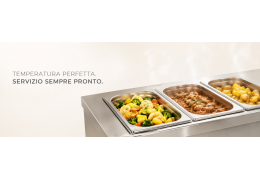
A commercial bain-marie is designed to keep cooked food hot through gentle, even heat transfer.
Sauces, soups, side dishes, creams, stews and buffet preparations can be held at serving temperature without direct contact with an intense heat source. Heated water distributes energy around the Gastronorm containers, reducing the risk of food sticking to or burning on the bottom.
Restaurants, hotels, canteens, delicatessens, self-service operations, catering companies and institutional kitchens can use bain-maries to organise service, keep several preparations separate and speed up plating.
Selecting the correct model requires an evaluation of capacity, container format, well depth, energy supply, temperature control, drainage and the expected holding period.
How a Commercial Bain-Marie Works
A traditional bain-marie contains a well filled with water that is heated by electric elements or a gas system, depending on the model.
Food containers are positioned above the heated well and receive energy through the hot water and generated steam.
This provides gentler heat transfer than direct contact with a hot plate or flame.
A bain-marie is particularly suitable for preparations that could:
-
stick to the bottom;
-
develop a surface skin;
-
separate;
-
reduce excessively;
-
dry out;
-
lose consistency.
It does not replace cooking, blast chilling, refrigeration or regeneration. Its primary purpose is to hold food that has already been prepared correctly under the conditions required for service.
Holding Rather Than Initial Reheating
One common mistake is using a bain-marie to reheat cold food slowly.
The appliance is primarily designed to receive hot preparations and maintain them at the selected temperature. Refrigerated food placed directly inside may pass too slowly through critical temperature ranges.
Food prepared in advance should be regenerated with suitable equipment and a validated procedure. It should only be transferred to the bain-marie after reaching the required condition.
A professional process should clearly separate:
-
cooking;
-
blast chilling, when required;
-
storage;
-
regeneration;
-
hot holding;
-
service.
Every stage must comply with the business’s HACCP plan.
Benefits of Indirect Heating
Direct contact with an excessively hot surface can create significant temperature differences between the bottom and top of a product.
A bain-marie uses water as the heat-transfer medium, encouraging more even distribution.
It is useful for:
-
stocks and sauces;
-
creams;
-
soups;
-
ragù;
-
braised meat and stews;
-
mashed potatoes;
-
cooked vegetables;
-
rice and prepared foods;
-
buffet products.
Quality still depends on temperature, time and surface protection. Even correctly held food can lose texture if it remains in the well for too long.
Gastronorm Formats
Bain-marie capacity is often described through compatible Gastronorm formats.
GN dimensions allow different containers to be combined within the same well.
A configuration may include:
-
one GN 1/1 container;
-
two GN 1/2 containers;
-
three GN 1/3 containers;
-
combinations of smaller formats.
This flexibility allows the unit to be adapted to the menu and the quantity of each preparation.
Before purchasing, verify:
-
maximum GN format;
-
permitted combinations;
-
container depth;
-
availability of support bars;
-
lid compatibility;
-
space required for removal.
The number of containers does not describe total service capacity on its own. The volume and portions held in each pan must also be considered.
Container Depth
Gastronorm containers are available in different depths.
A deep pan holds more food but can make product handling more difficult and increase the time required for heat to distribute evenly.
During service, moderate quantities supported by planned replacement are often more effective.
Depth selection should consider:
-
food type;
-
density;
-
expected quantity;
-
stirring frequency;
-
service duration;
-
portioning;
-
weight when full.
A very deep container filled to the top can become heavy and difficult to remove safely.
Countertop Models
Countertop bain-maries are placed on stable, heat-resistant commercial surfaces.
They are suitable for:
-
small restaurants;
-
bars;
-
delicatessens;
-
pizzerias;
-
food trucks;
-
catering;
-
compact service lines.
The supporting surface must withstand the weight of the appliance when filled with water and food.
It should be stable, moisture-resistant, easy to clean, sufficiently large and positioned at an ergonomic height.
The unit should not be installed where cables, taps or containers interfere with staff movement.
Floor-Standing Models
Floor-standing bain-maries form independent workstations and can be integrated into modular lines.
They are suitable for high-output restaurants, canteens, hotels, self-service operations and institutional kitchens.
The base provides structural support and may include an open or enclosed compartment. Any storage use must comply with the manufacturer’s instructions and must not obstruct connections or ventilation.
Before purchasing, check:
-
width and depth;
-
working height;
-
well capacity;
-
drain access;
-
ease of floor cleaning;
-
utility connections;
-
compatibility with the existing line.
Drop-In Bain-Maries
Drop-in models can be installed in self-service counters, buffet lines and custom structures.
Installation must respect the manufacturer’s cut-out dimensions, technical clearances and ventilation requirements.
Planning should include:
-
access to components;
-
electrical or gas connection;
-
water filling and drainage;
-
protection of surrounding furniture;
-
insulation;
-
maintenance access;
-
management of accidental liquid spills.
A visually clean installation must not prevent technical servicing.
Electric Supply
Electric bain-maries use heating elements to warm the water.
Before purchasing, check:
-
voltage;
-
frequency;
-
power;
-
single-phase or three-phase connection;
-
plug or connection type;
-
available electrical capacity;
-
other simultaneous loads.
Compact units may require relatively modest power, while larger wells need more energy to reach and maintain temperature.
Connections must comply with the technical documentation and applicable requirements.
Gas Supply
Some commercial bain-maries operate with gas and may be configured for natural gas or LPG.
Installation must consider:
-
gas type;
-
pressure;
-
heat output;
-
ventilation;
-
safety systems;
-
isolation-valve position;
-
combustion-product removal;
-
system compliance.
Connection, commissioning and conversion must be carried out by qualified personnel.
Temperature Control
Temperature adjustment allows operation to be adapted to the food and the business’s procedure.
The selected value does not necessarily equal the temperature at the centre of the product. Water, container material, quantity and consistency all affect heat transfer.
Food temperature must therefore be checked with suitable instruments at the required frequency.
Staff should not rely exclusively on the control knob or appliance display.
For every preparation, establish:
-
entry temperature;
-
holding temperature;
-
inspection frequency;
-
stirring procedure;
-
maximum holding time;
-
management of leftovers.
Water Level
The well must contain the quantity of water specified by the manufacturer.
Insufficient water can cause:
-
uneven heat distribution;
-
rapid evaporation;
-
overheating;
-
incorrect operation;
-
activation of safety devices.
Excess water can overflow when containers are inserted.
The volume displaced by the pans must be considered during filling. The well should not be filled to the rim before the containers are positioned.
Water level should be checked during extended service and replenished according to the operating procedure.
Water Temperature During Filling
Using warm water can reduce start-up time when permitted by the manufacturer.
Very cold water increases preheating time and can delay the beginning of service.
Before filling, verify:
-
correct appliance condition;
-
closed drain tap;
-
required water level;
-
compatible water temperature;
-
absence of components that could be damaged.
The well should be filled before loaded containers are inserted.
Preheating
The bain-marie should be switched on early enough for the water and structure to become thermally stable.
Loading food immediately after start-up can cause a temperature drop and delay correct holding.
The procedure should include:
-
cleanliness check;
-
drain closure;
-
filling;
-
start-up;
-
temperature setting;
-
preheating;
-
verification;
-
insertion of hot containers.
Preheating time depends on the water quantity, power, initial temperature and well dimensions.
Using Lids
Lids help reduce heat loss, evaporation and contamination.
They can also limit surface drying and reduce energy consumption.
Lids must be compatible with the containers and serving utensils.
During service:
-
close containers whenever possible;
-
prevent condensation from dripping into sensitive foods;
-
keep handles clean;
-
do not place lids on contaminated surfaces;
-
use suitable openings for ladles and utensils.
Buffet food should also be protected with guards and appropriate service procedures.
Stirring Food
Sauces, creams, mashed potatoes and dense preparations can develop temperature differences between the surface, centre and bottom.
Periodic stirring helps distribute heat and preserve uniform consistency.
Frequency depends on:
-
density;
-
quantity;
-
temperature;
-
holding duration;
-
use of a lid;
-
tendency to separate.
Each pan should have a dedicated utensil to prevent flavour transfer and contamination.
The lid should be replaced after stirring when required.
Replacing Containers
Adding new food on top of older food can compromise stock rotation and make holding times difficult to monitor.
It is preferable to use replacement containers filled with food that has already been regenerated correctly.
A professional procedure may include:
-
removing the nearly empty pan;
-
managing any remaining quantity according to the HACCP plan;
-
inserting a clean, hot replacement pan;
-
recording the time;
-
checking product temperature.
FIFO principles should also be applied during active service.
Holding Duration
A bain-marie does not preserve quality indefinitely.
Over time, food may:
-
lose moisture;
-
thicken;
-
separate;
-
change colour;
-
lose aromatic freshness;
-
continue cooking;
-
deteriorate.
A maximum holding time should be defined for every product according to safety and quality requirements.
The objective should not be to fill large pans at the beginning and leave them until closing. Quantities should reflect forecast demand.
Buffet Organisation
At a buffet, food should be accessible without compromising hygiene or temperature.
The service line should include:
-
labels;
-
dedicated utensils;
-
protective guards;
-
orderly customer routes;
-
portion control;
-
clean surfaces;
-
container replacement;
-
temperature checks.
Lids should not be left in unstable positions, and utensils should not fall into the containers.
Allergen Management
Closely positioned containers increase the risk of food, droplets or utensils being transferred.
Allergen controls should include:
-
identifying every preparation;
-
dedicated utensils;
-
avoiding lid exchanges;
-
keeping container rims clean;
-
organising pan positions;
-
training staff;
-
communicating correctly with customers;
-
replacing contaminated food.
Physical proximity should not be considered adequate separation for products intended for specific dietary requirements.
Drain Tap
A drain tap simplifies emptying the well after service.
Before opening it:
-
switch off the appliance;
-
remove the containers;
-
wait for the required safe conditions;
-
use a suitable drain or collection container;
-
protect hands and body;
-
clear the route;
-
open the tap slowly.
The water may remain extremely hot and can cause burns.
The tap should be cleaned to prevent scale and residue accumulation.
Scale and Water Quality
Repeated water heating can create limescale deposits on the well, heating elements and drain.
The amount depends on water hardness and frequency of use.
Scale can:
-
reduce efficiency;
-
increase heating time;
-
create difficult-to-clean surfaces;
-
restrict drainage;
-
damage components.
Descaling must follow the manufacturer’s instructions and use compatible products at appropriate intervals.
Daily Cleaning
After service, the bain-marie should be emptied and cleaned when it reaches the specified safe condition.
The procedure may include:
-
switching off;
-
removing containers;
-
draining the water;
-
removing residues;
-
cleaning the well;
-
cleaning the tap and edges;
-
rinsing;
-
drying;
-
cleaning external surfaces;
-
completing a general inspection.
Abrasive tools and incompatible detergents should not be used.
The well should not remain filled with dirty water between services.
Preventive Maintenance
Regular checks help preserve temperature stability and safety.
Inspect:
-
thermostat;
-
heating elements;
-
burners;
-
drain tap;
-
cables and connections;
-
controls;
-
seals;
-
water-level protection;
-
limescale;
-
well integrity.
Slow heating, unstable temperature, leaks or repeated activation of safety devices should be evaluated by a qualified technician.
Standardising the Station
For every preparation, create an operating sheet containing:
-
product name;
-
container format;
-
quantity;
-
entry temperature;
-
appliance setting;
-
stirring frequency;
-
inspection frequency;
-
dedicated utensil;
-
maximum holding time;
-
replacement method;
-
allergens;
-
management of remaining food.
Standardisation supports quality, safety and yield control.
How to Select a Commercial Bain-Marie
Before purchasing, evaluate:
-
number of preparations;
-
quantity required during service;
-
GN formats;
-
container depth;
-
countertop, floor-standing or drop-in installation;
-
electric or gas supply;
-
power;
-
temperature control;
-
drain tap;
-
filling method;
-
available space;
-
ease of cleaning;
-
expected service duration;
-
compatibility with the buffet or kitchen line;
-
maintenance access.
The correct model should allow the business to use pans sized according to actual demand, avoiding excessive quantities and unnecessarily long holding periods.
Related Category on Ristorazione-Refrigerazione
Explore the selection of commercial bain-maries available from Ristorazione-Refrigerazione to compare electric and gas models, countertop, floor-standing and drop-in configurations, and units compatible with different Gastronorm formats.
Related Chef Costantino Recipe
Red Wine-Braised Beef Cheek with Mashed Potatoes and Crispy Onion
This professional preparation organises the braised beef cheek and mashed potatoes in separate containers for controlled holding during service. The crispy onion is added only during plating to preserve its texture.
The complete recipe will be published on Chef Costantino with quantities per portion, total ingredients, professional procedure, Critical Control Points, allergens, plating instructions and food-cost calculation.
Conclusion
A commercial bain-marie helps organise service and hold cooked, correctly regenerated food at the required temperature.
Capacity, Gastronorm formats, container depth, power and drainage should be selected according to actual quantities. Temperature checks, rotation, lids, stirring and holding duration are equally important for preserving safety and quality.
To identify the most suitable model for your business, explore the dedicated category or contact Ristorazione-Refrigerazione with details of the number of preparations, GN formats, expected quantities and installation type.