Renovating a Commercial Kitchen: Which Professional Equipment to Replace and Why
The end of the year provides an excellent opportunity to assess professional equipment performance and plan investments aimed at improving foodservice operations.
Renovating a commercial kitchen does not necessarily mean replacing every appliance. Assessing equipment condition, energy consumption, maintenance costs and production requirements helps identify genuinely necessary improvements.
Restaurants, hotels, pizzerias, delicatessens, pastry shops and food production facilities can improve operational efficiency through a progressive modernisation programme, limiting unnecessary investments and reducing the risk of service interruptions.
When should a commercial kitchen be renovated?
The operating life of professional equipment depends on manufacturing quality, intensity of use, environmental conditions and regular maintenance.
Equipment age is therefore not the only parameter to consider. Properly maintained appliances may continue to provide adequate performance after several years of operation.
However, several warning signs may indicate the need for replacement:
- Increasing frequency of breakdowns.
- Rising maintenance costs.
- Excessive energy consumption relative to production requirements.
- Difficulty maintaining temperature settings.
- Reduced production capacity.
- Excessively long processing times.
- Difficulty obtaining spare parts.
- Cleaning and sanitation difficulties.
- Inadequate performance for new menu requirements.
- Equipment safety or conformity concerns.
Assess existing equipment before planning investments
Before purchasing new machinery, prepare a technical inventory of existing kitchen equipment.
Collect information about installation dates, operating conditions, consumption, servicing history and actual productivity for each appliance.
| Assessment parameter | Assessment objective |
|---|---|
| Installation year | Assess equipment age |
| Operating hours | Estimate intensity of use |
| Energy consumption | Identify potential inefficiencies |
| Maintenance costs | Assess the financial viability of continued operation |
| Breakdown frequency | Measure operational reliability |
| Production capacity | Verify suitability for current workloads |
| Spare parts availability | Assess future repair possibilities |
| Hygienic and structural condition | Verify effective cleaning possibilities |
| Safety conditions | Identify potential technical concerns |
Which equipment should be replaced first?
Investment priorities should reflect the consequences that equipment failure could have on business continuity, employee safety and food storage.
| Priority | Condition | Recommended action |
|---|---|---|
| Immediate | Safety or food storage concerns | Discontinue use and arrange technical inspection |
| High | Frequent breakdowns and production downtime risks | Scheduled repair or replacement |
| Medium | High consumption and insufficient performance | Financial investment assessment |
| Low | Functional but technologically outdated equipment | Progressive modernisation |
Upgrading professional refrigeration equipment
Refrigeration equipment represents a significant source of continuous energy consumption in foodservice businesses because storage conditions must be maintained even outside opening hours.
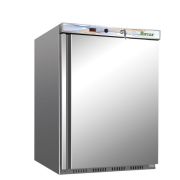
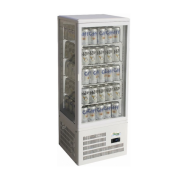
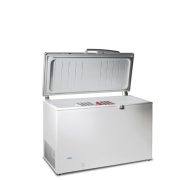
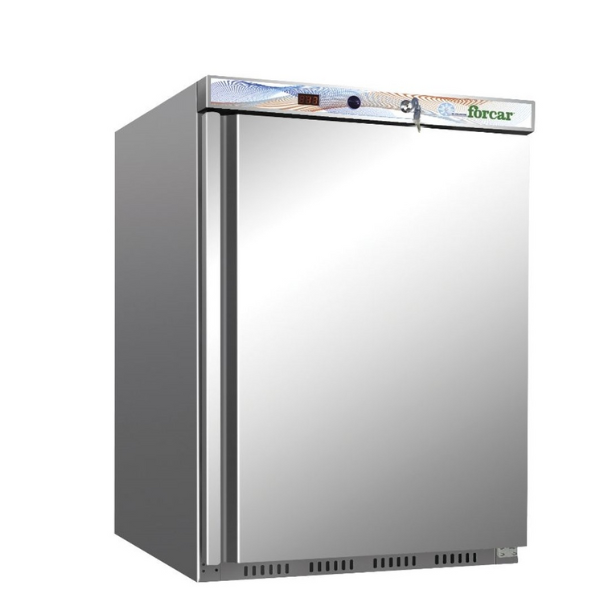
Refrigerated cabinets, freezers, refrigerated counters and cold rooms should undergo periodic inspections to assess refrigeration system efficiency, door seals, condenser cleanliness and temperature stability.
Signs of inefficient refrigeration equipment
- Extended compressor operating periods.
- Unstable internal temperatures.
- Abnormal ice formation.
- Deteriorated door seals.
- Excessive condensation.
- Increasing electricity consumption.
- Frequent refrigeration circuit repairs.
Before replacement, determine whether qualified maintenance can restore original performance.
When comparing new models, consider usable capacity, climate class, declared energy consumption, testing conditions and applicable energy efficiency classifications.
Modernising the professional cooking line
The cooking line must be suitable for menu composition, seating capacity and order concentration during service.
A kitchen designed several years ago may no longer meet current operational requirements, particularly when production volumes have increased or new preparations have been introduced.
Professional combination ovens
Combination ovens integrate different cooking methods within a single appliance. Models featuring automatic programmes can facilitate preparation standardisation, cooking parameter control and workflow organisation.
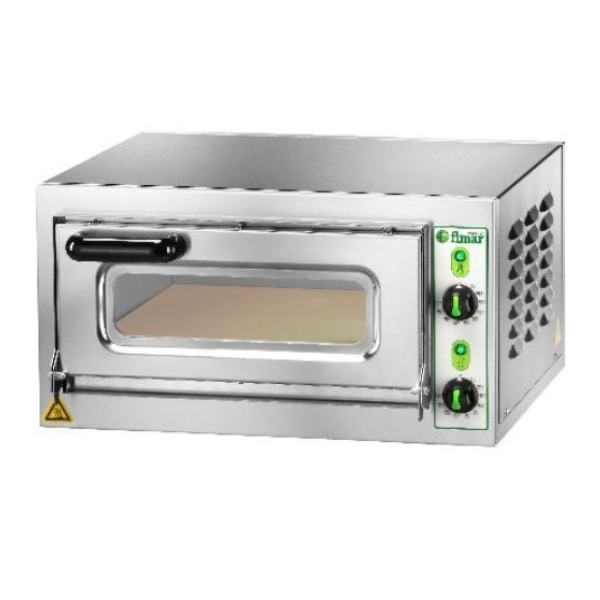
Replacing a conventional oven with a combination oven should be assessed according to cooking methods, tray capacity, productivity and utility requirements.
Induction cooking equipment
Induction equipment transfers energy directly to compatible cookware, reducing heat dispersion compared with certain conventional technologies.
Introducing induction equipment requires verification of available electrical capacity, cookware compatibility and kitchen operating procedures.
Professional fryers
A modern, correctly sized fryer may improve oil temperature recovery after food immersion and support greater cooking consistency.
Selection should consider tank capacity, heating power, temperature control, drainage accessibility and available oil filtration functions.
Introducing or replacing blast chillers
Introducing a blast chiller can significantly improve production organisation in a commercial kitchen.
Rapid cooling of compatible food preparations allows selected processes to be scheduled in advance, distributing production workloads throughout the day.
When an existing blast chiller cannot manage production volumes, assess actual cycle capacity, daily cycle requirements and the characteristics of food preparations.
Upgrading professional washing equipment
The washing area is essential for service continuity. Inefficient dishwashers may cause operational delays, increase consumption and require additional manual work.
When comparing existing and replacement equipment, consider:
- Water consumption per cycle.
- Washing programme duration.
- Rack throughput per hour.
- Energy consumption.
- Detergent and rinse aid consumption.
- Heat recovery systems.
- Water treatment quality.
- Cleaning and maintenance accessibility.
Equipment sizing should consider the actual productivity of the entire washing station, including clearing, loading, washing and handling clean tableware.
Food preparation equipment: improving productivity
Replacing or introducing food preparation machines can reduce repetitive processing times.
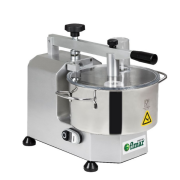
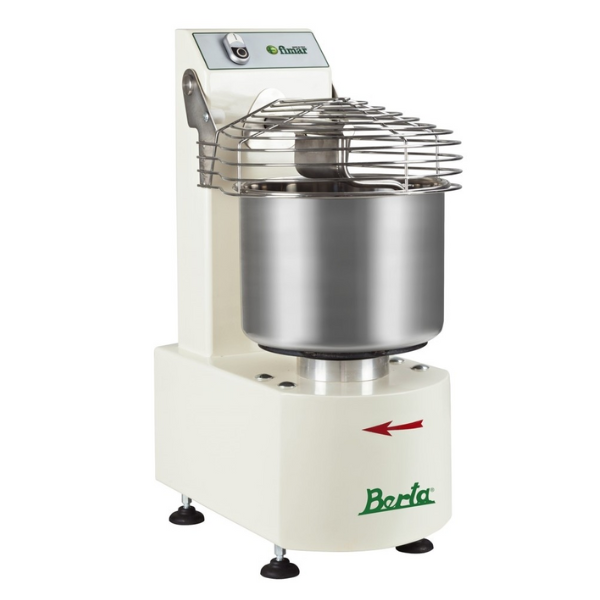
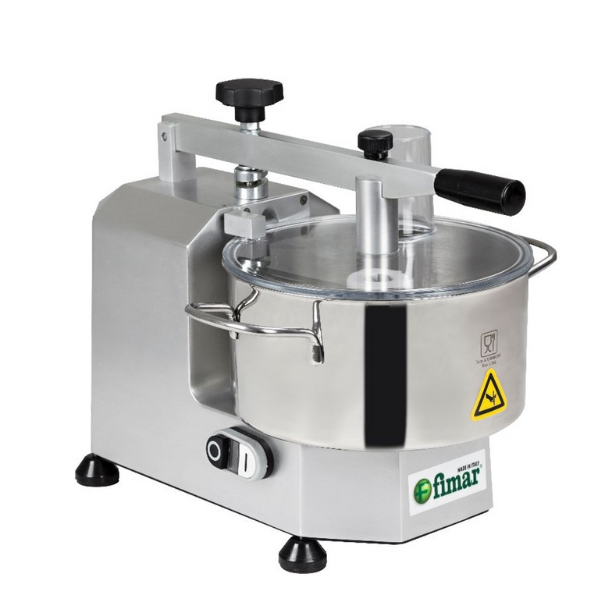
Vegetable cutters, food processors, meat mincers, slicers, mixers and potato peelers should be selected according to processing quantities, frequency of use and cleaning accessibility.
Processing time assessment example
| Parameter | Hypothetical value |
|---|---|
| Daily processing time with existing equipment | 90 minutes |
| Daily processing time with new equipment | 35 minutes |
| Daily time saved | 55 minutes |
| Annual operating days | 300 |
| Annual time recovered | 275 hours |
| Hypothetical hourly labour cost | €20 |
| Theoretical value of recovered time | €5,500 per year |
The result represents the potential economic value of recovered working time rather than necessarily a direct cash saving. Actual benefits depend on staff reorganisation and the productive use of available hours.
Renovating professional stainless steel furniture
Kitchen modernisation should also include an assessment of workstations, employee movement and storage areas.
Worktables, sinks, cabinets, wall cabinets, shelving and trolleys should facilitate preparation, cleaning and ingredient handling.
Replacing damaged, deformed or difficult-to-clean elements may improve hygiene and operational organisation without requiring complete kitchen renovation.
Professional equipment to consider when renovating a commercial kitchen
| Professional equipment | Modernisation objective |
|---|---|
| REFRIGERATION AND STORAGE | |
| Professional refrigerated cabinets | Energy efficiency and temperature stability |
| Professional freezer cabinets | Frozen food storage |
| Professional refrigerated counters | Preparation workstation optimisation |
| Modular cold rooms | Storage capacity adjustment |
| Blast chillers | Production planning and organisation |
| Professional ice makers | Ice production capacity adjustment |
| PROFESSIONAL COOKING | |
| Professional cooking ranges | Cooking line reorganisation |
| Professional combination ovens | Cooking versatility and standardisation |
| Professional induction cooking ranges | Power control and reduced heat dispersion |
| Professional fryers | Temperature control and productivity |
| Professional pasta cookers | Peak service management |
| Professional griddles | Griddle cooking optimisation |
| Professional bratt pans | Large-volume production |
| Professional boiling pans | Bulk preparation organisation |
| Professional extraction hoods | Cooking vapour and emission management |
| FOOD PREPARATION | |
| Professional vegetable cutters | Reduced preparation times |
| Professional food processors | Processing consistency |
| Professional meat mincers | Production capacity adjustment |
| Professional slicers | Portioning precision and organisation |
| Professional potato peelers | Reduced manual processing |
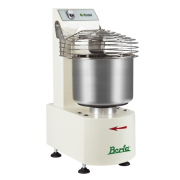
| Professional dough mixers | Improved dough processing |
| Professional planetary mixers | Preparation versatility |
| Vacuum packaging machines | Preparation and packaging organisation |
| PROFESSIONAL WASHING | |
| Undercounter dishwashers | Washing optimisation in limited spaces |
| Hood-type dishwashers | Improved washing area productivity |
| Conveyor dishwashers | High-volume tableware management |
| Professional glasswashers | Glassware washing organisation |
| Professional utensil washers | Washing pots, trays and utensils |
| Professional water softeners | Water hardness management |
| STAINLESS STEEL FURNITURE | |
| Stainless steel worktables | Workstation reorganisation |
| Professional sinks | Improved washing and preparation areas |
| Professional hand wash basins | Employee hygiene organisation |
| Stainless steel storage cabinets | Utensil protection and organisation |
| Stainless steel wall cabinets | Vertical space optimisation |
| Stainless steel shelving | Storage area organisation |
| Tray rack trolleys | Food preparation handling |
Repair or replace professional equipment?
The decision should consider repair costs, estimated remaining operating life, equipment reliability and future operating expenses.
| Situation | Recommended assessment |
|---|---|
| Isolated breakdown in equipment in good condition | Consider repair |
| Repeated and expensive breakdowns | Compare repair and replacement |
| Unavailable spare parts | Consider replacement |
| High consumption but adequate performance | Calculate potential investment returns |
| Insufficient production capacity | Consider expansion or replacement |
| Safety concerns | Discontinue use and arrange qualified inspection |
Calculating energy savings from replacement equipment
Purchase price is not the only relevant factor. Comparisons should also include energy consumption throughout the expected operating life.
Example of refrigerated cabinet replacement
| Parameter | Existing equipment | New equipment |
|---|---|---|
| Hypothetical annual consumption | 1,800 kWh | 900 kWh |
| Hypothetical electricity price | €0.28/kWh | €0.28/kWh |
| Annual energy cost | €504 | €252 |
| Five-year energy cost | €2,520 | €1,260 |
| Ten-year energy cost | €5,040 | €2,520 |
In this example, theoretical energy savings amount to €252 annually, €1,260 over five years and €2,520 over ten years, assuming constant consumption and electricity prices.
These figures are illustrative. Actual comparisons must involve equipment with comparable capacity, performance and operating conditions.
Calculating the investment payback period
The simple payback period estimates the time required to recover an investment through the resulting financial savings.
The simplified formula is:
Payback period = Net investment / Annual financial savings
Investment example
| Item | Hypothetical value |
|---|---|
| New equipment purchase and installation | €4,800 |
| Annual energy savings | €650 |
| Annual maintenance cost reduction | €350 |
| Total annual savings | €1,000 |
| Simple payback period | 4.8 years |
The calculation excludes capital costs, tariff variations, residual value and extraordinary expenses. It provides a preliminary tool for comparing investment opportunities.
Checking utilities before installing new equipment
Equipment replacement may require modifications to electrical, plumbing, gas or extraction systems.
Before purchasing, verify:
- Available electrical capacity.
- Required supply voltage.
- Electrical protection specifications.
- Water pressure and quality.
- Drainage locations.
- Gas supply availability and specifications.
- Extraction and ventilation system capacity.
- Delivery access and installation space.
- Maintenance and ventilation clearances.
Technical assessments and required modifications must be carried out by qualified professionals in accordance with manufacturer instructions and applicable regulations.
Planning kitchen renovation without interrupting operations
Progressive equipment replacement allows investments to be distributed while limiting service interruptions.
| Phase | Action |
|---|---|
| 1. Technical assessment | Inventory and inspection of existing equipment |
| 2. Priority definition | Identification of operational concerns |
| 3. Financial planning | Budget definition and comparison of alternatives |
| 4. Utility assessment | Verification of new equipment compatibility |
| 5. Delivery scheduling | Coordination of procurement and installation |
| 6. Progressive replacement | Installation during quieter operating periods |
| 7. Staff training | Introduction of new operating procedures |
| 8. Monitoring | Assessment of actual performance and consumption |
Disposal of old professional equipment
Decommissioned equipment must be handled through procedures appropriate to its type and applicable regulations.
Particular attention should be given to electrical and electronic equipment, refrigeration circuits, refrigerants and materials subject to specific recovery procedures.
Dismantling and component handling should be entrusted to qualified and authorised operators where required.
Financial incentives for equipment modernisation in 2027
Hospitality businesses may assess potential investment support programmes relating to energy efficiency, digitalisation and capital equipment modernisation.
Programme availability, eligibility requirements and admissible expenditure must be verified through official measures active when the investment is planned.
Before placing orders or paying deposits, verify any restrictions relating to the investment start date.
Common mistakes during commercial kitchen renovation
- Replacing efficient equipment without financial assessment.
- Purchasing machinery exclusively according to price.
- Failing to compare energy consumption.
- Ignoring compatibility with existing utilities.
- Underestimating delivery and installation times.
- Ignoring spare parts availability.
- Purchasing unnecessarily oversized equipment.
- Failing to provide staff training.
- Neglecting preventive maintenance of new equipment.
- Failing to monitor post-investment results.
Frequently asked questions about commercial kitchen renovation
How often should professional equipment be replaced?
There is no universal replacement interval. Requirements depend on operating conditions, maintenance, intensity of use and equipment performance.
Which machines should receive priority?
Equipment presenting safety concerns, food storage problems or significant production downtime risks should receive priority assessment.
Is replacing a functioning refrigerator worthwhile?
Financial convenience depends on actual consumption, maintenance costs and replacement equipment prices. An economic comparison is required.
Can a commercial kitchen be renovated without closing the restaurant?
In many cases, progressive replacements can be scheduled during quieter periods, coordinating delivery, installation and commissioning.
Is induction cooking always cheaper than gas cooking?
Not necessarily in financial terms. Results depend on equipment efficiency, operating methods and applicable energy tariffs.
How can investment viability be assessed?
Compare purchase and installation costs with expected savings, maintenance costs, productivity and anticipated operating life.
Conclusion
Renovating a commercial kitchen provides an opportunity to improve operational efficiency, control running costs and adapt production capacity to business requirements.
An effective modernisation strategy should begin with an assessment of existing equipment, priority definition and financial evaluation of potential improvements.
Planning investments for 2027 through progressive and technically sustainable modernisation can improve kitchen organisation while preserving service continuity and optimising available resources.