Refrigerated Fish Display Counters: How to Choose the Ideal Display to Preserve Freshness, Food Safety and Sales
In the seafood industry, product quality is judged long before the first bite.
Customers immediately notice the colour of the fish, the shine of the skin, the arrangement on the display, and the overall cleanliness of the presentation. Just a few seconds are enough to convey either freshness and professionalism or poor maintenance and neglect.
For this reason, a refrigerated fish display counter is one of the most important pieces of equipment for fishmongers, supermarkets, restaurants, delicatessens, and seafood departments in large retail stores.
Its role goes far beyond simply keeping products cold. A professional refrigerated display must preserve fish correctly, enhance its appearance, simplify staff operations, and maintain the cold chain throughout the working day.
In this guide, we will explore the different types of refrigerated fish displays, the key features to evaluate before purchasing, the most common mistakes to avoid, and the best practices for keeping seafood in optimal condition.
Why Display Matters When Selling Fish
Unlike many other food products, fish is purchased primarily with the eyes.
A clean, well-lit, and properly refrigerated display immediately communicates quality, hygiene, and professionalism.
A refrigerated display therefore serves two essential purposes:
- Preserving the product.
- Increasing its perceived value.
For businesses with high customer traffic, these factors can have a direct impact on sales.
Temperature Really Makes the Difference
Fish is one of the most delicate foods used in professional catering.
Even small temperature fluctuations can significantly accelerate deterioration.
Professional refrigerated displays are designed to maintain stable conditions throughout service, reducing temperature fluctuations caused by frequent opening, customer interaction, or high ambient temperatures.
Consistent refrigeration helps preserve:
- Texture
- Colour
- Aroma
- Overall organoleptic quality
Main Types of Refrigerated Fish Displays
Every business has different operational requirements.
For this reason, manufacturers offer several display solutions.
Linear Refrigerated Display Counters
These are the most common models used in traditional fishmongers.
They provide a large display surface and allow fresh fish to be presented on a bed of ice.
They are particularly suitable for businesses with high product turnover.
Ventilated Refrigerated Displays
These units use a uniform flow of chilled air to maintain consistent temperatures across the display.
They are ideal when stock rotation is frequent and the counter remains open for extended periods.
Display Counters with Refrigerated Storage
These models include refrigerated storage beneath the display surface.
This solution allows operators to replenish products quickly during service while improving workflow efficiency.
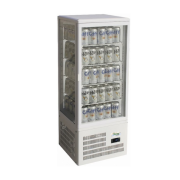
Refrigerated Displays for Supermarkets
Designed to maximise display capacity and product visibility.
Available in numerous configurations, they adapt easily to different retail layouts.
The Role of Ice
Ice is not simply decorative.
It helps maintain a consistent surface temperature across the product while preserving freshness during display.
For best results, food-grade ice produced by professional ice machines should always be used.
The ice grain size should also be appropriate for the type of seafood being displayed.
Lighting: An Often Overlooked Feature
Lighting plays a crucial role in seafood presentation.
A properly designed lighting system enhances the fish's natural colours without altering their appearance.
Modern LED systems offer several advantages:
- Lower energy consumption
- Reduced heat generation
- Improved product presentation
Materials and Hygiene
Refrigerated seafood displays are generally manufactured using stainless steel and other materials that are easy to sanitise.
All surfaces should allow quick and thorough cleaning, reducing the risk of contamination.
Daily maintenance is essential to comply with food hygiene regulations.
How to Choose the Right Refrigerated Fish Display
Before making a purchase, consider:
- Available floor space
- Average sales volume
- Customer profile
- Frequency of restocking
- Presence of an in-house preparation area
- Need for refrigerated storage underneath
A proper assessment helps identify the most suitable model while avoiding equipment that is either oversized or insufficient.
Energy Consumption: Choosing an Efficient Refrigerated Display
A refrigerated fish display typically operates continuously for many hours each day.
Energy consumption therefore represents one of the most significant operating costs.
Modern professional models incorporate technologies designed to reduce energy consumption while maintaining excellent refrigeration performance.
Key features include:
- High-efficiency compressors
- Improved insulation
- LED lighting
- Electronic temperature control
- Automatic defrost systems
Even small improvements in energy efficiency can generate significant annual savings.
Routine Maintenance
Regular maintenance ensures consistent refrigeration performance.
Recommended maintenance includes:
- Daily cleaning of all surfaces
- Sanitising the display area
- Inspecting door and lid seals
- Checking proper drainage
- Cleaning the condenser
- Verifying operating temperatures
Poor maintenance leads to higher energy consumption, reduced reliability, and an increased risk of equipment failure.
Food Safety and HACCP Compliance
Fresh fish is one of the most sensitive food products handled within the food industry.
Maintaining the cold chain is therefore essential.
A refrigerated display must guarantee stable temperatures throughout the entire time the product remains on display.
Good operating practices include:
- Regular temperature monitoring
- Using certified food-grade ice
- Separating different species when necessary
- Proper cleaning and sanitisation
- Stock rotation following the FIFO (First In, First Out) principle
Integrating refrigerated displays into HACCP procedures improves both food safety and service quality.
The Most Common Mistakes
Based on years of experience in professional refrigeration, several mistakes occur repeatedly.
Buying a Counter That Is Too Small
Many operators focus only on the available space.
It is equally important to consider peak sales periods, especially during holidays and the summer season.
Poor Ventilation
Installing the display too close to walls or other equipment restricts airflow, reduces cooling efficiency, and increases energy consumption.
Using Unsuitable Ice
Display ice should always be produced using professional ice machines and comply with food-grade hygiene standards.
Inadequate Lighting
Lighting that is too cold or excessively bright can distort the natural appearance of fresh fish.
Proper lighting should enhance the product while preserving its authentic colour.
Expert Advice
One of the most overlooked aspects is the location of the display within the store.
Before choosing a model, observe the natural customer flow.
A well-positioned refrigerated display increases product visibility and makes daily operations more efficient for staff.
Pre-Purchase Checklist
✔ Suitable dimensions for your sales volume
✔ Uniform temperature distribution
✔ Professional LED lighting
✔ Easy-to-sanitise surfaces
✔ Proper ventilation
✔ Refrigerated storage when required
✔ Low energy consumption
✔ Easy maintenance
Frequently Asked Questions (FAQ)
What is the ideal temperature for displaying fresh fish?
Fresh fish is generally displayed between 0°C and +2°C, using food-grade ice and refrigeration systems that maintain consistent temperatures.
Is a ventilated or static display better?
It depends on the business.
For high-turnover operations, ventilated systems generally provide more consistent temperature distribution.
How important is lighting?
Very important.
Proper lighting enhances the product and improves the perception of freshness without altering its natural colour.
Is ice always necessary?
In most fresh fish displays, yes.
Besides maintaining temperature, ice also helps preserve the product's visual appeal.
How often should a refrigerated display be cleaned?
Food-contact surfaces should be cleaned and sanitised daily, while the condenser requires periodic maintenance according to the manufacturer's recommendations.
Conclusion
A refrigerated fish display is one of the most valuable investments for any seafood business.
Choosing the right equipment helps preserve product quality, improve workflow efficiency, and present customers with a clean, attractive, and professional display every day.
Carefully evaluating capacity, energy consumption, lighting, refrigeration technology, and maintenance requirements will ensure an investment that delivers long-term value.
If you're looking for the ideal refrigerated fish display for your fish shop, delicatessen, supermarket, or restaurant, our team is ready to help you find the solution that best suits your business.
📞 Phone: +39 0824 1816643
📱 WhatsApp: +39 389 7940545
Discover our range of professional refrigerated fish display counters, engineered to deliver outstanding reliability, energy efficiency, and maximum product presentation.